
Views: 0 Author: Site Editor Publish Time: 2026-05-11 Origin: Site


Many homeowners and contractors share a dangerous misconception. They mistakenly believe a nail is simply a nail. You might assume any piece of rigid metal will hold building materials together successfully. However, this assumption creates massive financial liabilities. Substituting standard construction fasteners for specialized roof hardware directly compromises structural integrity. Regular nails typically encompass framing, siding, or standard utility variants. Builders rely on these for general framing and basic wood connections. Conversely, a modern Roofing Nail acts as a highly engineered fastening system. Manufacturers design them specifically to meet strict weatherproofing codes. They also satisfy rigid warranty-compliance standards set by major shingle brands. Using improper hardware invites moisture penetration immediately. High winds will easily shear off expensive asphalt shingles. We will break down exactly why these fasteners differ so drastically. You will discover the precise fastener dimensions and advanced material coatings required for success. We will also expose the hidden costs of ignoring proper hardware selection. Understanding these technical nuances prevents catastrophic water damage. Let us explore how making the correct choice protects your property long-term.
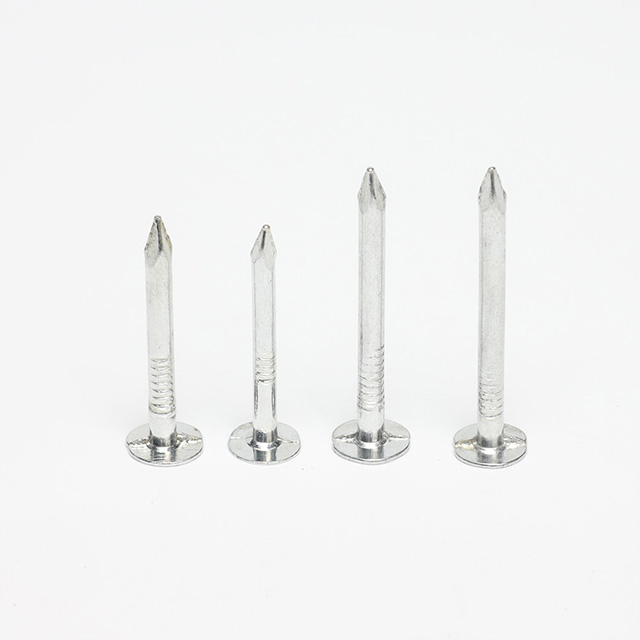
Design Intent: Roofing nails feature a broad, flat head to secure thin materials (shingles/underlayment) against high winds, whereas regular (framing) nails have small heads meant to sink flush into thick wood.
Installation Depth: Roofing fasteners must be driven completely flush to maintain a watertight seal; siding nails require a slight gap to allow for thermal expansion.
Compliance & Warranties: Using regular framing or siding nails on an asphalt roof violates ASTM standards and instantly voids manufacturer warranties.
Pull-Out Resistance: Premium roofing fasteners utilize specific shank designs (like ring shanks) that offer up to 300% more pull-out resistance in extreme weather compared to smooth-shank regular nails.
The clamping mechanism defines a Roofing Nail. It requires a massive, broad, flat head. Diameters typically range from 3/8" to 7/16". This expansive surface area acts as a heavy-duty anchor. It holds down fragile asphalt shingles securely against the elements. Large heads distribute downward pressure evenly across the material. This prevents the metal from punching through the soft asphalt matting. Regular framing nails function entirely differently. They feature small, narrowly domed heads. Carpenters design these specifically to countersink entirely into thick lumber. They bind wood structural pieces tightly together. A small framing head would tear right through a warm asphalt shingle during summer months.
Roofers need shorter, thicker fasteners to ensure structural safety. Typical lengths run between 1 inch and 2 inches. This calculated short profile serves a highly specific purpose. It allows the nail to penetrate the shingle fully. It then reaches roughly 3/4" into the wooden roof sheathing. Shorter lengths prevent accidental, ugly punctures protruding through open soffits. Roof fasteners also utilize a thicker wire gauge. They typically measure between 10 and 12 gauge. Thick wire provides exceptional shear strength against high winds. Framing nails require much longer profiles. They range anywhere from 2 to 3.5 inches. They connect heavy structural beams securely. Their wire gauges vary drastically depending on specific load-bearing structural requirements.
Fastener shanks dictate both holding power and extraction difficulty. Smooth shanks dominate standard, everyday roof applications. They clamp materials tightly but allow for easier future tear-offs. Roofers appreciate smooth shanks during demolition phases. Ring shanks serve high-wind, hurricane-prone zones. These extreme environments demand maximum grip. Rings function almost like microscopic fish hooks inside the wood fibers. They drastically increase ultimate hold strength. Tests show ring shanks offer immense pull-out resistance during severe storms. Framing fasteners sometimes use smooth shanks. Sometimes they feature a spiraled coating. They prioritize sheer holding strength over future extraction ease.
Best Practices
Always verify the gauge thickness before starting any project. A thicker wire prevents bending during rapid pneumatic firing.
Common Mistakes
Never assume a standard framing fastener will suffice. Small heads will punch completely through soft asphalt during hot summer days.
Different building surfaces face varying lifecycle expectations. Roofs require periodic, inevitable replacement. UV rays and harsh weather destroy shingles eventually. Therefore, roof fasteners must hold securely but remain relatively removable. Siding installations serve a near-permanent function on a house. Builders expect quality vinyl siding to last several decades without removal. Siding nails grip permanently to secure the exterior envelope.
Vinyl siding expands and contracts daily. Temperature shifts physically alter its dimensions. Therefore, contractors drive siding fasteners leaving a slight, intentional gap. This tiny space accommodates thermal movement perfectly. It prevents the vinyl panels from cracking under structural stress. Roof systems operate under a completely different physical law. You must drive a Roofing Nail absolutely flush against the shingle. Flush sealing prevents catastrophic water intrusion. Any raised nail head creates a permanent gap under the overlapping shingle. Capillary action naturally pulls rainwater inward. Destructive ice dams form rapidly during freezing winter conditions.
Both applications utilize pneumatic coil nailers. However, siding nailers feature a precise depth-of-drive adjustment mechanism. Standard roof nailers usually lack this specific micro-adjustment. Mixing these specialized pneumatic tools causes immediate, frustrating problems on site. You will likely experience jammed magazines constantly. You might overdrive fasteners straight through the delicate material. Equipment mismatching damages both the tool and the building materials. Never swap pneumatic systems on a professional job site.
Let us examine the physical failure mechanism through the PIMBO framework.
Problem: Inexperienced workers use standard framing nails on roof shingles.
Impact: Homes suffer devastating, slow-moving water damage inside wall cavities.
Mechanism: Small gaps result from improper domed framing heads. Capillary action continuously draws external moisture inside. Water freezes and expands forcefully during freeze-thaw cycles. This repetitive expansion physically pries shingles apart over time.
Benefits: Using the correct, wide-headed fastener ensures an impenetrable water barrier.
Outcome: Your home stays permanently dry, safe, and structurally sound for decades.
Tier-one shingle manufacturers enforce strict installation rules. They explicitly require ASTM-compliant fasteners. The official standard demands a 12-gauge minimum thickness. Using incorrect hardware instantly voids your expensive product warranty. Non-compliance shifts the entire Total Cost of Ownership liability directly to you. The homeowner pays out of pocket for all premature replacement materials. Insurance companies often deny claims involving improper installation techniques.
Hurricanes and winter blizzards test physical structural limits. Standard framing nails entirely lack wide clamping heads. High winds easily catch the edges of under-secured shingles. Gusts tear shingles right off their wooden bases. This critical fastener failure point completely exposes the waterproof underlayment. Total roof system failure follows shortly after the first shingle flies off.
Galvanized steel serves as the baseline industry standard. Electro-galvanized options have a very thin zinc coating. Factories apply this via electrical currents. They work acceptably well for standard, dry inland environments. Hot-dipped galvanized steel features a much thicker, rugged zinc layer. Manufacturers dip the steel directly into molten zinc. Industry experts highly recommend hot-dipped variants. They offer superior, long-lasting rust resistance.
Stainless steel scales perfectly for coastal zones. Marine environments present incredibly harsh challenges. High airborne salt destroys standard zinc coatings rapidly. Upgrading to stainless steel hardware provides excellent ROI. Stainless alloys resist extreme marine corrosion highly effectively. They outlast standard galvanized options by decades near the ocean.
Copper fasteners represent the specialized, luxury tier of hardware. Roofers use them almost exclusively for expensive slate or clay tiles. They provide immense longevity. Crucial Warning: Never mix copper fasteners with standard galvanized flashing. This careless combination triggers rapid galvanic corrosion. The dissimilar metals react chemically upon contact. They rapidly destroy each other when exposed to rainwater.
Aluminum functions strictly as an edge case. Some contractors use them for basic asphalt shingles. However, aluminum remains highly vulnerable to continuous salt spray. Chemical reactions limit its broader, mainstream application. Aluminum fasteners can bend easily during installation. We generally recommend sticking to steel variants for maximum reliability.
Properly estimating materials saves contractors considerable money. It prevents frustrating mid-project delays. Hardware buyers frequently encounter the traditional "Penny" (d) sizing system when sourcing a professional Roofing Nail. We can translate this archaic system easily for modern procurement to ensure your bulk orders align perfectly with the required asphalt shingle or underlayment thickness.
Penny Size (d) | Equivalent Inch Length | Primary Application |
|---|---|---|
2d | 1.00 inch | Thin asphalt shingles, standard flat underlayment. |
3d | 1.25 inches | Architectural shingles, re-roofing over existing thin layers. |
4d | 1.50 inches | Thick multi-layer shingles, heavy duty fiberglass mats. |
6d | 2.00 inches | Fastening thick ridge caps, securing heavy wood shakes. |
A "square" equals exactly 100 square feet of roof area. Proper estimation guarantees sufficient job site supplies.
Standard installation requires approximately 240 nails per roofing square. Installers typically use four fasteners per individual shingle.
High-wind compliance installation demands roughly 360 nails per roofing square. You must drive six fasteners into each individual shingle to meet strict codes.
Always check your local municipal building codes. Coastal wind requirements frequently mandate heavily textured ring shank fasteners. Verify these strict municipal regulations before finalizing any bulk purchase. Do not buy smoothly shanked nails if you live near hurricane zones. Code inspectors will fail your project instantly.
Best Practices
Order ten percent more material than your strict calculation dictates. Dropped or bent hardware happens constantly on active job sites.
Fastener selection is absolutely not an area for dangerous cost-cutting. Avoid scavenging random parts from leftover project bins. The functional differences between framing, siding, and dedicated roof fasteners dictate your home's entire lifespan. They determine total waterproofing success. They directly control ongoing warranty validity. We strongly advise you to audit your current fastener inventory carefully. Compare your on-site supplies against official manufacturer guidelines. Take these vital steps before commencing any structural weatherproofing project. Use the correct, engineered hardware. Protect your most valuable real estate asset properly.
A: No. Screws rotate as they enter the material. This spinning action tears the delicate asphalt mat. It leaves microscopic voids behind. These hidden voids create a direct path for capillary water leaks. Always use smooth or ring-shanked drive fasteners to preserve shingle integrity.
A: Siding nails are typically longer. They consume more raw metal material during production. Furthermore, they feature complex ring-shank designs required to grip wood permanently. This advanced manufacturing geometry increases production time and overall factory costs significantly.
A: Never. The physical extraction process heavily damages the protective galvanized coating. It also severely compromises the structural integrity through hidden metal fatigue. Reusing an old fastener virtually guarantees future rust formation and eventual mechanical failure under wind loads.
A: No. The collation angles, wire gauges, and driver blade shapes differ entirely. Attempting to mix specialized pneumatic tools and incompatible fasteners will result in dangerous misfires. You will jam the equipment and potentially cause serious job site injuries.


