




| Quantity: | |
|---|---|


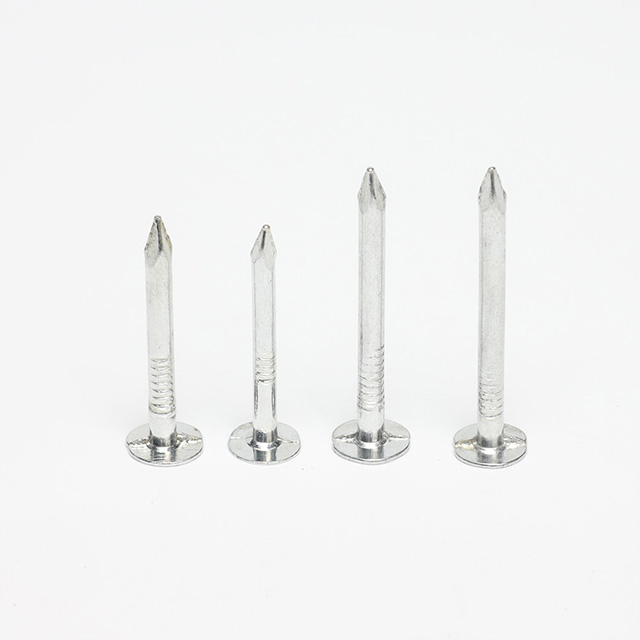
Finding a reliable roofing nail manufacturer is the cornerstone of any successful construction project or long-term supply partnership. Our high-performance roofing nails are engineered to provide an impenetrable seal and superior holding power for a wide range of roofing materials, from asphalt shingles to corrugated metal sheets. As a dedicated supplier, we offer a comprehensive selection of shanks, including smooth, ring, and twisted varieties, ensuring that every fastener meets the rigorous demands of modern building codes. These nails are crafted with precision-engineered umbrella heads and diamond points to minimize wood splitting while maximizing weatherproofing capabilities in the most challenging environments.
The first thing you notice about a premium roofing nail is the consistency of its finish and the sharpness of its profile. When holding these fasteners, the tactile quality of the heavy zinc coating is evident, providing a smooth yet grippy texture that signifies deep metallurgical protection against oxidation. Each nail is forged with a structural integrity that resonates with a clear, metallic "ping" when handled in bulk, a testament to the high-carbon steel density used in our production process. The umbrella head is not merely a design choice; it is a functional shield, meticulously curved to deflect moisture away from the entry point, effectively preventing the silent threat of internal timber rot.
In the hands of a professional installer, these nails represent efficiency and peace of mind. The diamond-honed points are designed to bite into substrates instantly, reducing the effort required for manual hammering and ensuring a clean, straight drive every time. Whether you are working with softwoods or denser composite materials, the penetration is fluid and resistance-free. The aesthetic of the finished work is equally impressive, with the polished or galvanized heads sitting flush and uniform across the roofline, creating a professional appearance that reflects the quality of the underlying craftsmanship. This is not just a fastener; it is a vital component of a building’s structural envelope, designed to endure decades of thermal expansion, high winds, and heavy precipitation.
| Parameter | Specification Details |
| Material Grades | Q195, Q235, 45# Steel, 60# Steel |
| Surface Treatment | Polished, Electro Galvanized (EG), Hot Dipped Galvanized (HDG), Black Phosphated, Yellow Zinc |
| Head Types | Umbrella Head, Flat Head, Checkered Head |
| Shank Varieties | Smooth Shank, Ring Shank (Annular), Twisted Shank (Screw/Spiral) |
| Point Geometry | Precision Diamond Point |
| Length Range | 1/2 inch to 6 inches (12.7mm - 152.4mm) |
| Gauge / Diameter | BWG8, BWG9, BWG10, BWG11, BWG12, BWG13 |
| Standard Packaging | 20kg/25kg per carton, 7lb/box (8 boxes/ctn), or customized small packaging |
Our fasteners undergo rigorous surface treatment processes to ensure they withstand the test of time. Whether you opt for the cost-effective electro-galvanized finish or the heavy-duty hot-dipped galvanized coating, the result is a barrier that prevents rust from compromising the fastener’s core. This longevity is crucial for maintaining the structural warranty of a roof.
The variety in shank design allows for customized grip levels based on the specific substrate. The ring shank acts like a series of barbs, locking into the wood fibers to provide maximum pull-out resistance, while the twisted shank mimics a screw, rotating into the material for a permanent bond that resists vibration and wind uplift.
The classic umbrella head is the industry standard for a reason. Its wide diameter covers the puncture hole completely, and when combined with an optional rubber or plastic washer, it creates a watertight gasket. This design is particularly effective for corrugated roofing where water runoff is concentrated.
For large-scale projects, our coil roofing nails are manufactured with precise spacing and wire collation to ensure zero-jam performance in pneumatic nail guns. This compatibility significantly reduces labor time and physical fatigue for installation teams, allowing for faster project completion without sacrificing quality.
The foundation of a high-quality roofing nail lies in its raw material. We primarily utilize Q195 and Q235 carbon steel, which provide the optimal balance between ductility and tensile strength. This ensures that the nail can be driven through tough materials without snapping, yet remains rigid enough to support the weight of heavy roofing tiles or metal sheets. For specialized applications requiring even higher hardness, our 45# and 60# steel options provide the extra "bite" needed for harder timber or light-gauge steel framing.
Roofing materials are subject to extreme temperature fluctuations, causing them to expand and contract daily. Our fasteners are designed with this movement in mind. The metallurgical properties of the steel allow for slight flexural movement without losing grip, preventing the "nail pop" phenomenon that often leads to leaks in inferior installations. By choosing the correct gauge—ranging from the heavy BWG8 to the versatile BWG13—users can match the fastener to the specific density and expansion profile of their roofing system.
In applications where the primary force is shear rather than tension, smooth shank nails offer the fastest installation speeds. They are the go-to choice for temporary structures or internal roofing layers where the weight of the material itself helps keep it in place. The reduced friction during driving also preserves the life of pneumatic tool components.
In coastal or storm-prone regions, the ring shank (or annular thread) is indispensable. The deep grooves create a mechanical lock with the wood grain, significantly increasing the force required to remove the nail. This is often a requirement for building code compliance in "High-Velocity Hurricane Zones" (HVHZ), as it prevents the wind from prying the shingles or panels off the deck.
The screw-like nature of the twisted shank makes it ideal for structures that experience vibration or heavy foot traffic. As the nail is driven, it threads its way into the lumber. This reduces the risk of the nail backing out over time, a common issue in agricultural buildings or workshops where heavy machinery is operated.
For projects located within five miles of saltwater or in high-humidity climates, hot-dipped galvanization is the gold standard. By dipping the nails into molten zinc, a thick, multi-layered alloy bond is formed. This coating is significantly thicker than electro-galvanized alternatives, providing a "sacrificial" layer that continues to protect the steel even if the surface is slightly scratched during installation.
Beyond traditional zinc, we offer yellow zinc and black phosphated finishes. These are often used for specific architectural requirements or when the nails might be exposed to treated lumber, which can be chemically corrosive to standard fasteners. The phosphated finish also provides an excellent base for paint adhesion, allowing for a seamless look on colored metal roofing panels.
Our production facility utilizes automated high-speed cold-heading machines and thread-rolling equipment that maintain tolerances within microns. Every batch undergoes a series of stress tests, including salt spray testing for corrosion resistance and pull-out tests to verify shank performance. This rigorous QC process ensures that every box delivered to your job site or warehouse is consistent in quality, preventing wasted material and costly callbacks.
We understand that the condition of the packaging is just as important as the product itself. Our nails are packed in heavy-duty, moisture-resistant cartons reinforced with strapping to prevent breakage during international transit. Whether you require bulk 25kg shipments for industrial use or branded small boxes for retail distribution, our logistics team ensures that the product arrives organized and ready for immediate use.
With decades of experience in the fastener industry, our team provides more than just a product; we provide solutions. We can customize nail lengths, gauges, and head styles to meet specific regional building codes or unique architectural designs. Our deep understanding of the global supply chain allows us to offer competitive lead times and stable pricing, even in volatile raw material markets.
For a standard three-tab asphalt shingle installation over a 3/4-inch plywood deck, a 1-1/4 inch nail is typically recommended. This allows the nail to penetrate through the shingle layers and fully through the underside of the deck, which is essential for maximum holding power. If you are installing architectural (laminated) shingles or reroofing over an existing layer, a 1-1/2 inch nail may be necessary.
Electro-galvanized nails have a thinner layer of zinc and are best suited for inland areas with low humidity and minimal exposure to corrosive elements. Hot-dipped galvanized nails have a much thicker, more durable coating and are mandatory for coastal environments, areas with high rainfall, or when using pressure-treated lumber, as the chemicals in the wood can quickly corrode thinner coatings.
Yes, we manufacture specific coil roofing nails that are wire-collated at a 15-degree angle to fit most standard pneumatic roofing nailers. These are produced with strict adherence to spacing and wire thickness standards to ensure smooth feeding and prevent jamming during high-volume installation.
The umbrella head features a larger surface area and a slightly concave shape. This design accomplishes two things: it provides more "clamping" force to hold the roofing material down against wind uplift, and it creates a physical canopy over the puncture hole, shedding water away from the nail shaft to prevent leaks.
A ring shank nail provides significantly higher withdrawal resistance—often up to twice as much as a smooth shank. This makes it the preferred choice for areas prone to high winds or for applications where the substrate may shrink or swell, as the rings lock into the wood fibers and prevent the nail from "creeping" out over time.


