
Views: 0 Author: Site Editor Publish Time: 2026-05-12 Origin: Site


In the construction industry, we often see a critical vulnerability emerge from the smallest details. Builders frequently allocate premium budgets toward expensive architectural lumber or durable fifty-year shingles, only to secure them with subpar fasteners. This "weak link" reality means your massive investment goes to waste if the underlying fasteners fail within ten years. To prevent this, you need a true hot-dip galvanized (HDG) nail. We define this as a steel fastener completely submerged in molten zinc after it is manufactured, creating a permanent metallurgical bond. Understanding this process is vital for any builder or site manager.
Our article transitions into a deep technical evaluation of HDG fasteners. We will distinguish genuine hot-dip galvanization from cheaper alternatives. You will learn how to verify compliance, evaluate structural integrity, and ensure your next project stands the test of time. Making the right choice protects your reputation and your bottom line.
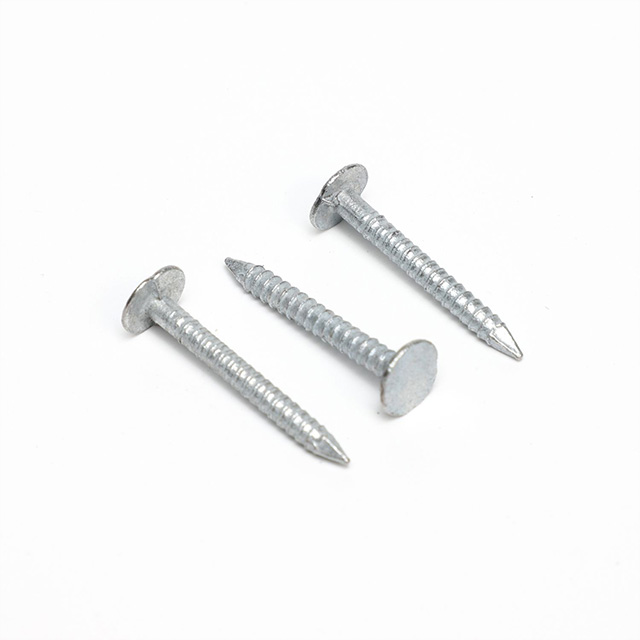
True HDG requires post-manufacture dipping: Beware of nails cut from pre-galvanized wire, which leaves the nail head exposed to rust.
System Longevity: An HDG roofing nail offers a 30- to 85-year lifespan, perfectly matching the warranties of premium architectural shingles.
Data-Backed Protection: HDG provides 50–100 microns of zinc coating compared to just 3–8 microns for electro-galvanized (EG) nails.
Material Compatibility: HDG is mandatory for ACQ-treated (pressure-treated) lumber, but stainless steel is required for Cedar or Redwood to prevent chemical staining.
Total Cost of Ownership (TCO): Standardizing on HDG nails across a site streamlines inventory and eliminates the risk of using indoor nails in exterior applications.
Genuine hot-dip galvanization represents a rigorous industrial process. Manufacturers first shape a complete steel nail. They form its head and cut its threaded shank. Once fully formed, they plunge it directly into a vat of molten zinc. This creates a powerful reaction. The intense heat forms a robust zinc-steel alloy inner layer. A pure, thick zinc outer coating then hardens over it.
This layered defense introduces the sacrificial anode principle. The outer zinc coating physically blocks moisture. More importantly, it chemically protects the underlying steel. Construction is a rough process. Carpenters frequently scratch fastener surfaces during vigorous hammering. Rough nail gun firing causes abrasions. When you scratch a standard painted nail, rust begins immediately. By contrast, the surrounding zinc on an Hdg Roofing Nail acts as a sacrificial anode. It safely corrodes first. This specific chemical reaction actively prevents the core steel from rusting.
Many builders initially question the visual aesthetics. HDG nails feature a rough, dull, crystalline finish. They look vastly different from shiny, silver electro-plated nails. You should frame this roughness as a distinct structural advantage. We call it the "cling" factor. The textured crystalline surface substantially increases friction. As the fastener drives into wood fibers, the rough exterior grips the grain tightly. This dramatically improves withdrawal resistance, giving your framing exceptional holding strength.
Not all silver nails perform equally. We must evaluate hard data to understand the gap between HDG and electro-galvanized (EG) options. Visual similarities often hide massive performance differences.
Coating thickness dictates survival in harsh weather. We measure this barrier in mils or microns. True HDG delivers a minimum thickness of 1.7 mils. This equals approximately 50 to 100 microns. Conversely, EG maxes out at a mere 0.36 mils. That is roughly 3 to 8 microns.
This stark contrast translates directly to lifespan expectations. Engineers often use a 5% surface rust threshold to determine failure. In typical suburban environments, an HDG fastener lasts anywhere from 30 to 85 years before reaching this threshold. An EG nail often shows significant, damaging rust within just 5 to 10 years.
Laboratory salt spray testing further proves this point. Quality HDG nails easily withstand 30 or more hours of standardized abrasive salt spray tests. EG alternatives routinely fail under these exact conditions in less than 10 hours.
Specification | Hot-Dip Galvanized (HDG) | Electro-Galvanized (EG) |
|---|---|---|
Coating Thickness | 1.7+ mils (50-100 microns) | 0.36 mils max (3-8 microns) |
Lifespan (5% Rust) | 30 to 85 years | 5 to 10 years |
Salt Spray Testing | 30+ hours | Under 10 hours |
Primary Application | Outdoor, treated lumber, severe weather | Indoor, climate-controlled spaces only |
The final verdict is clear. You must relegate EG strictly to indoor, climate-controlled use. HDG serves as the absolute baseline for any outdoor exposure.
A frustrating financial flaw haunts modern roofing projects. We call it the lifecycle mismatch trap. Homeowners routinely purchase premium architectural shingles. These materials carry impressive 40- to 50-year warranties. Contractors then install these expensive materials using inferior, short-lived fasteners. The roof inevitably fails when the cheap fasteners rust, snap, or pull out.
You avoid this disaster by using an Hdg Roofing Nail. Think of this hardware as incredibly cheap insurance. A roofing system functions as a cohesive unit. Therefore, every fastener must match or exceed the anticipated lifespan of the building envelope it secures. Spending an extra fraction of a cent per nail protects a massive investment.
Various environmental variables continually assault your roof. Coastal moisture brings salt, which aggressively devours weak metals. Acid rain accelerates chemical degradation in industrial or urban zones. Extreme temperature fluctuations force materials to expand and contract daily. These brutal conditions mandate the thicker, metallurgically bonded barrier of an Hdg Roofing Nail. Using standard fasteners risks premature roof failure. This inevitably leads to devastating water damage and incredibly high callback costs.
Choosing the right metal coating depends heavily on the wood you select. Modern pressure-treated lumber presents unique chemical challenges. We commonly refer to this as ACQ treated wood. Manufacturers infuse this wood with a high copper content to resist rot and insects. However, this copper is highly corrosive to plain steel. If you use standard bright nails, the treated wood will literally "eat" the fastener in a few short years. A high-quality Hdg Roofing Nail represents the minimum viable standard here. Its thick zinc barrier effectively isolates the steel from the corrosive copper.
You must proceed with extreme caution when handling Cedar or Redwood. These premium woods contain natural tannins. Tannins react violently with zinc. If you drive an HDG fastener into Cedar, a chemical reaction occurs quickly. It produces ugly black streaks down the siding. For these high-end aesthetic applications, you must upgrade to stainless steel. Stainless steel costs more but completely prevents chemical staining.
To maximize structural integrity, look for ring shank variations. Combining the HDG chemical barrier with a mechanical "ring shank" profile yields incredible results. The raised rings lock securely into wood fibers like a screw. This provides the ultimate combination of chemical corrosion resistance and mechanical pull-out resistance. We consider this combination crucial for pole barns and high-wind coastal zones.
Common Mistake: Using bright framing nails for an ACQ-treated deck ledger board, leading to rapid structural failure.
Common Mistake: Using galvanized nails on Cedar siding, resulting in permanent black oxidation stains.
Best Practice: Always pair HDG ring shank nails for exterior pole barn framing to resist wind uplift.
Best Practice: Default to high-grade stainless steel when installing any premium, tannin-rich hardwood.
The fastener industry harbors a dangerous deceptive shortcut. We call it the pre-galvanized wire loophole. Certain manufacturers want to cut costs while still claiming they sell "galvanized" products. They buy enormous spools of pre-galvanized wire. They feed this wire into machines, cut it to length, and cold-head the top to form a nail.
This process introduces a catastrophic flaw. By cutting and shaping the wire after it was galvanized, they expose raw, unprotected steel. The newly formed nail head lacks any zinc coating. Ironically, the nail head is the most exposed part of the fastener. Once driven into exterior trim or siding, it faces rain and snow directly. Yet, it carries zero protection.
Buyers must aggressively evaluate vendor specs. You cannot simply accept the word "galvanized" on a cardboard box. Instruct your procurement team to explicitly verify the exact manufacturing method. Look for phrases like "dipped after cutting and threading." This guarantees a continuous, unbroken zinc seal across the entire surface.
To streamline your purchasing, follow a strict compliance standard. Only purchase bulk nails stating compliance with ASTM A-153. This specific standard governs pre-formed hardware. It ensures the manufacturer dipped the fully formed piece into molten zinc. It explicitly rejects raw wire loopholes.
Inspect the exterior box label for a clear ASTM A-153 certification mark.
Examine the nail surface for a dull, rough finish rather than a bright, shiny appearance.
Ensure vendor documentation confirms the product was "hot-dipped after manufacture."
Total Cost of Ownership (TCO) extends far beyond the checkout counter. Smart site managers look for practical ways to improve efficiency. Standardizing your fastener inventory offers a massive operational advantage.
Inventory simplification prevents costly site mistakes. Imagine a busy job site. Framing crews are rapidly reloading pneumatic guns. If you stock both cheap "bright" nails for indoor framing and HDG nails for exterior walls, someone will eventually mix them up. A crew member will accidentally load non-rated bright nails into their gun while shooting exterior sheathing. This simple error compromises the entire wall system. Stocking only HDG framing and exterior nails completely eliminates this risk.
Furthermore, premium fasteners boost operational uptime. High-quality HDG options undergo meticulous double-dipping processes. Manufacturers often clear the threads mechanically to ensure uniform thickness. These uniformly coated products feed much more smoothly through high-speed pneumatic nail guns. You experience significantly fewer jams. Less downtime means your labor stays highly productive.
We must frame this decision around true ROI. The upfront cost difference often amounts to mere pennies per pound. However, you must weigh that against the long-term benefits. Standardizing yields massive ROI by eliminating future callbacks. You prevent voided shingle warranties. You avoid catastrophic structural repairs. Ultimately, standardizing on premium hardware proves to be a highly lucrative site management strategy.
We must treat fastener selection with the gravity it deserves. An HDG nail is never a place to cut project costs. It serves as a fundamental structural safeguard for your entire build. A fifty-year roof or a robust treated deck relies entirely on the integrity of the hidden metal holding it together.
We advise procurement teams and contractors to take immediate action. Audit your current fastener inventory today. Purge any exterior nails lacking explicit ASTM A-153 compliance. Finally, upgrade all critical applications—especially your roofing systems and treated wood framing—to true post-manufacture hot-dip galvanized hardware.
A: Yes, modern coil and strip HDG nails are collated specifically for nail guns. Ensure you buy quality brands where the zinc coating is uniform to avoid gun jams.
A: No, stainless steel offers absolute corrosion resistance, but it costs 2-3 times more. HDG provides the best balance of cost-efficiency and heavy-duty protection for standard construction.
A: The dull, crystalline texture is the natural result of the molten zinc bath. It is a sign of a thick, protective coating and actually helps the nail grip the wood tighter.
A: It is highly discouraged. Paint micro-cracks over time, and the thin EG layer will fail quickly when exposed to environmental moisture.


