
Views: 0 Author: Site Editor Publish Time: 2026-05-12 Origin: Site


Fasteners have evolved over 3,000 years, but the fundamental choice on a jobsite often boils down to a simple question: is this structure permanent or temporary? In 1917, the invention of the duplex nail provided a direct solution to a major industry problem. Before its creation, using standard fasteners for temporary applications caused massive material waste and labor inefficiencies. Workers spent hours struggling to extract flush-driven fasteners from concrete forms and scaffolding, often destroying the wood in the process.
Today, modern builders face a critical decision-stage evaluation when selecting materials for temporary structures. This article compares regular nails, Duplex Head Nails, and modern threaded alternatives. We will explore total cost of ownership (TCO), safety risk mitigation, and labor efficiency. You will learn exactly how to match the right fastener to your specific application to maximize jobsite productivity.
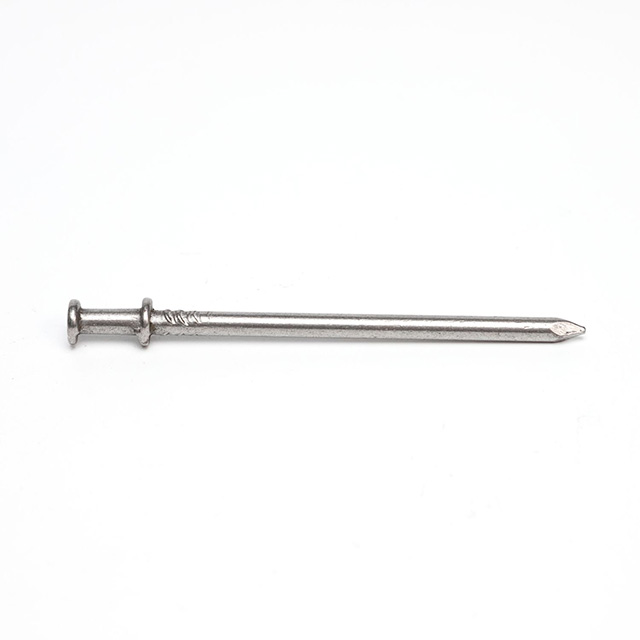
Core Functionality: Regular nails are engineered for flush, permanent holding power; Duplex Head Nails feature a two-tiered head designed specifically for rapid extraction without damaging materials.
Cost of Lumber vs. Cost of Fasteners: Using duplex nails reduces material waste by preserving reusable lumber (like concrete forms and scaffolding) that regular nails would otherwise splinter during teardown.
Jobsite Safety: Standardizing fastener selection based on application significantly reduces hammer-related hand injuries and pry-bar slippage risks.
Modern Alternatives: For high-volume professional contractors, duplex screws are emerging as a reusable, drill-driven alternative with a distinct long-term TCO advantage.
Understanding the physical differences between fastener types helps you make better purchasing decisions. Manufacturers engineer each option for a highly specific end goal.
Regular nails utilize a straightforward design mechanism. They feature a single flat or countersunk head. Manufacturers pair this top with a smooth or textured shank. You drive them flush into or entirely below the wood surface. Carpenters rely on this design for permanent installations.
This design maximizes permanent holding power. It also provides a clean, unobtrusive finish. However, you face extreme difficulty trying to remove them later. Once fully driven, the head sits flush against the lumber. You must aggressively dig into the substrate to grip the head. This action inevitably damages the surrounding material.
Temporary structures demand a completely different approach. Duplex Head Nails utilize a highly specialized, dual-head design mechanism. They feature a lower flange acting as the primary head. An extended top head sits just a fraction of an inch above it.
This unique structure yields a distinct outcome. You strike the upper head to drive the fastener. The lower flange halts the shank tightly against the top layer of material. This creates the necessary structural rigidity. Meanwhile, the upper head remains fully exposed. You can easily grip it later using a claw hammer or a long pry bar. You never need to dig into the wood.
Feature | Regular Nails | Duplex Head Nails |
|---|---|---|
Head Design | Single flush or countersunk head | Dual-tier (lower flange + exposed top head) |
Driving Depth | Driven flush or below the surface | Driven until the lower flange meets the surface |
Primary Goal | Maximum holding power and clean finish | Secure temporary hold and rapid extraction |
Removal Difficulty | High (requires damaging the substrate) | Low (upper head remains accessible) |
Choosing the wrong hardware disrupts project timelines. You must deploy fasteners based on a strict application framework. We separate these applications into permanent and temporary woodworking categories.
Permanent woodworking relies heavily on standard fasteners. You use them for framing, roofing, siding, and finishing. In these areas, structural integrity and aesthetic concealment remain non-negotiable. A flush finish ensures subsequent layers of building materials sit flat.
Builders typically size these fasteners using the traditional Penny system (d). They follow a straightforward sizing logic known as the "3x thickness" rule. The fastener length should measure three times the thickness of the top material you are securing. For example, fastening a half-inch sheet of plywood requires a 1.5-inch nail. This ratio guarantees the shank penetrates deeply enough into the base material to prevent long-term shifting.
Temporary woodworking prioritizes speed and material recovery. Double-headed fasteners dominate these specific scenarios.
Concrete Forming: You secure form ties and spreader cleats before pouring concrete. Using standard fasteners here causes massive problems. It often leads to chipped, fresh concrete edges during difficult removals. Double-headed options pull out cleanly without shaking the fragile, newly cured concrete.
Scaffolding & Temporary Bracing: Jobsite safety requires robust temporary structures. You need quick assembly and teardown. The fastener must hold heavy weight temporarily but release smoothly later.
Temporary Fencing: Workers frequently set up agriculture boundaries or construction site perimeters. They pull them down just as quickly when the project phase ends. Easy extraction saves hours of manual labor on long fence lines.
Project managers must look beyond the initial purchase price of a box of hardware. You must calculate the total cost of ownership (TCO). This calculation includes material preservation and labor efficiency.
The hidden cost of standard hardware becomes obvious during teardown. Workers drive regular nails flush into temporary wood. They must then dig deeply into the grain to extract them later. This aggressive prying destroys reusable lumber. Expensive plywood concrete forms splinter and break. You cannot reuse compromised lumber for the next pour.
You also face increased labor hours. Crews spend valuable time struggling with stuck fasteners. Sometimes they give up entirely. They resort to cutting the hardware off with an angle grinder. This adds unnecessary equipment wear and consumes expensive hourly wages.
We can easily calculate the return on investment (ROI) for double-headed hardware. High-quality Duplex Head Nails cost slightly more per pound than common bulk nails. However, they pay for themselves during a single project phase. You preserve expensive form-wood for subsequent uses. Wood costs drastically overshadow hardware costs on modern jobsites. Teardown times drop significantly. Your crew pulls the temporary bracing apart in minutes rather than hours. This labor efficiency instantly neutralizes the slightly higher upfront material cost.
Cost Category | Using Regular Nails | Using Duplex Head Nails |
|---|---|---|
Initial Hardware Cost | Low | Slightly Higher |
Lumber Salvage Rate | Low (30% - 50% splintered) | High (90%+ reusable) |
Labor Teardown Time | Extended (Requires prying tools) | Minimal (Straight pulls) |
Overall Project Cost | High (High replacement costs) | Low (Excellent material retention) |
Hardware choices directly impact worker safety. A jobsite functions best when you actively mitigate physical risks. We must examine the physics of extraction to understand these risks fully.
Pulling flush fasteners requires high-leverage prying. A worker wedges a pry bar under a deeply embedded head. They apply massive downward force. This intense pressure increases the risk of tool slippage. When a pry bar suddenly slips, workers easily lose their balance. They smash their hands into adjacent structures or fall backward.
Double-headed fasteners eliminate this physical struggle. They allow for a clean, straight-pull leverage point. The exposed upper head catches the hammer claw perfectly. The worker applies smooth, predictable pressure. The hardware slides out safely.
Statistical context highlights the severity of these dangers. Hammer strikes and pry-bar slips rank consistently among the top four causes of construction injuries. Hand and finger trauma drastically impacts jobsite productivity.
Framing hand-injury claims vary widely in financial cost. Historically, minor incidents cost around $500 in immediate medical attention. Severe incidents, such as thumb fractures from violent tool slips, generate claims exceeding $26,000. These figures do not include lost productivity or rising insurance premiums. Safety officers recognize these financial and human costs. They mandate specific, easily removable fasteners for temporary builds to actively minimize extraction risks.
Technology continues to improve jobsite efficiency. Double-headed nails solved the extraction problem perfectly for their era. However, modern commercial contractors now evaluate threaded alternatives.
The original double-headed fastener emerged in 1917. It revolutionized concrete forming. A major leap forward arrived much later, around 2007. Inventors patented duplex screws to modernize temporary fastening. They introduced a dual-hex head designed specifically for drill-driving. This evolution completely eliminates the need for hammering. You drive and extract the hardware using a standard impact driver.
Speed and efficiency metrics heavily favor the modern screw in commercial settings. Industry tests reveal stark installation speed differences. Drill-driven screws can outpace hammer-driven options by up to 47% in per-minute installations. You simply pull the trigger on your power tool.
Teardown efficiency on large-scale concrete form setups shows similar impressive gains. Crews might spend 8 full hours removing hammered fasteners from a massive commercial foundation. They can remove threaded alternatives from the exact same setup in just 6 hours. This saves a quarter of a workday.
The reusability factor provides another massive advantage for threaded hardware. Traditional double-headed nails remain single-use items. The act of pulling them out with a hammer bends the metal shank. You toss them into the scrap bin immediately.
Conversely, you reverse out threaded screws entirely intact. The impact driver backs them out cleanly. You reuse them multiple times across different jobs. This capability drastically lowers the long-term TCO. They carry a much higher initial unit cost, but they act as long-term assets rather than disposable consumables.
Choosing the proper fastener streamlines your jobsite operations and protects your bottom line. Use this simple decision matrix to guide your purchasing strategy:
Choose Regular Nails for permanent, flush, and concealed structural framing where aesthetic finish and permanent hold matter most.
Choose Duplex Head Nails for cost-effective, temporary wood-to-wood applications where lumber preservation and fast teardown are required.
Choose Duplex Screws if you are a commercial contractor looking to eliminate hammer-related safety risks, maximize fastener reusability, and optimize labor speed on massive jobsites.
As a practical next step, we recommend auditing your current concrete-forming and scaffolding workflows. Check your inventory. Ensure your crews stock the correct temporary hardware. Preventing just one hand injury or saving one batch of premium plywood justifies the immediate switch to specialized temporary fasteners.
A: Typically, no. The act of pulling them out with a claw hammer or pry bar usually bends the metal shank. They are meant to preserve the expensive lumber they hold together, not the fastener itself. Once removed, you should discard them.
A: Yes, they offer identical shear strength for equivalent gauges. However, because they are not driven fully flush with a single impact head, they lack the same rigid permanent hold. They are strictly rated for temporary bracing, not permanent load-bearing walls.
A: They utilize the exact same traditional Penny (d) system and gauge measurements as standard construction hardware. You will usually find them ranging from 6d to 16d. This sizing covers almost all standard concrete forming and scaffolding applications.


