
Views: 0 Author: Site Editor Publish Time: 2026-05-11 Origin: Site


When evaluating fasteners for roofing applications, getting the gauge right is a strict pass/fail criteria—but it is only the baseline. Standard gauge dictates nailer compatibility and basic code compliance. However, true drivers of project longevity, minimized callbacks, and total cost of ownership go much deeper. Choosing the wrong fastener profile causes rust bleed, shingle pull-through in high winds, and voided warranties. The long-term viability of a roof depends heavily on material composition, coating, and shank design.
This guide breaks down the exact technical specifications required for modern roofing. We provide a rigorous evaluation framework for selecting the right fasteners based on environment and risk tolerance. You will learn exactly when to upgrade to premium Stainless Steel Coil Roofing Nails to ensure maximum performance and structural integrity.
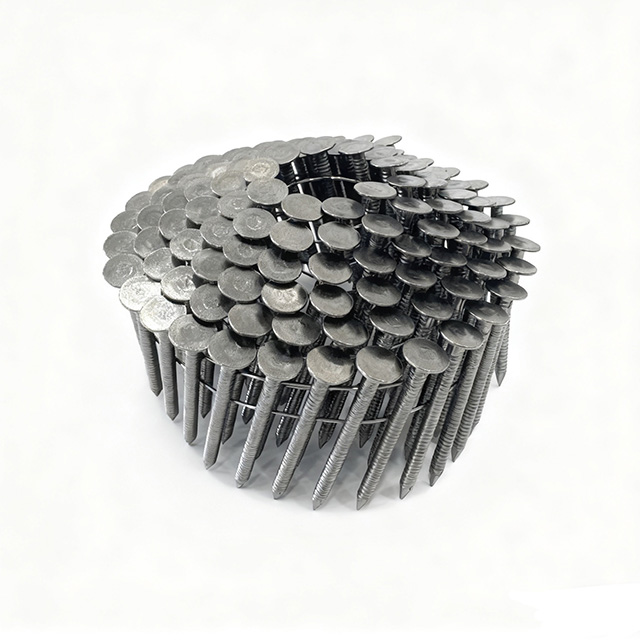
The Standard Metric: The universal industry standard for coil roofing nails is 11-gauge (0.120-inch diameter) with a 15-degree wire collation.
Material Dictates ROI: While electro-galvanized nails offer short-term economy, hot-dipped galvanized or 304/316 stainless steel upgrades are critical for coastal environments, synthetic slate, or cedar to prevent structural failure.
Holding Power: Upgrading from smooth to ring shank designs acts as a "barb" against wind uplift, often required for Miami-Dade hurricane compliance.
Usage Math: Anticipate ~320 nails per square (100 sq ft) for standard applications, scaling to ~480 nails for high-wind (5-nail pattern) zones.
The standard roofing industry requirement is strictly 11-gauge. Attempting to use thinner gauges risks immediate code violations and structural vulnerability. Local building inspectors check fastener specifications rigorously. If they discover undersized fasteners, they will force you to tear off the newly installed shingles and start over.
To understand why this specific gauge remains the universal standard, we must look at the anatomy of the fastener itself. Every millimeter serves a distinct mechanical purpose.
Diameter (0.120 inches): This thickness provides the optimal balance. It offers enough tensile strength to resist sheer forces without splitting the underlying wooden roof deck.
Head Size (Minimum 3/8-inch): Asphalt shingles heat up and soften under direct summer sunlight. A broad, full round head acts as a crucial washer. It prevents the fastener from pulling right through the softened shingle.
Point Design (Diamond-shaped tips): A sharp diamond point separates the material fibers smoothly. It penetrates asphalt and synthetic materials cleanly without cracking or fracturing the shingle body.
Common Mistake: Many novice contractors try to cut costs by sourcing 12-gauge imported nails. These thinner nails lack the bending yield strength required for overhead impacts. They frequently bend inside the pneumatic driver, causing costly gun jams.
For tool compatibility, 11-gauge nails are exclusively collated at a 15-degree angle. Manufacturers use dual copper-wire banding to hold them together. This specific angle ensures that high-performance Stainless Steel Coil Roofing Nails fit seamlessly into standard pneumatic roofing nailers manufactured by major brands like Bostitch, Dewalt, and Senco. Using the correct collation prevents continuous jamming and ensures a consistent, high-speed installation flow on the job site.
Component | Industry Standard Specification | Primary Function |
|---|---|---|
Wire Gauge | 11-Gauge | Provides structural shear strength. |
Shank Diameter | 0.120 inches | Prevents deck splitting. |
Head Diameter | Full Round, Minimum 3/8" | Prevents shingle pull-through. |
Collation Angle | 15-Degree | Ensures pneumatic nailer compatibility. |
Fastener corrosion is the leading cause of premature roof failure and contractor callbacks. The choice of coating directly impacts the long-term viability of the installation. A shingle rated for 50 years becomes useless if the fastener holding it rusts away within a decade.
Contractors typically choose between three distinct material grades based on the project environment.
Electro-Galvanized (Short-Term Economy)
Manufacturers create these nails by applying a thin zinc layer via electrical current. They offer an economical solution for standard, inland residential asphalt roofing. However, they remain highly susceptible to rust. If the pneumatic hammer strikes the head too hard, it can chip the thin coating and expose bare steel to moisture.
Hot-Dipped Galvanized (Moderate Weather/Wind)
These fasteners are dipped directly into molten zinc. This process creates a thicker, superior protective barrier. You should consider this the minimum baseline for regions experiencing distinct temperature fluctuations or moderate moisture. The thicker coating resists installation impacts far better than electro-galvanized alternatives.
Stainless Steel (Maximum ROI & Risk Mitigation)
For harsh environments, standard zinc coatings fail. Upgrading to Stainless Steel Coil Roofing Nails becomes an absolute necessity. Grades like 304 and 316 stainless steel contain chromium, which forms a passive oxide layer that stops rust entirely.
You must use stainless steel in coastal or saltwater environments. Salt spray devours standard galvanized nails in mere months. Furthermore, premium materials like synthetic slate and natural cedar shingles contain corrosive natural tannins. These tannins actively attack zinc coatings. Using stainless steel guarantees zero rust-bleed callbacks and aligns your fastener lifespan with 50-year premium material warranties.
Material Grade | Corrosion Resistance | Ideal Application Scenarios | Relative Cost |
|---|---|---|---|
Electro-Galvanized | Low | Inland, dry climates, standard asphalt. | $ |
Hot-Dipped Galvanized | Medium | Moderate rain, seasonal temperature shifts. | $$ |
304/316 Stainless Steel | Exceptional | Coastal salt zones, cedar, synthetic slate. | $$$ |
Shank design determines how fiercely the nail grips the roof decking. Roofs face constant expansion and contraction cycles. As the sun beats down, the wood deck expands. As temperatures drop at night, it contracts. Over time, this daily movement slowly pushes smooth nails upward—a phenomenon known as "nail backing."
Speed and Efficiency: Smooth shanks drive into wood incredibly fast. They require less pneumatic pressure from the air compressor.
Jam-Free Operations: They slide through the nail gun magazine easily, reducing mechanical friction.
Appropriate Use Cases: They offer sufficient holding power for standard residential roofing applications located in low-wind geographical zones.
Mechanics of the Grip: These fasteners feature extruded rings along the metal shank. As the nail enters the wood, the wood fibers separate and then snap back into the grooves between the rings.
The "Barb" Effect: This design acts exactly like a barb. Once driven, removing a ring shank nail usually requires destroying the surrounding wood.
Implementation Reality: Ring shanks provide vastly superior resistance against temperature shifts and aggressive wind-uplift forces.
Compliance Necessity: They are often a strict requirement for meeting rigorous regional building codes, including Miami-Dade County hurricane approvals.
Best Practice: If you operate in a region prone to severe thunderstorms, tornadoes, or hurricanes, abandon smooth shanks entirely. The marginal increase in material cost for ring shanks pays for itself by preventing catastrophic shingle blow-offs.
Accurate estimation prevents mid-job material shortages and excessive over-ordering. Running out of nails forces your crew to stop working. Costly downtime eats into your profit margins instantly. Conversely, ordering too many cases ties up your cash flow.
To estimate correctly, you must understand standard job math based on your local exposure zone.
Standard Zone Math: Most manufacturers require 4 nails per shingle for a standard warranty. This translates to roughly 320 nails per roofing square (100 square feet).
High-Wind Zone Math: In coastal or storm-prone areas, building codes dictate a 5-nail or 6-nail pattern per shingle. This drastically increases your usage to approximately 480 nails per roofing square.
Understanding packaging realities helps you translate this math into purchasing orders. Standard bulk cases of Stainless Steel Coil Roofing Nails contain exactly 7,200 nails. Factories organize them into 60 coils, with each coil holding 120 nails. Depending on your required nail pattern, one single case covers roughly 15 to 22 roofing squares. Investing in fasteners with verifiable "jam-free" dual copper-wire collation reduces on-site misfires and drastically lowers your labor-related TCO.
Total Cost of Ownership extends beyond the raw price of the nails. You must factor in labor efficiency. Investing in fasteners with verifiable "jam-free" dual copper-wire collation reduces on-site misfires. Cheap wire bands break easily, causing coils to tangle inside the nail gun magazine. When your installers spend ten minutes clearing a jammed gun, you lose money. High-quality collation translates directly to saved labor hours and faster job completion.
Using uncertified, cheaply manufactured imported fasteners carries immense financial risk. It can easily invalidate the shingle manufacturer’s warranty. If a storm tears the roof off, the manufacturer will inspect the remaining fasteners. If they find non-compliant nails, they will deny the claim, leaving the contractor fully liable for thousands of dollars in material failures.
Always verify your fasteners meet specific industry certifications. The most critical standard to require is ASTM F1667-03. This is the defining American standard for driven fasteners. It tests for structural integrity, dimensional consistency, and bending yield strength. When a box displays this certification, you know the product meets strict engineering thresholds.
Furthermore, structural integrity directly impacts worker safety. High-quality manufacturing creates reinforced necks where the head meets the shank. Inferior nails often possess weak necks. When the pneumatic driver strikes the nail at 100 PSI, a weak neck snaps instantly. The steel head turns into a dangerous projectile that can strike a worker in the eye. Reinforced shanks prevent head breakage, reducing worker injury risks and cutting down on material waste.
To summarize, here are the critical action steps for selecting coil roofing nails:
Never compromise on gauge: Stick strictly to 11-gauge fasteners to ensure building code compliance and proper shingle retention.
Match the material to the environment: Use electro-galvanized for basic jobs, but upgrade to stainless steel for coastal homes or premium cedar/slate roofs.
Prioritize pull-out resistance: Utilize ring shank designs in any region experiencing high winds or severe temperature fluctuations.
Calculate usage accurately: Base your bulk orders on your local wind-zone nailing patterns to prevent costly crew downtime.
Verify safety certifications: Always demand ASTM F1667-03 compliance to protect your workers from snapping nail heads and shield your business from liability.
By treating fastener selection as a critical risk-management decision, you protect your profit margins. You eliminate rust-bleed callbacks and ensure your installed roofs survive the harshest weather conditions for decades to come.
A: A standard trade case contains exactly 7,200 nails. Manufacturers typically organize them into 60 individual coils, with each coil containing 120 nails connected by dual copper wire.
A: Yes, but with strict caveats. Because roofing nails feature larger heads (minimum 3/8-inch), you must install them using a "blind nailing" technique where the overlapping siding conceals the fastener. Always verify the nail gauge meets your siding manufacturer's specific warranty requirements.
A: Jamming and head breakage usually stem from three factors: operating the air compressor at an incorrect PSI, using nails with weak wire collation that tangles, or utilizing unreinforced shanks that shatter under pneumatic impact. Always opt for quality fasteners with a jam-free guarantee.


