
Views: 0 Author: Site Editor Publish Time: 2026-05-08 Origin: Site


Choosing between coil and strip nails is not just a simple user preference. It is a critical business decision. Your choice heavily impacts labor efficiency, tool lifecycles, and strict building code compliance. Using the wrong fastener setup drains project budgets through constant reload downtime. It also causes severe operator fatigue and can even result in failed building inspections.
Maximizing your return on investment requires careful balance. You must weigh upfront tool costs against application-specific holding power requirements. In this guide, we explore core mechanical differences and compliance standards. We also uncover when to deploy heavy-duty fasteners for optimal structural integrity. You will learn exactly how to match the right nail collation system to your next major construction or manufacturing project.
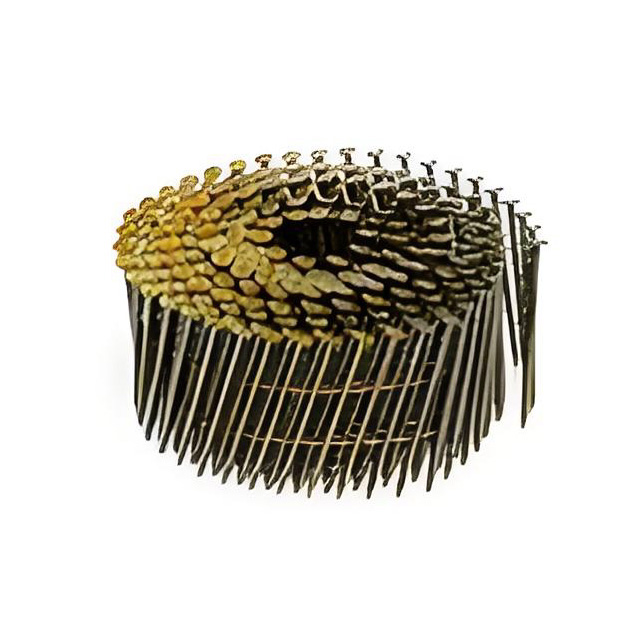
**Capacity vs. Agility:** Coil nails hold massive volume (up to 300) for continuous production; strip nails (20–40) offer lightweight maneuverability for precision and vertical framing.
**Compliance Reality:** Strip nail angles and head types (e.g., clipped vs. full round) directly impact seismic building code approvals.
**Maximum Holding Power:** Specialized variations, such as wire coil ring nails, provide superior withdrawal resistance for high-intensity, weather-exposed environments.
**TCO Driver:** The higher initial cost of coil setups is consistently offset by labor savings in high-volume commercial, roofing, and pallet-building applications.
Understanding the architecture of your fasteners helps you optimize workflow. Manufacturers design these two distinct systems to solve entirely different engineering problems. For instance, high-quality Wire Coil Ring Nails utilize specific angles, materials, and capacities to meet varying job demands.
Manufacturers collate strip nails in straight or angled lines. You will typically find them in 21-degree, 28-degree, or 30 to 34-degree configurations. This angled layout allows the nail gun magazine to bypass tight corners during framing.
Collation materials vary strictly by angle. Plastic collation dominates the 21-degree market. These strips often feature full round heads. Wire-weld and paper tape collations typically serve the 30 to 34-degree category. These steeper angles require clipped heads or D-heads so the nails can sit flush against one another.
Capacity remains the primary limitation here. A standard stick only holds 20 to 40 nails. This low volume forces operators into frequent reloading cycles. While lightweight, they demand constant interruption.
Coil nails sit tightly spooled in a circular configuration. This design maximizes storage density within the tool magazine. Manufacturers bond these nails using distinct methods. Wire-welded collation is the most common for heavy-duty framing and siding. Plastic-inserted collation serves well for specialized finishes where stray wire shards pose risks.
You must also distinguish between spool shapes. Flat-wound coils are the standard for larger, heavier nails. Conical-wound coils shape the nails into a cone. You will mostly see conical coils used for shorter nails under two inches. This cone shape feeds rapidly into compact roofing nailers.
The capacity advantage is massive. A typical spool houses 200 to 300 nails. This sheer volume is purposely designed to eliminate reloading downtime during continuous flatwork.
Feature | Strip Nails | Coil Nails |
|---|---|---|
Typical Capacity | 20 to 40 nails | 200 to 300 nails |
Common Angles | 21°, 28°, 30–34° | 15° (typical) |
Collation Material | Plastic, paper, wire-weld | Wire-weld, plastic band |
Primary Advantage | Lightweight agility | Uninterrupted production |
Selecting the right tool goes far beyond hardware preference. It dictates job site legality and structural safety. You must match the tool to the specific environment.
Coil systems dominate wide-open spaces. They rule high-volume applications where operators move rapidly across flat surfaces. Primary use cases include roofing installations, exterior siding, and large decking projects where Wire Coil Ring Nails provide the necessary efficiency. B2B pallet manufacturing relies almost exclusively on this continuous feed system.
However, you must note a critical limitation. Roofing nailers are highly specialized tools. They typically accommodate only shorter nail lengths, maxing out between 1.25 inches and 1.75 inches. You cannot use a roofing coil gun as a universal framing tool. Attempting to frame walls using short roofing nails severely violates structural integrity standards.
Strip territory focuses on agility. Primary use cases involve structural framing, installing joist hangers, and working in extremely tight indoor spaces. A lighter tool prevents arm strain when reaching between studs or ceiling joists.
Compliance Warning: You must understand how specific strip configurations affect building code approvals. The 30 to 34-degree clipped-head nails save space, but they frequently fail inspections in strict seismic zones. Inspectors in earthquake-prone regions demand maximum shear strength. Therefore, regional building codes often mandate 21-degree full-round head plastic collated nails. Always verify local municipal codes before ordering massive quantities of clipped-head fasteners.
Raw strength is non-negotiable for outdoor infrastructure. Fasteners must endure extreme weather, constant vibration, and seasonal wood expansion. True holding power relies on mechanical engineering rather than sheer size.
Ring shank designs drastically alter holding power mechanics. As the nail drives into the lumber, wood fibers forcibly separate. These fibers then compress tightly back into the rings along the nail shaft. This reaction acts exactly like a wedge. It physically locks the fastener in place, preventing the nail from pulling out over time.
Because of this wedging effect, Wire Coil Ring Nails serve as the absolute industry standard for high-intensity structural tasks. Outdoor applications face major risk factors. Wind uplift constantly threatens roofing shingles. Structural shifting easily loosens standard smooth shank nails. Deploying ring shank technology neutralizes these threats.
Mechanical grip alone cannot stop rust. You must deploy specific finishes for outdoor and heavy-duty use. Hot-Dipped Galvanized (HDG) coatings provide a thick zinc barrier. This barrier defends against rain, humidity, and coastal salt air.
Certain premium woods require specialized metals. Cedar and redwood naturally contain high levels of tannin acid. When standard steel contacts tannin acid in the presence of moisture, a harsh chemical reaction occurs. This causes ugly black staining around the nail head. You must use Stainless Steel fasteners to prevent this chemical reaction and preserve the wood's aesthetic value.
Best Practices for Fastener Durability:
Specify Hot-Dipped Galvanized finishes for general outdoor decking.
Upgrade to Stainless Steel when working directly alongside cedar or coastal saltwater.
Insist on ring shank profiles anywhere wind uplift poses a structural threat.
Smart procurement managers look beyond the initial price tag. The true cost of a fastener system emerges over months of daily operation. Evaluating Total Cost of Ownership (TCO) reveals surprising financial realities.
We frame the TCO model conceptually around time. Coil nailers and their dedicated fasteners carry a significantly higher upfront acquisition cost. Yet, they deliver a dramatically lower TCO in high-volume settings. They achieve this by slashing reload downtime. When an operator avoids reloading 15 times an hour, daily productivity skyrockets.
Conversely, strip configurations present a lower financial barrier to entry. They remain the most logical choice for lower-volume operations, occasional contractors, or weekend DIYers. The cost savings of rapid continuous firing do not materialize on small, sporadic projects.
Storage efficiency matters greatly at a commercial scale. Bulk shipments of Wire Coil Ring Nails offer remarkably tight packaging density. A single pallet holds thousands more fasteners compared to bulky strip nail boxes. This tight density reduces overall shipping volume. It shrinks warehouse storage footprints. For large-scale B2B procurement and global export, optimizing pallet space translates directly into reduced freight costs.
Physical exhaustion represents a hidden financial drain. A fully loaded coil nailer is significantly heavier than its strip counterpart. This weight is manageable when aiming downward on a flat roof.
However, vertical framing and overhead tasks alter the equation. The labor efficiency gained from high capacity is quickly negated by extreme worker fatigue. Tiring workers slow down and make mistakes. For prolonged overhead agility, lightweight strip nailers remain the superior financial choice.
Calculate Hourly Labor: Track time spent reloading small magazines versus continuous firing.
Assess Freight Costs: Compare pallet density between boxed strips and dense coil spools.
Monitor Ergonomics: Evaluate crew fatigue levels on vertical tasks to avoid costly injury or slowdowns.
Even the best tools fail when utilized improperly. Understanding common implementation risks prevents catastrophic equipment failure and protects worker safety.
Tool jams destroy project timelines. You must never cross collation types. Feeding a flat-wound coil into a conical-only nailer guarantees a catastrophic jam. Furthermore, mismatching wire-weld placement spacing shreds the magazine feed mechanism. Always verify exact angle and collation compatibility printed on the tool housing.
We must also address the common "paper strip moisture" myth. Many contractors falsely believe all paper-collated nails disintegrate in humid environments. In reality, manufacturers treat premium paper strips with heavy-duty waterproof adhesives to resist moisture. They handle standard job site humidity perfectly. However, prolonged submersion in water puddles will still cause adhesive failure and subsequent loading jams.
Avoid the dangerous "one tool fits all" fallacy. Matching tool power to material thickness is paramount. Using a heavy-duty pneumatic framing nailer for thin cedar fencing often results in massive overkill. The high-velocity driver blade will completely blow through the delicate wood, ruining the fence.
Similarly, underpowering is hazardous. Pushing a compact roofing coil gun beyond its designated length limits invites disaster. Forcing undersized tools into thick engineered lumber risks severe injury from high-speed fastener ricochets. Always size the gun precisely to the fastener gauge and length.
Common Mistakes to Avoid:
Storing paper tape nails directly on wet concrete flooring overnight.
Ignoring manufacturer guidelines regarding conical versus flat coil compatibility.
Using short 1.5-inch fasteners in tools calibrated only for 2-inch minimums.
Choosing the correct fastening system dictates the speed, safety, and profitability of your operations. Our decision matrix provides rapid shortlisting logic. We highly recommend coil configurations for uninterrupted, high-capacity flatwork and outdoor manufacturing. They simply dominate in roofing, decking, and pallet assembly. Alternatively, we recommend strip configurations for complex structural framing, overhead agility, and compliance in code-strict seismic zones.
Take actionable steps before your next bulk hardware order. First, audit your local building codes regarding full-round versus clipped head requirements. Second, rigorously assess your crew's ratio of flat-work to overhead framing. By aligning your procurement strategy with actual job site realities, you will maximize worker output and protect your bottom line.
A: No. Roofing nailers are purposely built for short fasteners. They max out around 1.75 inches in length. Structural wall framing strictly requires much longer fasteners, typically ranging between 2 inches and 3.5 inches, to safely anchor load-bearing timber.
A: Many strip nails feature a clipped-head (D-head) design to fit more nails into the magazine. However, seismic building codes demand maximum shear strength to withstand earthquakes. Inspectors often mandate full-round head nails, which provide greater holding power under extreme structural stress.
A: They utilize a specialized ring shank design. As they penetrate wood, fibers lock tightly into the rings. This creates an intense wedge effect that stops the nail from backing out due to wind uplift or wood expansion. The coil format also eliminates constant reloading on large decks.
A: High-quality modern paper strips use advanced waterproof adhesives. They easily withstand typical job site humidity and light dampness. However, extreme exposure, dropping them in puddles, or buying cheap generic alternatives can still dissolve the glue and cause severe loading jams.


