
Views: 0 Author: Site Editor Publish Time: 2026-05-08 Origin: Site


We all know the frustration. Your crew is working at top speed. Suddenly, a pneumatic nailer jams. Production stops entirely. You spend valuable minutes clearing misfires while project downtime mounts. Look closely around any modern job site. You will spot copper wire residue scattered on the ground. This wire is the hallmark of high-volume, collated nail usage.
Today, industrial construction demands incredible speed. Traditional manual hammering yields maybe two or three driven nails per minute. By contrast, pneumatic coil nailing delivers up to 60 actuations per minute. This shift transforms job site efficiency. However, raw speed means nothing without long-term reliability.
Selecting the right collated fastener is absolutely critical. Upgrading to Wire Coil Ring Nails for high-stress joints makes a massive difference. You minimize expensive warranty callbacks. You eliminate dreaded squeaky floors. Ultimately, you maximize the return on investment for your expensive fastening equipment. Here is what you need to know before buying your next bulk order.
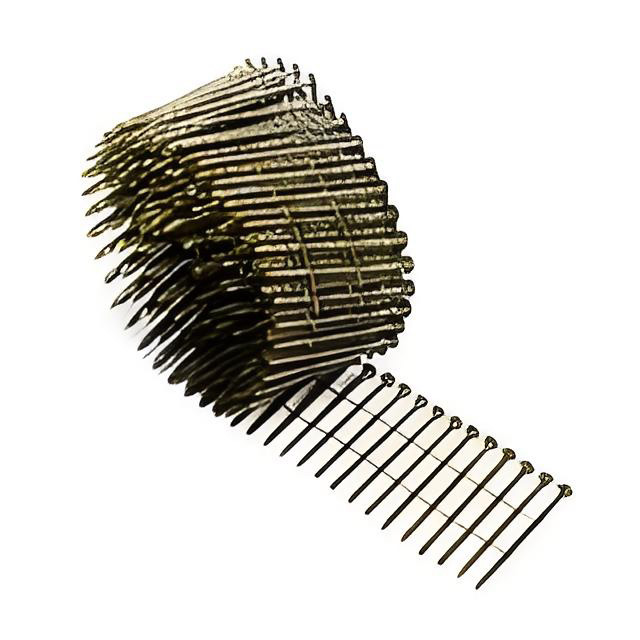
Application Scope: Essential for high-volume, repetitive tasks like pallet manufacturing, roofing, framing, and subflooring.
Efficiency Gains: Standard coils hold 300–400 nails (depending on wire gauge), drastically reducing reload frequencies compared to stick nails.
Holding Power: Wire coil ring nails provide maximum pull-out resistance, essential for high-vibration applications and heavy-duty structural integrity.
Compatibility Risks: Mismatching coil wound shapes (Flat vs. Conical) with pneumatic gun specifications is the leading cause of equipment jamming.
Sizing Formula: Optimal fastener length should be exactly three times the thickness of the material being secured.
Labor costs dominate modern construction and manufacturing. Shifting from manual fastening to pneumatic coil nailers drastically scales your production velocity. A skilled operator easily achieves 60 actuations per minute. This speed reduces framing and assembly time by hours.
Magazine capacity math further proves this efficiency. Standard reload cycles vary based on wire thickness. A 2.1mm wire gauge yields roughly 400 nails per coil. Stepping up to a 2.3mm gauge reduces this capacity to 300 nails per coil. Both options easily outperform traditional stick nails. Fewer reloads mean less operator fatigue and higher sustained output across an eight-hour shift.
Total Cost of Ownership (TCO) extends beyond the initial purchase price. Warranty callbacks destroy profit margins. Joint failures, squeaky subflooring, and pallets dismantling during transit are common symptoms of poor fastener selection.
Utilizing specific profiles eliminates these long-term failures. Wire Coil Ring Nails feature specialized shanks. Wood fibers expand and lock into these rings after driving. This creates a permanent, wedge-like grip. It virtually guarantees your subfloors remain silent and your shipping crates arrive intact.
Accurate procurement forecasting requires baseline job site data. Guessing order volumes leads to budget overruns or work stoppages. Consider roofing installations. An average architectural shingle requires four to five nails. This translates strictly to 320 to 480 nails per 100 square feet.
Standard bulk boxes should contain between 3,600 and 7,200 nails. Use these standardized metrics. They help your purchasing department calculate exact box quantities per project. This accuracy prevents costly delays while waiting for fastener restocks.
Export logistics subject packaging to severe vibration. Drop shocks and forklift handling demand ultimate fastener retention. High-performance Wire Coil Ring Nails made from Q235 steel are mandatory for dense hardwoods. They provide the necessary tensile strength to prevent bending during driving while creating a permanent grip that withstands the rigors of global shipping.
Roofing contractors fight high wind-uplift forces daily. Shingles must survive decades of thermal expansion and contraction. This application demands strict adherence to galvanized finishes. Thick zinc coatings withstand harsh weather cycles. They stop rust from deteriorating the fastener head and causing roof leaks.
Carpenters rely on high-capacity magazines to rapidly secure floor joists and underlayment. The priority here is tight, squeak-free connections. As wood dries over time, it shrinks. Smooth shank nails loosen, causing the floorboards to rub against the metal. Using high-quality Wire Coil Ring Nails prevents this upward creeping, securing the joint permanently and ensuring a high-standard finish.
Fences and siding panels face constant environmental exposure. Contractors must focus on exterior-grade collation and premium finishes. Hot-dipped galvanized or stainless steel options prevent ugly rust bleed-through. Rust streaks ruin the aesthetic appeal of expensive siding. Proper material selection ensures structural panels remain visually pristine and structurally intact.
The nail shank dictates the holding power of your connection. Buyers must match the profile to the material density and vibration risk.
Smooth Shanks: Ideal for fast, soft-material driving. They offer less friction but maximize installation speed.
Screw Shanks: Perfect for roofing and decking. They twist slightly as they penetrate, grabbing the fibers.
Ring Shanks: The definitive choice for maximum friction and pull-out resistance in subfloors and pallets.
Nail steel comes in different carbon grades. Evaluating your wood hardness determines your choice. Q195 offers higher ductility. It bends slightly without snapping, making it the best choice for preventing softwood splitting. Q235 features higher carbon content. It provides the high tensile strength necessary for deep hardwood penetration without buckling under the hammer impact.
The head controls the pull-through resistance. The point controls how the wood fibers separate. Understanding these geometries prevents material damage.
Component | Style | Primary Benefit & Use Case |
|---|---|---|
Nail Heads | Flat (Standard) | Provides broad bearing surface to hold materials securely. |
Checkered | Anti-slip surface for flush driving. Reduces hammer or driver slippage. | |
Nail Points | Diamond | Universal point. Sharp and easy to drive into most common lumber. |
Blunt | Punches through rather than parting fibers. Prevents splitting in brittle wood. | |
Chisel | Designed to shear through extremely hard materials and dense grains. |
Lifespan heavily depends on corrosion resistance. Electro-galvanized (EG) nails offer basic indoor protection. Hot-Dipped Galvanized (HDG) nails provide a thick zinc shell for harsh exterior environments. Stainless Steel remains the ultimate choice for coastal, high-salt areas.
You should also look for color-coated or painted finishes. These polymer coatings melt slightly from friction during rapid firing. They act as a vital lubricant for the gun mechanism, extending tool life.
Never guess fastener lengths. Follow the standard industry buyer's formula. Ensure the selected nail length is exactly three times the thickness of the top material being fastened. This provides the necessary two-thirds anchor embedment.
Top Material Thickness | Calculation (Thickness x 3) | Recommended Fastener Length |
|---|---|---|
1/2 inch (Underlayment) | 1/2" x 3 | 1.5 inches |
3/4 inch (Thick Subfloor) | 3/4" x 3 | 2.25 inches |
1 inch (Heavy Decking) | 1" x 3 | 3.0 inches |
Purchasing mistakes cause massive job site delays. The most common error involves coil winding profiles. Many buyers think "Flat" and "Conical" (sometimes called domed) refer to the shape of the nail head itself. This is entirely incorrect.
These terms describe the structural winding of the copper or welding wire assembly. Flat coils form a perfect, level cylinder. Conical coils rise toward the center, resembling a shallow cone. You must understand this distinction before placing an order.
Nail guns are engineered for specific coil shapes. Detail the operational risks of loading conical wire coil nails into a flat-magazine pneumatic nailer. It rarely ends well. Misaligned collation wires cause the nail to enter the firing chamber at a slight angle. This leads to immediate, severe jamming.
Worse, forcing incorrect coils damages the internal feed pawls. The gun will fail to index the next nail properly. You will face severe downtime and expensive tool repair bills. Always verify the magazine specifications printed on your tool before purchasing bulk fasteners.
The quality of the collating wire itself matters deeply. Cheap wire snaps prematurely inside the drum from normal job site vibration. When the wire breaks before reaching the firing chamber, the entire coil unwinds inside the magazine. A tangled mess results. Premium manufacturers use precise welding techniques to secure the copper wire to each shank, ensuring seamless feeding.
Sourcing reliable fasteners requires evaluating the supplier's manufacturing line. Demand complete process transparency. A premium factory sequence looks like this: wire drawing, stamping, surface treatment, collation, and final inspection.
Skipping any of these steps results in weak products. Ask your vendor if they manage wire drawing in-house. In-house drawing guarantees strict control over the base material's tensile strength.
Collation quality defines operational efficiency. Ask your vendor about their step-by-step quality control. Uniform spacing between each nail is non-negotiable. If spacing varies even by a millimeter, the pneumatic feed claw will eventually misfire.
Wire weld strength represents another critical metric. The copper must hold the nails firmly during transport but shear off cleanly the millisecond the driver blade strikes. Too weak, the coil collapses in the box. Too strong, the gun jams. Proper QA ensures this perfect balance.
Bulk orders require absolute consistency. You might order a pallet of three million nails. The first and last box must be identical. Ensure your supplier maintains strict tolerances for wire gauges and head diameters. Oversized heads stick in the nosepiece. Undersized heads slip past the driver blade. Strict testing compliance ultimately protects your expensive pneumatic tool warranties.
Selecting the ideal collated fastener demands a methodical approach. You must balance the wood hardness against material grades like Q195 and Q235. You must anticipate environmental exposure to specify the correct level of galvanization. Finally, you must evaluate the specific holding requirements of the joint.
For demanding, high-vibration applications, defaulting to wire coil ring nails remains the safest strategy for long-term durability. They virtually eliminate pull-out failures. They protect your reputation and your profit margins from warranty callbacks.
Take actionable steps today. First, audit your current pneumatic tool specifications to determine if your magazines accept flat or conical winds. Next, review the accepted length parameters of your guns. Finally, calculate your true bulk purchase volumes based on the 3X sizing rule and standard box yields. Armed with this data, you can source fasteners that drive both efficiency and uncompromising quality.
A: It is the collation material. The wire holds the nails in a coiled sequence, allowing them to feed continuously into a pneumatic nail gun's firing chamber.
A: Usually between 300 and 400, strictly depending on the wire thickness (e.g., 2.1mm yields ~400; 2.3mm yields ~300).
A: Q195 offers more flexibility, making it ideal for softwoods without splitting them. Q235 is carbon-rich, offering the high yield strength necessary to penetrate dense hardwoods without bending.
A: Whenever pull-out resistance is the primary success metric. Ring shanks act like wedges, locking into wood fibers, making them mandatory for pallets, crates, and subflooring where vibration or movement is expected.


