
Views: 0 Author: Site Editor Publish Time: 2026-06-10 Origin: Site


Framing a house demands speed, precision, and highly reliable tools. Unfortunately, frequent nailer jams, tedious job site cleanup, and weather-related misfires directly impact framing efficiency and labor costs. You want a smooth operation, not a frustrating halt every few hours. The choice between paper strip and plastic strip collation goes far beyond the fastener itself. It heavily dictates your tool compatibility, overall site safety, and seasonal framing performance. If you choose the wrong collation type for your environment, you risk significant downtime. This guide provides a transparent, evidence-based comparison of Paper Tape Framing Nails versus plastic collated nails. We will explore tool angles, magazine capacity, and weather resilience to help contractors make an informed tooling investment. Understanding these key differences ensures your crew stays productive, safe, and efficient year-round. Choosing the optimal fastener system dramatically reduces daily frustrations.
Tool Compatibility: Paper tape framing nails are universally designed for 30° to 34° nailers, whereas plastic strip nails are built for 20° to 22° nailers. They are not interchangeable.
Jobsite Cleanliness & Safety: Paper tape drives directly into the wood without dangerous shrapnel; plastic strips shatter, creating flying debris and job site litter.
Weather Resilience: Plastic strips perform exceptionally well in wet conditions but become brittle and snap in freezing temperatures. Modern paper tape is resin-treated for moisture resistance but can still swell if left submerged.
Efficiency: Paper collated strips hold more nails per strip (typically 30-40+) compared to plastic (usually 20-25), resulting in fewer reloads for the operator.
The core distinction between fastener types lies in their physical arrangement. Collation methods directly dictate the structural angle of your framing gun. You cannot mix these systems. Selecting a specific nail type legally binds you to its corresponding tool architecture. Understanding this physical constraint helps prevent costly purchasing mistakes.
Nail gun angles refer to the slant of the magazine, not the trajectory of the driven nail. Every fastener drives straight into the lumber. The magazine simply tilts out of the way.
Plastic Strip Configurations: These fasteners require 20° to 22° framing nailers. Manufacturers space them further apart. They typically feature traditional full round heads centered perfectly over the shank.
Paper Tape Configurations: These strips demand 30° to 34° framing nailers. Historically, manufacturers utilized clipped heads to nest the shanks close together. Today, offset full round heads dominate the market. They push the round head slightly to one side. This smart engineering allows tight nesting while remaining fully code-compliant.
Magazine angles dramatically influence daily job site mobility. A steeper angle offers superior clearance. Paper Tape Framing Nails require a 30°+ magazine, which angles sharply away from the work surface. You gain exceptional access in notoriously tight framing scenarios.
Consider the common task of nailing solid blocking between 16-inch on-center studs. A steep 30° tool effortlessly slides into the stud bay. You can position the nose precisely where needed. Conversely, bulky 21° plastic nailers struggle here. Their shallower magazine juts out horizontally. You often find yourself driving nails at awkward, compromised angles because the tool body hits the adjacent stud.
Purchasing decisions extend far beyond a single box of fasteners. Investing in a specific collation type means committing heavily to a proprietary tool ecosystem. Major brands build robust pneumatic and cordless platforms around these exact angles.
Evaluate your primary power source preference (pneumatic versus cordless).
Identify which brands offer the best ergonomic balance for your preferred angle.
Standardize your entire crew on one specific angle to avoid job site confusion.
Ensure your local suppliers consistently stock the exact angle you select.
If you purchase a 30° framing nailer, you must exclusively buy paper tape fasteners. Standardizing your site eliminates the frustration of crews grabbing incompatible strips from the tool trailer.
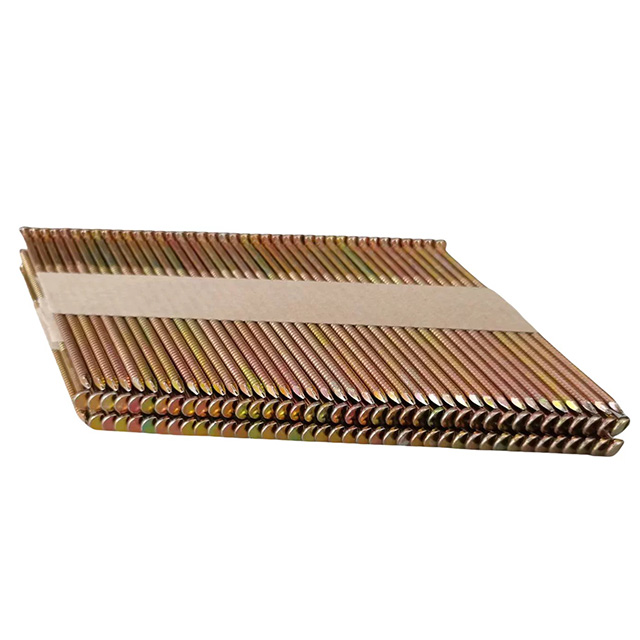
The physical act of driving a nail subjects the collation material to immense force. How that material reacts to violent impact separates paper from plastic. The resulting debris profile directly influences worker safety and site cleanliness.
Plastic collation relies on a rigid synthetic matrix holding the shanks together. When the heavy steel striker hits the nail head, this plastic violently shatters. The impact forcefully ejects micro-plastics across the immediate work area. Over a standard work week, thousands of plastic shards accumulate on the subfloor. Someone must sweep up this inevitable mess before the next trade arrives.
Shattering plastic creates a predictable and dangerous physical hazard. Sharp fragments frequently fly back toward the operator. These high-velocity pieces easily bounce off framing lumber and strike the face. High-impact safety glasses become an absolute necessity. Even adjacent workers face exposure to these flying plastic shards. Eliminating this hazard drastically improves general site safety.
Framers widely loathe a phenomenon known as "flagging." Flagging occurs when jagged pieces of the shattered plastic strip get trapped directly under the driven nail head. The plastic protrudes visibly from the lumber.
This creates two immediate problems. First, sharp plastic flags prevent flush seating for exterior sheathing or interior drywall. Second, rigorous local inspectors often flag these protrusions during framing checks. You must manually pick them out or smash them flat with a framing hammer. This tedious manual intervention wastes valuable production time.
High-quality Paper Tape Framing Nails solve these hazards through superior mechanical design. Upon impact, the heavy paper shears cleanly. The driver blade pushes the paper seamlessly into the wood right alongside the metal shank.
The results speak for themselves. You completely eliminate flying shrapnel. Job site litter drops to zero. Flagging becomes a relic of the past. Your crew stays significantly safer, and the workspace remains pristine throughout the rough framing phase.
Safety and Cleanliness Comparison | ||
Feature | Plastic Strip Collation | Paper Tape Collation |
|---|---|---|
Debris Generation | High (shatters on impact) | None (drives into wood) |
Eye Safety Hazard | High (flying plastic shards) | Low (no flying collation debris) |
Flagging Risk | Frequent | Eliminated |
Cleanup Labor Required | Significant sweeping needed | Zero cleanup required |
Framers rarely enjoy perfect weather. Extreme temperatures and varying moisture levels heavily stress fastening systems. Selecting a collation type based on your local climate prevents catastrophic tool failures.
Winter climates brutally expose the flaws of plastic collation. When temperatures plunge below freezing, the synthetic plastic strips lose their elasticity. They become highly brittle. Simply dropping a strip onto a frozen subfloor causes it to snap into small sections.
Loading these tiny, three-nail fragments into your magazine invites disaster. The internal pusher struggles to advance broken strips smoothly. This leads to premature snapping inside the magazine, frequent dry fires, and severe drive channel jams. You lose considerable time clearing the tool with pliers.
Historically, builders harbored deep skepticism regarding paper tape in rainy environments. First-generation uncoated paper dissolved rapidly upon exposure to moisture. It turned into a mushy paste inside the tool. This caused catastrophic magazine jams requiring complete tool disassembly.
Tool and fastener manufacturers aggressively solved this historic weakness. Today, premium Paper Tape Framing Nails feature a heavy, specialized resin and glue coating. This advanced polymer treatment seals the paper fibers effectively.
You still cannot leave them sitting overnight in standing water. However, they now easily withstand high ambient humidity, morning dew, and light rain showers without degrading. The structural integrity of the strip remains intact long enough to empty the magazine.
We advise adhering to a simple regional selection logic. Builders operating in extreme northern climates should lean heavily toward paper. Avoiding brittle plastic in January saves immense frustration. Conversely, builders working in consistently torrential, wet environments might prefer plastic. If your site lacks dry tool boxes or covered staging areas, plastic provides absolute immunity to water saturation.
Weather Condition | Plastic Strip | Paper Tape (Resin Coated) |
|---|---|---|
Sub-Zero Cold | Fails (Snaps and Jams) | Excellent (Remains Flexible) |
Light Rain / High Humidity | Excellent | Very Good |
Standing Water / Submerged | Excellent | Fails (Swells and Degrades) |
Time spent reloading a nailer represents pure downtime. Efficient framers optimize every movement. The spacing differences between collation methods drastically affect overall magazine capacity and daily labor output.
The physical geometry of the collation dictates capacity. Paper Tape Framing Nails sit completely flush against one another. The steep 30° angle allows the shanks to touch. By utilizing clipped or modern offset round heads, manufacturers nest them incredibly tightly. A single paper strip typically packs between 30 and 44 nails.
Plastic collation inherently requires distinct physical gaps. The plastic matrix itself occupies valuable real estate between each shank. Because these nails feature traditional, centered full round heads, they cannot overlap. This unavoidable spacing limits a standard plastic strip to roughly 20 to 25 nails.
Let us calculate the tangible operational outcome. Imagine a framer driving 1,000 nails during a shift.
Using 20-count plastic strips requires 50 separate reload actions.
Using 40-count paper strips requires only 25 reload actions.
Using paper tape literally cuts your reload frequency in half. Framers stay on the ladder or top plate much longer. They maintain their physical rhythm. They spend significantly less time reaching blindly into their pouches or pulling back the heavy magazine follower. Over an entire residential build, this reduced reload frequency translates to hours of reclaimed production time.
Selecting the optimal system requires auditing your current setup, understanding local regulations, and calculating hidden operational burdens. Follow these practical steps to secure the right platform for your crew.
Always audit the tools your crew currently owns before buying fasteners. If your gang runs an entire fleet of 21° pneumatic guns, you must purchase plastic strips. Trying to force a transition without replacing the guns will fail.
However, if you are actively migrating to modern cordless platforms, you have a blank slate. Evaluate the sheer weight and ergonomic balance of competing models. Pick up a 30° paper model and a 21° plastic model. Most framers find the 30° tool feels better balanced and easier to wield between tight studs.
Structural integrity guidelines change depending on your region. You must consult your local municipal inspector regarding acceptable nail head profiles.
Standard Jurisdictions: Offset round head paper tape nails pass almost all modern IBC/IRC codes seamlessly. They provide excellent pull-through resistance.
High-Wind & Seismic Zones: Strict coastal or earthquake-prone municipalities occasionally enforce rigid mandates. Some specifically require traditional, perfectly centered full round head nails. Plastic strips natively handle these specific fastener requirements without question. Always verify code compliance before framing the first wall.
Look past the simple sticker price of a fastener box. Smart builders evaluate hidden operational burdens. Paper tape systematically lowers indirect framing hurdles. You spend absolutely zero time cleaning up shattered synthetic debris. You suffer far fewer cold-weather tool jams in February. You cut your daily reload frequency by up to forty percent. These combined operational advantages heavily influence long-term site efficiency.
Conversely, if your site constantly deals with torrential rain and lacks dry staging boxes, plastic eliminates moisture-induced downtime entirely. Weigh these environmental factors carefully.
Both collation methods deliver undeniable structural integrity when driven correctly. However, understanding their mechanical differences prevents daily site frustrations. The choice largely hinges on your climate, access needs, and willingness to manage job site waste.
The Verdict: Paper tape framing nails generally emerge as the superior choice for high-volume crews. They prioritize safety, site cleanliness, reload efficiency, and cold-weather reliability far better than plastic alternatives.
Audit Your Gear: Check your current nailer inventory today. Confirm exactly which angle your tools require before purchasing bulk fasteners.
Verify Local Codes: Speak with your local inspector regarding head types. Ensure offset round heads meet your regional wind or seismic requirements.
Test The Elements: Purchase a single box of modern, resin-coated paper nails. Trial them in your specific climate to personally verify their upgraded moisture resistance.
A: No. The collation angles (30-34° for paper, 20-22° for plastic) and magazine feed mechanisms are completely incompatible.
A: Yes, provided you use offset full round head paper tape nails. Clipped head nails may face restrictions in specific seismic or high-wind jurisdictions. Always verify with local inspectors.
A: Keep them in their original wax-lined boxes, store them off the ground in a dry truck bed or job box, and avoid leaving loose strips exposed to overnight dew.
A: Under normal conditions, paper tape generally jams less because there are no plastic fragments to clog the driver blade channel, assuming the paper hasn't been compromised by severe water exposure.


