
Views: 0 Author: Site Editor Publish Time: 2026-06-15 Origin: Site


Fastener failure introduces a disproportionate risk to any building envelope. Using the wrong nail compromises an entire roofing system instantly. It leads directly to severe water ingress, sudden wind blow-offs, and highly disruptive contractor callbacks. Standard flat-head fasteners constantly struggle to seal irregular profiles effectively. We must rely on an engineered alternative. The Umbrella Roofing Nail serves as a highly specialized fastener. Manufacturers design it specifically to solve pressure distribution and critical weatherproofing challenges for corrugated roofing materials. This comprehensive guide provides buyers, contractors, and procurement teams with a strict evaluation framework. You will learn how to properly select, specify, and install these crucial components. We will show you exactly how to guarantee maximum structural integrity and prevent costly premature roof failures.
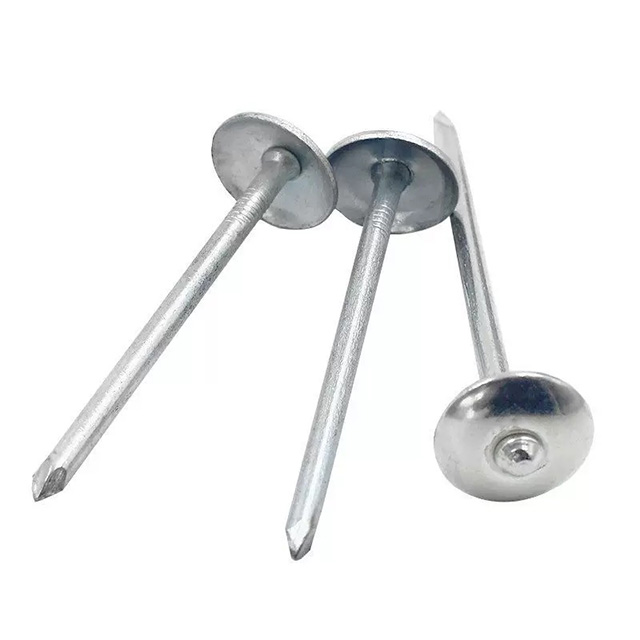
Umbrella roofing nails are specifically engineered with a wide, domed head to distribute downward pressure and protect integrated rubber/EVA washers from UV degradation.
Twisted or ring shank profiles offer up to double the pull-out resistance of smooth shanks, crucial for high-wind-load environments.
Selecting the correct corrosion resistance (e.g., hot-dipped galvanized vs. electro-galvanized) must be dictated by regional climate data and roofing material lifespan.
Proper installation depth is a narrow margin: over-driving compromises the seal, while under-driving leaves the roof vulnerable to uplift.
Roofing systems overwhelmingly fail at their penetration points. Every hole punched through a metal or plastic sheet creates an immediate vulnerability. Flat-head nails easily crush fragile corrugated peaks. They frequently tear straight through thin plastic panels. They routinely fail to seal the resulting puncture effectively. Moisture inevitably finds these hidden weaknesses. Wind uplift forces exploit them rapidly.
The unique dome of this fastener acts as a vital protective shield. It physically deflects water away from the vulnerable entry hole. The rigid steel cap completely encapsulates the delicate sealing washer beneath it. It prevents the rubber from cracking under harsh, direct sun exposure. Ultraviolet degradation destroys exposed rubber extremely quickly. The umbrella head stops this destructive process entirely.
Surface area dictates the success of clamping force. The wide umbrella head spreads this heavy downward pressure evenly. It fiercely protects brittle materials like fiberglass or thin-gauge steel. Localized stress fractures occur rapidly when installation pressure concentrates too heavily. This smart dome design eliminates those destructive pinch points. It ensures the panel remains intact while securing it firmly to the underlying purlin.
Thermal expansion presents another serious physical challenge. Metal panels expand during hot afternoons. They contract violently during freezing nights. This constant movement strains the penetration points. The domed cap accommodates slight structural shifting. It maintains constant pressure on the washer without tearing the surrounding panel material. You avoid micro-tearing completely.
Buyers require a strict decision matrix for building materials. You must evaluate different specification variants carefully. Choosing the correct fastener prevents catastrophic structural failures. This evaluation framework simplifies the selection process for any project.
The shank design directly controls the grip strength. You must match the shank profile to your local environmental loads.
Lower cost makes smooth shank nails broadly appealing. Installers drive them into wood purlins much faster. You should strictly reserve them for temporary structures. They also suit low-wind, non-critical indoor applications well. They offer minimal resistance to natural wood expansion.
Twisted or spiral shank designs create a secure physical locking mechanism. The sharp metal spirals grip the surrounding wood fibers tightly. High-uplift wind zones absolutely mandate this specific profile. Permanent installations facing severe thermal expansion require them constantly. The twisted shank significantly reduces backing out over decades of use.
Common Mistake: Using smooth shanks on large metal shed roofs. The constant vibration from wind causes smooth nails to pop up within months.
Galvanization defines the absolute baseline requirement for exterior use. You must select a coating thickness that outlasts the roofing panel itself.
Electro-galvanized (EG) options feature a remarkably thinner zinc coating. They offer a noticeably shorter overall lifespan. Mild, dry climates tolerate EG fasteners reasonably well. They fail rapidly in damp or salty conditions.
Hot-Dipped Galvanized (HDG) nails provide a thick, robust zinc layer. Coastal regions make HDG fasteners entirely essential. Heavily industrial environments demand them due to airborne pollutants. The molten zinc bath creates a strong metallurgical bond with the steel.
Corrosion Resistance Comparison Chart | |||
Coating Type | Zinc Thickness | Ideal Climate | Expected Lifespan |
|---|---|---|---|
Electro-Galvanized (EG) | Low (Thin layer) | Arid, Low Humidity | Short to Medium |
Hot-Dipped Galvanized (HDG) | High (Thick layer) | Coastal, Humid | Long-Term |
Stainless Steel | N/A (Alloy) | Extreme, Corrosive | Maximum Lifetime |
Correct sizing guarantees structural code compliance. Standard fastener gauges typically range from 8G to 13G. Fastener lengths vary dramatically between 1.5 inches and 4 inches.
Follow these numbered steps for sizing validation:
Measure the precise height of the corrugated panel crest.
Calculate the thickness of any underlying insulation layers.
Add a strict minimum of 3/4 inch for wood embedment.
Select the next standard nail length that exceeds your total calculation.
The fastener must penetrate the roof decking deeply. It requires at least 3/4 inch of solid embedment into the wood. This depth achieves full structural compliance. Shallower penetration risks immediate failure during mild storms.
Matching the fastener to the substrate prevents installation disasters. Certain profiles demand specific hold-down methods. Knowing when to avoid an Umbrella Roofing Nail proves equally important.
Corrugated metal sheets represent the optimal use case. Polycarbonate greenhouse panels also benefit immensely. The unique dome shape perfectly matches the raised corrugated profile. It seals effectively directly on the exposed crests of the panels. It prevents inevitable crest crushing during heavy hammer strikes.
A severe industry misconception exists regarding residential roofs. Many assume these domed nails work perfectly for asphalt shingles. Standard asphalt shingles actually require flat, wide-head fasteners. Prominent IKO and Atlas installation standards dictate this specifically. They strictly prohibit domed or umbrella nails for flat shingles. Contractors must view this as a critical risk-avoidance tip. Using a domed head on a flat shingle cuts directly into the overlapping shingle above it. It severely compromises the entire waterproofing matrix.
Agricultural buildings present unique chemical challenges. Aggressive environments demand extremely careful planning. Ammonia from livestock attacks standard metal violently. Chemical fumes erode typical zinc coatings quickly. You must pair the fastener with specific high-grade coatings. Stainless steel variants survive these harsh conditions perfectly. Standard electro-galvanized options rust away completely within months inside a crowded poultry house.
Poor execution routinely voids expensive material warranties. We must address the daily installation realities. Proper technique ensures the engineered components function as designed.
Installation depth operates on a very narrow margin. Installers must hit the perfect compression point every single time.
Over-driving destroys the assembly instantly. It crushes the vital sealing washer completely flat. It forcefully inverses the protective metal umbrella dome. This heavy strike creates a permanent pooling crater for standing water. The damaged washer will inevitably leak.
Under-driving leaves the system vulnerable. It fails to compress the rubber washer properly. It leaves a visible open gap for wind-driven rain. It risks severe nail pop over time as the loose panel vibrates. Uplift forces will easily rip the uncompressed sheet off the purlin.
The perfect drive requires precise visual confirmation. The washer feels firmly snug against the panel. It looks visibly compressed. It absolutely does not bulge outward beyond the metal umbrella head. The panel shape remains entirely undistorted.
Industry standards dictate penetration placement precisely. You must apply them to corrugated sheets correctly. Always fasten directly through the elevated ribs or crests. Never place them down in the lower valleys. Water flows heavily and constantly through those lower valleys. Penetrating a water channel guarantees a rapid leak.
Alignment matters significantly for long-term success. Ensure the fastener enters the purlin perfectly straight. It requires a strict 90-degree angle relative to the roof deck. Crooked drives compromise the rubber seal instantly. A tilted head leaves one side of the washer completely uncompressed. It creates a tiny funnel for rainwater to enter the building envelope.
Best Practice: Use a specialized seating tool or a carefully calibrated hammer swing. Train new crew members on scrap material to master the exact compression feel.
Commercial contractors need highly reliable bulk suppliers. Securing consistent materials prevents project delays. Buyers must look for very specific quality indicators during vendor evaluation.
Batch consistency remains a non-negotiable requirement. Consistent head concentricity prevents major headaches. Shank sharpness matters heavily for installation speed. Poor manufacturing consistency causes job-site jams constantly. Dull points split the wooden purlins. Off-center heads fail to compress washers evenly. These minor defects slow installation times down severely.
Evaluate the pre-assembled washer material closely. EPDM (Ethylene Propylene Diene Monomer) provides excellent thermal stability. It resists massive temperature swings effectively. Standard cheap rubber dries out and cracks quickly. PVC washers harden terribly under extreme winter temperature shifts. Demand true EPDM for any permanent structural application.
Demand verifiable specification sheets before purchasing. These critical documents must detail zinc coating thickness accurately. They must prove tensile strength clearly. Building code compliance relies entirely on these exact numbers. A reputable vendor provides third-party testing documentation immediately upon request. Avoid suppliers who hide their manufacturing tolerances. If the spec sheet lacks a galvanization micron count, find a different supplier.
An umbrella roofing nail functions as a highly engineered, critical component, never a simple commodity.
You must match the lifespan of your chosen fastener directly to the lifespan of your roofing panel.
Never pair a premium 30-year steel panel with a cheap, 5-year electro-galvanized nail.
Always respect the narrow installation margin; ensure your crew understands the exact compression required for a watertight seal.
Next Step: Audit your current fastener specifications today. Request detailed technical data sheets from your supplier, and test material samples on-site before your next major installation.
A: They do not always include washers. Manufacturers highly recommend washers for exterior weatherproofing. You can purchase them without washers for specific interior or specialized agricultural applications where weather sealing is unnecessary.
A: Umbrella nails feature a wide, domed head specifically designed to fit corrugated profiles and protect a sealing washer. Standard roofing nails utilize a flat, wide head strictly meant to sit flush against flat asphalt shingles.
A: You generally need about 80 to 100 fasteners per roofing square (100 square feet) for standard corrugated panels. This formula changes based on local wind zone variations and specific purlin spacing guidelines.
A: Most traditional variants require hand-driving. The wide, domed head and pre-assembled washer make standard coil collation difficult. However, some manufacturers produce specialized collated versions for very specific pneumatic systems.


