
Views: 0 Author: Site Editor Publish Time: 2026-06-05 Origin: Site


Labor costs routinely dictate the profitability of construction operations. Teardown phases often consume disproportionate resources compared to initial assembly times. Dismantling temporary structures like scaffolding and concrete forming frequently drains project profit margins. Site supervisors face immense pressure to accelerate these teardown processes without sacrificing site safety. Procurement managers constantly analyze these specific friction points. Every minute saved during teardown translates directly into improved schedule adherence.
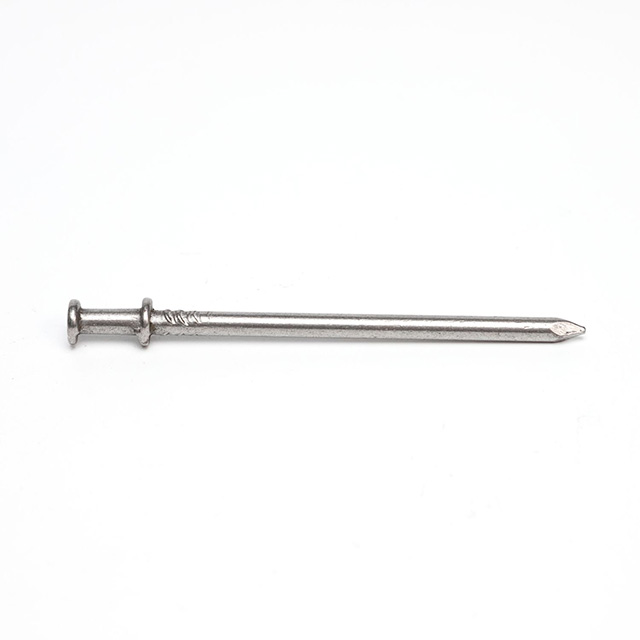
Engineered fasteners offer a highly effective solution to this widespread bottleneck. Specifically, Duplex Head Nails provide formidable structural hold while guaranteeing rapid, damage-free removal. You gain the shear strength required for load-bearing nodes alongside immediate pull-out accessibility.
This guide delivers a comprehensive evaluation framework for selecting optimal temporary fasteners. We will explore correct sizing conventions, essential material coatings, and modern deployment methods. You will learn how to match these specific fasteners to your exact site requirements. Site managers and purchasing teams can use these precise insights to streamline operations and protect expensive lumber investments.
Efficiency: The dual-head design eliminates the need to dig out flush nails, preserving lumber and accelerating dismantling.
Sizing Accuracy: Choosing between 8d duplex nails and 16d duplex nails depends strictly on material thickness and required shear strength.
Environmental Considerations: Galvanized duplex nails are critical for long-term outdoor scaffolding to prevent rust-induced structural weakness.
Deployment Scale: High-volume projects are increasingly shifting from traditional hand-drive bulk to pneumatic duplex nails to optimize labor hours.
A dual-collar design fundamentally changes how temporary structures perform under physical stress. The lower head acts as the primary fastening mechanism. Carpenters drive it tightly against the wood surface. This action creates immense friction and ensures maximum shear strength. It stabilizes heavy scaffolding frames against lateral wind loads. The structural integrity closely mirrors permanent framing fasteners. Structural engineers routinely calculate the lateral resistance required for multistory frameworks. They rely on precise fastener metrics to ensure compliance with occupational safety regulations. Utilizing engineered fasteners mitigates catastrophic shear failures under heavy winds.
The top collar completely alters the teardown equation. The upper head remains entirely exposed above the wood surface. It offers instant leverage for a long pry bar or a standard claw hammer. Workers never need to dig into the lumber to extract the embedded fastener. They simply hook the exposed collar and pull firmly. This mechanical advantage eliminates frustrating extraction delays and accelerates site clearance.
Using standard flush nails for temporary bracing introduces severe operational risks. Workers inevitably gouge the surrounding wood during difficult extractions. This splinters structural lumber and destroys its future reusability. Damaged wood directly increases your seasonal material replacement costs. Extraction struggles also inflate daily labor hours significantly. Engineered double head fasteners prevent these costly inefficiencies entirely.
Many commercial trades refer to these specific fasteners as double head scaffolding nails. Procurement teams frequently specify them under this exact nomenclature for large-scale operations. Their primary application clearly centers on temporary structural supports. Standardizing their use across various job sites demonstrates a commitment to operational efficiency. Duplex Head Nails remain the undisputed engineered standard for these dynamic bracing applications.
Selecting the correct fastener size dictates both structural safety and extraction efficiency. Proper sizing balances sufficient penetration against unnecessary lumber damage. You must evaluate the specific thickness of your bracing materials accurately. Undersized fasteners risk catastrophic pull-out failure under heavy loads. Oversized fasteners waste manual effort and risk splitting older wood.
Let us thoroughly examine the common sizes used across commercial construction sites.
The 8d size provides excellent versatility for lighter applications. They measure exactly 2-3/4 inches in total overall length. They excel at light bracing tasks and securing standard 1-by lumber. Form carpenters rely on them heavily for standard concrete forming. They perform exceptionally well in toe-nailing scenarios where wood thickness remains minimal. Toe-nailing requires driving the fastener at a specific angle through the edge of the wood. The shorter 8d length prevents the sharp point from protruding dangerously through the opposite side.
However, you must recognize their distinct load limitations immediately. These lighter fasteners lack sufficient pull-out resistance for heavy load-bearing scaffold nodes. Using them on massive structural supports violates basic safety protocols and invites collapse.
Heavy structural scaffolding demands the superior holding power of the 16d size. These measure 3-1/2 inches long and penetrate deeply into thick dimensional lumber. They effectively secure heavy 2x4 to 2x4 structural connections. Engineers mandate their use in extreme high-shear load zones. They anchor massive temporary structures securely against severe environmental forces.
Implementation does carry specific risks you must manage proactively. Driving thick 16d fasteners into older, dry lumber requires careful placement. Older lumber loses its natural moisture content over time. This makes it incredibly brittle. You must maintain adequate edge distances. Careless installation will split the ends of the wood boards instantly. Splitting destroys the holding power entirely and wastes expensive materials.
To clarify these sizing decisions, consult the following technical comparison chart:
Sizing Decision Matrix | ||
Specification | 8d Fasteners | 16d Fasteners |
|---|---|---|
Total Length | 2-3/4 inches | 3-1/2 inches |
Primary Application | Light bracing, concrete forms | Heavy scaffolding, 2x4 connections |
Best Used For | 1-by lumber, toe-nailing | High-shear load zones |
Main Limitation | Low pull-out resistance | Can split dry lumber ends |
Environmental exposure strictly dictates your choice of protective coatings. You must accurately evaluate the project duration and expected weather conditions. Choosing the wrong metal finish compromises both structural safety and financial margins.
Bright steel fasteners feature zero protective exterior coatings. They remain highly cost-effective for specific, climate-controlled environments. They suit short-term indoor projects perfectly. Rapid-turnaround concrete forms also benefit heavily from their lower unit price point. You can deploy them safely when weather exposure remains strictly minimal.
The primary trade-off involves severe susceptibility to rapid oxidation. Bright steel rusts incredibly quickly in damp conditions. Rain or high humidity triggers immediate degradation. You should never specify uncoated fasteners for prolonged exterior builds.
Outdoor environments strictly require heavy-duty galvanized coatings. These robust coatings deposit a protective zinc layer over the core steel. Manufacturers measure galvanized coatings in micrometers. Thicker zinc application guarantees extended field life. They prove completely essential for outdoor scaffolding exposed to heavy rain. Projects located near coastal air demand this maximum corrosion resistance. They survive extended periods of high humidity without degrading.
Corrosion creates multiple compounding problems on a busy job site. Rust does not simply make extraction physically difficult for carpenters. It actively degrades the shear strength of the embedded fastener. The structural integrity of the scaffolding drops rapidly as oxidation progresses. Specifying galvanized coatings represents a crucial baseline safety compliance measure. You must mandate them for any multi-month exterior build. It protects your crews and preserves your physical materials.
Here are several critical best practices regarding material selection:
Audit the specific micro-climate of your job site before ordering materials.
Always default to galvanized options if the project timeline might extend into wet seasons.
Store uncoated fasteners in sealed, dry containers to prevent premature warehouse rusting.
Inspect load-bearing structural nodes monthly for unexpected signs of oxidation.
Deployment methodology dramatically influences your daily labor expenditure. Tool selection scales directly according to total project size. You must evaluate your site logistics thoroughly before committing to an installation method.
Traditional hand-driving remains highly relevant for complex, vertical builds.
Pros: This method requires zero cumbersome air compressors. It perfectly suits dynamic, multi-level scaffolding assembly. Dragging heavy pneumatic hoses across high elevations introduces severe tripping hazards. Site supervisors constantly battle these dangerous trip hazards. Tangled air hoses on a third-story scaffold deck invite disaster. Traditional hammering mitigates this particular safety violation entirely. Carpenters enjoy maximum mobility across complex vertical structures.
Cons: Installation rates remain comparatively slow. The overall speed heavily depends on individual operator stamina. Fatigue sets in quickly during long shifts of overhead hammering. Manual installation scales poorly when managing massive linear footage.
Automated pneumatic tools entirely revolutionize massive framing operations.
Pros: Pneumatic nailers drastically reduce fastening time. Repetitive tasks benefit immensely from rapid trigger-fire speed. Massive linear concrete forms assemble in a fraction of the usual time. Ground-level pre-assembly stations achieve incredible daily output. The enormous labor savings on high-volume tasks quickly justify the initial equipment costs.
Implementation Considerations: This advanced method requires highly specialized equipment. Standard framing nailers cannot process the unique offset double head geometry. You must purchase or rent compatible tools designed specifically for these fasteners. This represents a significant upfront equipment investment. You also face the logistical challenge of managing heavy compressors and trailing hoses.
To ensure successful field deployment, follow this procedural numbered list:
Calculate the total linear footage of temporary framing required for the phase.
Assess the vertical elevation profile of the primary assembly area.
Determine if trailing air hoses will create unacceptable safety risks.
Allocate high-speed pneumatic tools strictly for ground-level batch assembly tasks.
Reserve bulk hand-drive boxes for elevated or heavily constrained access points.
Sourcing reliable fasteners requires rigorous supplier evaluation protocols. Substandard materials inevitably cause dangerous cascading failures on busy sites. You must establish strict technical criteria before finalizing any volume orders.
The most common physical failure point happens during the teardown phase. Poor quality upper heads snap off instantly under pry bar pressure. This completely defeats the original purpose of the dual-collar design. You must meticulously evaluate suppliers based on their cold-forging quality. The physical integration between the head and the shank must remain flawless. Brittle metal will shatter when extracted forcefully. This forces workers to manually dig out the broken shank, destroying the wood.
Packaging options directly impact job site logistics and material handling. You should assess whether the supplier offers diverse, job-site appropriate configurations. Massive framing operations require 50-pound bulk boxes for efficient mass distribution. Specialized, highly mobile crews benefit significantly from smaller, weather-resistant buckets. Poor packaging leads to spilled materials and ruined inventory. Match the packaging format precisely to your specific crew mobility requirements.
You should initiate several critical next-step actions prior to ordering. Always request comprehensive technical specification sheets from prospective suppliers. These critical documents reveal the carbon content of the steel alloy. High-carbon steel resists bending much better than low-grade alternatives. You want a fastener that pulls straight out without warping. Verify the exact wire gauge and the rated tensile strength. Never rely solely on generic marketing descriptions. Secure small sample batches for immediate site testing. Have your lead carpenters drive and extract these samples repeatedly. Only commit to a bulk seasonal order after validating their physical performance directly.
Temporary structures demand uncompromising fastener reliability to protect operating margins. The dual-collar design fundamentally solves the extraction bottleneck associated with temporary framing. These fasteners prove completely non-negotiable for safe, profitable scaffolding and formwork operations. Selecting the precise specification directly influences your overall project turnaround time. Proper sizing prevents dangerous structural failures and eliminates costly wood damage.
Audit your upcoming project environments thoroughly before submitting purchase orders. Determine the exact balance of indoor versus outdoor weather exposure. Assess whether your structural nodes require light or heavy load support. Contact a specialized technical sales representative to review your findings. They will help you finalize your bulk fastener requirements with absolute confidence.
A: Yes. The terminology varies strictly by user group. "Duplex" represents the highly technical fastener industry term. Conversely, "double head" or "scaffold nail" serve as common vernacular among site trades. They both describe the identical engineered fastener featuring two distinct collars designed for temporary structural framing.
A: While physically possible if unbent, it remains strictly advised against for load-bearing scaffolding. The violent extraction process causes microscopic metal fatigue. This internal stress compromises the structural integrity of the fastener. Reusing them introduces severe safety liabilities during subsequent structural assemblies.
A: Concrete forms function strictly as temporary molds. The dual-head design allows formwork to be stripped rapidly before the concrete fully cures. Workers remove the forms without violent hammering. Smooth extraction prevents damaging the vulnerable, fresh pour while accelerating the overall site workflow.


