
Views: 0 Author: Site Editor Publish Time: 2026-05-11 Origin: Site


What are U-shaped fencing nails called? Industry professionals officially know them as fence staples, U-nails, or poultry staples. They perform a straightforward task. They secure wire mesh panels tightly to wooden posts. However, basic terminology only reveals part of the equation. Commercial agricultural applications demand far more than generic hardware. High-tension fencing requires engineered, structural fasteners. You cannot rely on smooth staples for heavy livestock pressure. Severe weather and structural shifting will easily destroy inadequate installations. This guide focuses on a vital industrial solution. We will evaluate how to specify U Type Iron Nails with Barbed Shank for major projects. Upgrading your hardware specification maximizes fence lifespan immediately. It actively prevents structural pull-outs entirely. It also drastically reduces your long-term maintenance costs. By the end, you will understand exactly how to secure any perimeter effectively.
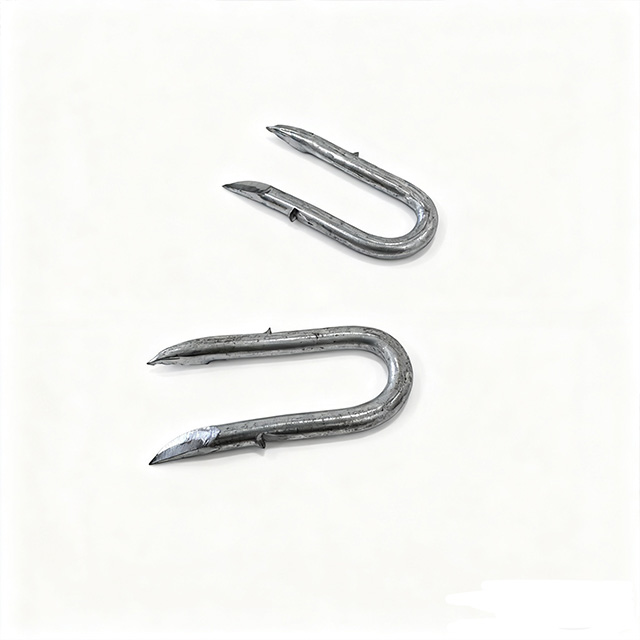
Terminology: "U-shaped nails" are properly termed fence staples or U-nails; commercial grades require specific shank modifications.
Performance Differentiator: Barbed shanks dramatically increase pull-out resistance compared to smooth shanks, resolving the primary failure point in livestock and security fencing.
TCO & ROI: Investing in heavily galvanized, barbed U-nails reduces the Total Cost of Ownership (TCO) by eliminating frequent re-fastening labor and premature rust failures.
Procurement Standard: Procurement should be based on wire gauge, zinc coating weight (Class 3 / HDG), and shank texture, rather than unit price alone.
Consumers often use generic names when visiting hardware stores. They ask for fence staples, netting staples, or simple U-nails. These common terms accurately describe the physical shape. They do not define the engineering specifications required for durability. A generic name cannot guarantee structural integrity. Retail stores sell basic staples to everyday consumers for light garden work. Commercial contractors operate in a different reality entirely. They require highly specific technical standards to guarantee long-term performance.
Standard smooth-shank staples frequently fail under pressure. Wood naturally expands during wet seasons. It contracts rapidly during dry summer months. This continuous environmental breathing loosens the grip around the metal. Animal impact also plays a massive role in hardware failure. Cattle constantly rub against wire boundaries to relieve itching. This friction jolts the tensioned wire continuously. Smooth shanks simply slide out over time. They cannot resist the repetitive outward pull. You need a permanent mechanical solution to stop this degradation.
Here, we introduce U Type Iron Nails with Barbed Shank as the definitive baseline. You must specify them for durable agricultural fencing. B2B contractors and high-security mesh installers rely on them daily. The engineered shank transforms a basic wire attachment into a permanent structural hold. Modern manufacturing stamps aggressive barbs directly into the steel wire during production. Choosing this specific fastener eliminates premature structural failure. It sets a professional standard for your entire project layout.
Fences face immense environmental and physical stress constantly. Wind shear pushes aggressively against woven wire mesh in open pastures. Heavy livestock lean heavily on perimeter boundaries. Wood posts undergo intense seasonal shifting as ground moisture changes. These natural forces create continuous, damaging vibrations along the fence line. The hardware absorbs every single shock directly. Inadequate fasteners fail quickly under these harsh structural dynamics.
How does the pull-out phenomenon actually happen? Smooth nails naturally back out over time. Microscopic wood movements loosen the initial tight grip. The wire vibrates endlessly in the wind. The staple slowly wriggles free from the post. The holding friction degrades week after week. Eventually, the staple falls out completely. The fence line sags and loses structural tension.
This physical failure carries massive hidden costs. The Total Cost of Ownership (TCO) skyrockets when hardware fails prematurely. Consider the cascading financial impacts of poor fastener selection.
Escaped Livestock: Lost animals damage agricultural profits immediately. Wandering cattle also create severe legal liabilities if they enter public roadways.
Perimeter Security Breaches: Loose mesh invites predators into enclosed areas. It also allows unauthorized trespassers to enter secure facilities easily.
Intensive Manual Labor: Workers must walk miles of remote fence lines continuously. They spend countless hours re-driving loose staples manually instead of doing productive farm work.
This endless maintenance cycle destroys project profitability. Upgrading your fastener stops this costly drain immediately. You effectively buy back hundreds of labor hours over the lifespan of the fence.
Engineered barbs change the physics of the fastener fundamentally. They introduce powerful friction dynamics into the installation. The barbs lock deeply into surrounding wood fibers upon entry. They act like tiny, rigid hooks inside the post. These hooks actively resist any reverse motion. The wood fibers close around the barb tightly after the metal passes. This mechanical interlock prevents the fastener from vibrating loose under stress.
Let us examine the holding power metrics closely. A smooth shank requires relatively little pound-force for extraction. A barbed shank demands significantly more force to remove. Independent laboratory tests show massive differences in withdrawal resistance between the two designs.
Shank Type | Pull-Out Resistance | Best Application | Maintenance Need |
|---|---|---|---|
Smooth Shank | Low (relies purely on initial friction) | Temporary fencing, lightweight mesh | High (requires frequent re-driving) |
Single Barbed | Medium-High (fibers lock onto one side) | Standard agricultural boundaries | Low (stable under normal weather) |
Double Barbed | Maximum (bilateral mechanical locking) | High-tension wire, heavy livestock | Zero (permanent installation) |
Implementation trade-offs certainly exist in the field. Barbed shanks are significantly harder to remove later. You must place them correctly on the first attempt. Careful installation is absolutely mandatory for success. However, this exact permanence guarantees your ROI. They stay exactly where you drive them initially. They resist extreme weather events easily. This reliable permanence justifies specifying U Type Iron Nails with Barbed Shank for serious commercial builds.
Evaluating galvanization is a critical procurement step. Rust destroys fencing hardware incredibly fast in damp conditions. Electro-galvanized coatings work solely for indoor applications or temporary builds. They fail quickly in harsh outdoor environments. Hot-Dipped Galvanized (HDG) coatings provide real longevity. Class 3 zinc coatings serve as the strict agricultural standard. Industry authorities like ASTM mandate specific zinc weights for true outdoor resilience. HDG resists harsh weather and corrosive treated lumber. It provides decades of reliable rust protection.
Gauge sizing dictates application suitability directly. You must match the wire thickness to the specific job requirements.
Heavy Gauge (8g-9g): Best for high-impact cattle fencing. Essential for robust deer enclosures. Ideal for heavy-duty security wire installations.
Medium Gauge (10g-11g): Standard for typical field fences. Great for perimeter boundary marking where animal pressure remains moderate.
Light Gauge (12g-14g): Used mainly for poultry netting. Perfect for domestic cat enclosures. Great for lightweight garden mesh.
Supplier shortlisting logic requires strict technical diligence. You must vet B2B suppliers thoroughly before purchasing bulk inventory. Look for consistent wire drawing quality in their samples. Demand uniform barb stamping across every single batch. Verify the zinc coating weights through independent testing data. Do not buy based on cheap unit prices alone. Cheap hardware always inflates your long-term maintenance budgets drastically.
Driving angle matters immensely during installation. Do not drive staples completely parallel to the wood grain. This common mistake splits the wooden post instantly. It destroys all holding power immediately because the wood fibers separate. Emphasize driving them at a slight diagonal angle. The fastener straddles the wood grain perfectly. This technique maximizes the mechanical grip of the barbs across multiple wood fibers.
Wire protection is another crucial installation step. Driving nails too deep creates severe structural problems. It pinches the tensioned wire tightly against the wood. This action damages the galvanized coating of the fence wire itself. Localized rust develops quickly in those damaged spots. You must leave a tiny gap for wire movement. The wire needs room to expand and contract freely during temperature swings.
Tooling choices impact labor costs and consistency dramatically across large projects.
Tooling Method | Capital Expenditure (CAPEX) | Labor Efficiency | Consistency |
|---|---|---|---|
Manual Hammering | Very Low (basic hand tools) | Poor (slow, highly labor-intensive) | Variable (depends on worker fatigue) |
Pneumatic Stapler | High (compressor, hoses, gun) | Excellent (massive labor savings) | Perfect (uniform depth control dials) |
Manual hammering yields variable consistency across the fence line. Worker fatigue leads to bent staples and crushed wires. Pneumatic fencing staplers offer a superior modern alternative. They require higher upfront CAPEX. However, they deliver massive labor savings quickly. Modern guns feature precise depth adjustment dials to prevent wire crushing. You absolutely need them for large commercial rollouts.
Knowing what U-shaped nails are called is only the first step. Knowing how to specify the correct barbed variant dictates true project success. Structural integrity relies entirely on your hardware choices. U Type Iron Nails with Barbed Shank eliminate costly maintenance cycles. They provide the mechanical locking power your perimeter desperately needs.
Take immediate action to improve your procurement strategy today.
Audit your specific wood post material (softwood vs. hardwood) to determine required fastener length.
Assess your regional environmental exposure and annual humidity levels.
Specify Hot-Dipped Galvanized coatings for all permanent outdoor projects.
Match the wire gauge exactly to your specific livestock pressure expectations.
Do not let inadequate hardware compromise your security. Reach out to professionals for technical guidance today. Consult a technical sales rep before starting your next build. Review a detailed spec sheet for high-grade barbed U-nails. Protect your perimeter correctly from day one.
A: The main differences lie in gauge thickness and shank design. Poultry staples are typically smooth and thin. They work well for lightweight, temporary netting. Conversely, barbed iron nails are structural and heavy-duty. They feature engineered barbs that lock into wood, providing superior holding power for high-tension agricultural fencing.
A: No. High-tensile wire exerts too much lateral force and continuous vibration. Standard smooth U-nails will inevitably pull out over time. You require barbed or specifically engineered locking staples to resist the intense mechanical pressure and maintain the integrity of high-tensile installations.
A: The general rule depends on your post material. Hardwoods require shorter staples, typically ranging from 1" to 1.25". Softwoods, like treated pine, require longer staples ranging from 1.5" to 2". The longer length ensures adequate bite and holding power in softer wood fibers.
A: Yes, provided they are Hot-Dipped Galvanized (HDG) or Class 3 coated. Pressure-treated lumber contains highly corrosive chemicals. Standard electro-galvanized staples will rust quickly. HDG coatings provide a thick zinc barrier designed specifically to resist chemical corrosion and harsh outdoor environments.


