
Views: 0 Author: Site Editor Publish Time: 2026-05-12 Origin: Site


Fastener selection rarely grabs headlines on a busy job site. Yet, structural integrity hinges entirely on choosing the right hardware for the task. Shifting your focus from generic hardware to specific structural reliability prevents catastrophic failures in load-bearing environments. You simply cannot afford to guess when local building codes demand precise shear strength and maximum pull-through resistance. The Flat Head Common Nail stands as a foundational, heavy-duty fastener strictly required for high-shear applications. This guide will help project managers, contractors, and procurement teams evaluate application suitability carefully. You will learn compliance standards, material trade-offs, and critical risk mitigation strategies. Read on to master these hardware specifications before you finalize your next bill of materials.
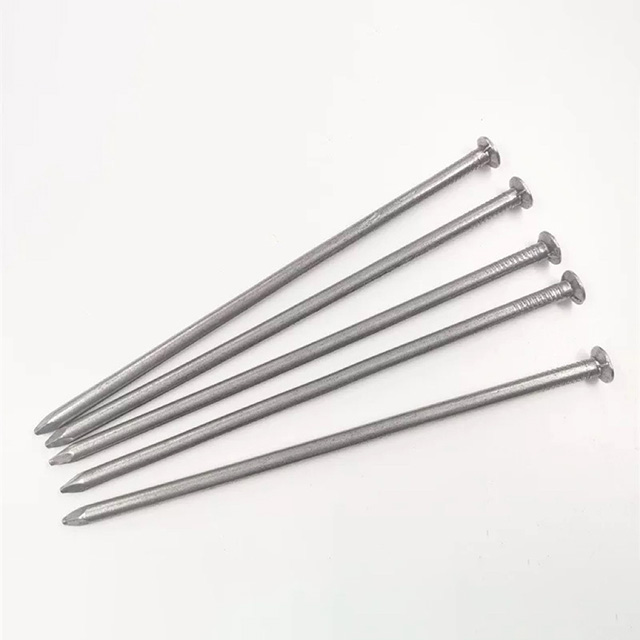
Primary Function: Flat head common nails are engineered for rough carpentry, framing, and structural joinery where high shear strength is prioritized over a concealed finish.
Structural Advantage: The wide flat head prevents pull-through in load-bearing scenarios, while the thick shank resists bending under heavy stress.
Material Matters: Total Cost of Ownership (TCO) and code compliance dictate the choice between bright steel (interior), galvanized (exterior), and stainless steel (harsh environments).
Implementation Trade-offs: The high holding power of a heavy-gauge common nail comes with an increased risk of wood splitting, requiring specific mitigation techniques during installation.
Understanding fastener anatomy helps you predict long-term structural outcomes. Every physical feature serves a distinct engineering purpose. When we examine these heavy-duty fasteners, four critical design elements emerge.
The broad head creates a massive surface bearing area. This design effectively stops the fastener from pulling through softer materials under intense structural stress. Pine, oriented strand board (OSB), and standard plywood fibers crush easily under localized pressure. A wider head distributes this pressure evenly. It pins the material securely against the underlying framing member.
A thick, heavy-gauge shank delivers maximum shear strength. Shear strength measures resistance to snapping under lateral sideways pressure. This metric represents a non-negotiable success criterion for building framing. When houses settle or winds howl, structural joints experience immense lateral loads. The heavy-duty Flat Head Common Nail features a thick shank that flexes slightly but refuses to snap, keeping your framing intact and maintaining long-term safety.
Manufacturers utilize a standard diamond point to balance driving speed and holding power. The sharp point bites quickly into lumber. It allows rapid installation on fast-paced job sites. However, this wedging action dictates specific handling rules near board edges. We will discuss splitting risks later in this guide.
Standardized wire gauges deeply impact load capacity calculations. Engineering and architectural specifications rely on exact measurements outlined by standards like ASTM F1667. Consistency ensures predictable structural performance.
Penny Size (d) | Length (Inches) | Wire Gauge | Primary Application |
|---|---|---|---|
8d | 2.5" | 10.25 | Sheathing, light bracing |
10d | 3.0" | 9 | Subflooring, joist hangers |
16d | 3.5" | 8 | Heavy structural framing |
You will find these fasteners at the heart of nearly every wood-framed structure. They perform best in scenarios demanding unyielding strength over aesthetic concealment.
Contractors rely heavily on the Flat Head Common Nail when fastening 2x dimensional lumber. Connecting studs, joists, and rafters requires massive holding power. You must meet local building codes, such as the International Building Code (IBC) or International Residential Code (IRC). These codes dictate specific shear strength requirements for framing connections. Heavy-gauge framing nails satisfy these stringent legal codes.
Securing structural panels to framing members requires specialized holding mechanics. The flat head plays a crucial role here. It holds the OSB or plywood panel tight against the joist. A smaller head would sink deep into the panel, crushing the delicate wood fibers. Crushed fibers weaken the panel and compromise floor stiffness.
Outdoor projects demand weather-resistant holding power. Teams utilize coated variations for robust exterior applications. You see them in privacy fencing, heavy retaining walls, and deck under-framing. Long-term structural integrity against weather remains the ultimate goal. Coated shanks ensure the connection survives decades of rain and snow.
Job sites feature intense, active vibrations. Temporary bracing and wooden scaffolding require reliable, rigid holds. Weak fasteners will vibrate loose, causing dangerous collapses. The thick shank and large head lock temporary struts firmly in place. They withstand daily impacts from heavy equipment and moving personnel.
Selecting the right fastener material protects your long-term investment. Buying the cheapest option often leads to expensive structural failures.
Bright steel offers the lowest upfront material cost. It provides incredible raw strength for rough carpentry. However, manufacturers strictly limit bright steel to dry, interior applications. Moisture rapidly rusts uncoated steel. Rust destroys the shank, leading directly to structural failure.
Galvanized fasteners carry a higher initial TCO. Yet, they remain essential for exterior code compliance. The zinc coating mitigates the risk of rust-induced fastener failure. When you use modern ACQ-treated lumber, you must use hot-dipped galvanized hardware. The harsh chemicals inside treated wood will quickly eat through standard bright steel.
Stainless steel commands the highest procurement cost on the market. Project managers specify it for coastal environments and corrosive industrial settings. It is also necessary when fastening highly acidic woods like cedar or redwood. Stainless steel guarantees ultimate project longevity and prevents unsightly black streaking on premium lumber.
Matching the correct coating to your environmental exposure prevents premature structural degradation. Upgrading to a galvanized finish costs slightly more upfront. However, it minimizes expensive warranty claims. It prevents disastrous callbacks for sagging fences or rotting deck frames years later.
Best Practice: Always audit your local climate before ordering hardware. Coastal zones require Type 304 or 316 stainless steel by default.
Common Mistake: Using bright steel outdoors to save a few dollars. The ensuing rot will cost ten times the original savings.
Heavy-duty holding power introduces distinct installation challenges. You must proactively manage how the wood reacts to the hardware.
The thick shank displaces a significant amount of wood fiber upon entry. This aggressive displacement dramatically increases the risk of splitting. You will notice this problem particularly near board ends. Dense lumber species also split much faster than soft pine.
Experienced carpenters utilize clever technique adjustments. Blunting the nail tip prior to driving offers a simple, effective fix. A blunt tip crushes the wood fibers as it enters. A sharp diamond point wedges the fibers apart. Crushing the fibers significantly reduces split-outs. For critical structural joints, pre-drilling pilot holes eliminates splitting entirely.
We must recognize a critical engineering reality. Common nails excel at shear strength. They resist lateral snapping beautifully. However, they remain susceptible to "back-out" or withdrawal over time. Environments featuring drastic moisture fluctuations cause wood to expand and contract repeatedly. This constant movement slowly pushes smooth-shank fasteners out of the timber.
Modern job sites balance tradition against speed. Collated nail guns offer massive labor cost savings. They drive heavy hardware in milliseconds. However, you must assess hardware compatibility. Ensure your pneumatic gun supports true full round heads. Clipped head variations often fail strict building code inspections in hurricane or seismic zones.
You face dozens of hardware choices in the procurement aisle. Understanding the exact mechanical trade-offs simplifies your final decision.
Box nails feature a noticeably thinner shank. This slim profile greatly reduces splitting risks in delicate trim or thin siding. However, you sacrifice massive load capacity. Box nails lack the shear strength required for legitimate structural framing.
Sinkers utilize a textured, countersunk head alongside a slick vinyl coating. Carpenters love them for fast, flush driving in residential framing. The vinyl melts during friction, lubricating the shaft. Yet, the Flat Head Common Nail variant provides a significantly larger bearing surface. It delivers superior pull-through resistance for structural sheathing, making it the more reliable choice for load-bearing panel attachments.
Screws offer vastly superior withdrawal resistance. Their aggressive threads bite deeply into wood fibers. However, hardened steel screws can snap abruptly under sheer loads. Traditional nails flex under lateral pressure. This flexibility makes them ideal for structural framing joints experiencing wind or seismic shifts.
Fastener Type | Shear Strength | Withdrawal Resistance | Splitting Risk |
|---|---|---|---|
Flat Head Common | Excellent | Moderate | High |
Box Nail | Low | Low | Low |
Structural Screw | Moderate (Prone to snap) | Excellent | Low (Self-tapping) |
Determine the primary load type your project faces. Choose high shear resistance for framing or high tensile pullout resistance for decking.
Assess your environmental exposure. Select bright steel for indoors or hot-dipped galvanized for outdoors.
Review local building code requirements. Verify exact gauge and penny size mandates for your specific region.
Finalize your fastener specification on the bill of materials.
Structural reliability begins long before the first hammer swings. By specifying heavy-gauge hardware, you protect your building from catastrophic lateral failures. We use these robust fasteners specifically for rough structural framing, heavy sheathing, and high-shear load applications. They out-perform thinner alternatives by offering unmatched resistance to pull-through and bending.
Remember that material coatings matter just as much as shank thickness. Selecting hot-dipped galvanized or stainless steel guarantees code compliance and protects your outdoor investments against aggressive rot.
Before moving forward, review your local building codes thoroughly. Calculate your necessary bulk quantities based on the project's square footage. Always consult your structural plans and engineering notes prior to final procurement.
A: You should use them for the heavy wooden substructure and joist framing. However, they are poor choices for the actual top deck boards. Wood decking expands and contracts rapidly with weather changes. This causes smooth shanks to back out. Use specialized decking screws to prevent popped heads and tripping hazards.
A: Common nails feature larger, wider heads and thicker shanks. They prioritize maximum holding power. Framing nails, such as sinkers, often feature slightly thinner shanks and smaller, textured heads. Sinkers drive flush easily and fit better into pneumatic gun magazines for rapid job site installation.
A: You must base penny size on material thickness. General construction rules dictate using a 16d (3.5-inch) size for connecting 2x dimensional lumber. Use an 8d (2.5-inch) size for attaching 1/2-inch or 3/4-inch sheathing and subflooring to framing joists.
A: Yes, but only if they feature the correct protective coating. Modern treated lumber contains high levels of copper. Copper rapidly corrodes uncoated bright steel. You must use hot-dipped galvanized or premium stainless steel hardware to prevent rapid chemical degradation inside treated wood.


