
Views: 0 Author: Site Editor Publish Time: 2026-05-12 Origin: Site


Framing contractors constantly evaluate consumable costs to protect tight profit margins. When ordering supplies, you might frequently ask if you can swap expensive paper tape nails for cheaper plastic alternatives. Builders often try to force new fastener types into their existing tool ecosystem to save a few dollars. However, the bottom line is clear. Swapping collation types is technically possible but strictly governed by magazine angle compatibility, not just the physical tool brand. Ignoring these specific tolerances leads to catastrophic equipment failure. It also severely compromises structural holding power. This guide provides an objective breakdown of cross-compatibility rules. We will explore the exact performance trade-offs between paper and plastic fasteners. Finally, you will uncover the true Total Cost of Ownership (TCO). You can then make profitable decisions before switching your site materials.
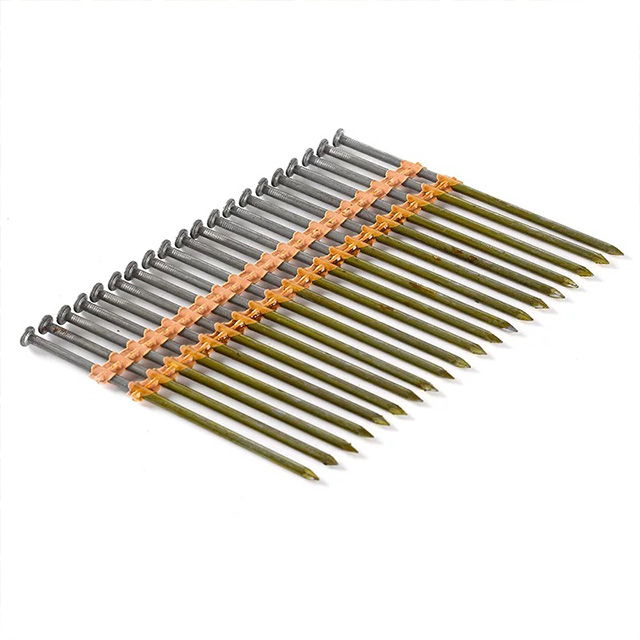
Nail gun compatibility is determined by the degree angle (e.g., 21°, 30°, 34°), not the collation material. A maximum tolerance of 4° dictates interchangeability.
Plastic sheet collated framing nails offer lower upfront costs and superior weather resistance but are prone to temperature-induced brittleness and "flagging."
Paper collated nails pack denser (up to 10 more nails per strip), reducing reload downtime and eliminating microplastic jobsite debris.
Mixing incompatible angles (e.g., 21° plastic in a 30° paper gun) guarantees immediate feed jams and potential firing pin damage.
Many framing crews misunderstand how nail guns feed fasteners. The collation material rarely causes the initial jam. Instead, the geometry of the tool magazine dictates compatibility. Understanding this angle rule saves you from costly equipment repairs.
Nail gun interchangeability relies on a strict baseline rule. Fasteners within a 4-degree variance of your gun's specification can technically feed. For example, a 30-degree nail might temporarily work in a 34-degree magazine. The feed pawl can push it forward. However, matching the exact angle is the only way to guarantee flawless operation. Pushing the 4-degree tolerance limit increases wear on the internal firing mechanism. Over time, the driver blade strikes the nail head off-center. This off-center strike leads to severe internal damage.
Manufacturers design fasteners around specific regional and historical preferences. You must match these angles to your current fleet.
Paper collated nails are traditionally manufactured at 30° to 34°. They dominate residential framing in many parts of North America.
Plastic Sheet Collated Framing Nails are most commonly 20° to 22°. They feature full round heads.
Wire-weld collated nails are typically 28°. Heavy-duty commercial applications frequently use them.
You cannot use standard 21° plastic nails in a standard 30° paper collated gun. Attempting to force different angles results in catastrophic feed issues. It bends fasteners inside the chamber. It also creates extreme safety hazards for the operator. You can switch materials only under one strict condition. You must source plastic and paper nails manufactured at the exact same degree angle. If your gun says 21 degrees, buy 21-degree nails regardless of the strip material.
Once you match the magazine angle, you must evaluate the actual fasteners. Both materials offer distinct advantages and frustrating drawbacks. Your local climate and project type should drive your choice.
Plastic strips dominate certain markets for good reasons. They excel in specific environments.
Strengths: High-quality Plastic Sheet Collated Framing Nails offer a significantly lower unit cost per box. Procurement managers love them for massive commercial builds. They are completely impervious to extreme moisture. You can drop a box in a puddle; they will still fire perfectly. Additionally, they often feature larger, full-round nail heads. These heads provide excellent grip for structural sheathing applications.
Weaknesses: Thermal dynamics heavily impact plastic. It becomes brittle in freezing temperatures. The strip shatters upon impact. Conversely, it gets gummy in extreme summer heat. The plastic melts slightly and jams the driver blade. This leads to frequent misfires.
Paper strips represent the premium option. They prioritize speed and finish quality over raw material costs.
Strengths: They provide a seamless drive. You experience zero plastic shrapnel hitting your face. They also boast a higher magazine capacity. The thinner paper collation means more nails fit per strip. You enjoy predictable penetration depth every single time.
Weaknesses: You will pay a higher purchase price upfront. Standard paper can degrade rapidly if exposed to heavy rain or high humidity. The strips swell and jam the feed track. Fortunately, some premium brands now offer water-resistant paper options to combat this issue.
Feature | Plastic Collated | Paper Collated |
|---|---|---|
Cost Profile | Lower upfront unit cost | Higher upfront unit cost |
Moisture Resistance | Excellent (100% waterproof) | Poor to Moderate (unless coated) |
Magazine Capacity | Standard (thicker collation) | High (up to 10 more nails per strip) |
Temperature Sensitivity | High (brittle in cold, gummy in heat) | Low (performs consistently) |
Paper specifications only tell half the story. The physical jobsite introduces variables that heavily impact your crew's daily routine. Fastener choice affects structural integrity, operator safety, and cleanup mandates.
Framers despise the "flagging" phenomenon. This occurs when fragments from Plastic Sheet Collated Framing Nails get trapped beneath the driven nail head. The plastic chunk prevents the nail from sitting completely flush against the wood. Flagging seriously compromises structural holding power. Heavy framing often requires a precise 3.5-inch embedment depth. A trapped piece of plastic ruins that tolerance. Your crew must grab their hammers to perform manual strike-offs to flush every flagged nail.
Operator safety changes drastically depending on your collation type. Paper tape generates harmless paper dust when fired. It blows away in the wind. Firing Plastic Sheet Collated Framing Nails ejects high-velocity shards. The driver blade shatters the plastic strip violently. These sharp fragments hit faces, arms, and nearby workers. You must enforce strict PPE requirements. Every worker within a 10-foot radius needs ANSI-approved safety glasses.
Environmental considerations now dictate construction practices. Plastic strips leave hundreds of thousands of microplastic shards across the jobsite. Strict municipal builds monitor site litter closely. West Coast sites often enforce rigid environmental compliance rules. You must pay laborers to sweep microplastics daily. The labor cost of this cleanup often negates your initial material savings. Paper tape avoids this problem entirely. It is fully biodegradable and breaks down naturally.
Purchasing agents often focus entirely on the price per box. Smart contractors calculate the Total Cost of Ownership (TCO). You must deconstruct the true ROI of your fastener selection.
A box of plastic collated fasteners costs less at the supply house. However, framing profitability relies on operational efficiency. Every minute your crew spends not driving nails costs you money. You must measure material savings against labor expenses.
Paper collation is physically thinner than plastic. A standard paper strip holds roughly 10 more nails than a comparable plastic strip. Most modern framing nailers feature a dual-strip magazine. Loading two paper strips yields 20 extra shots before stopping. Imagine a crew framing a large residential subdivision. They shoot thousands of nails daily. Reducing reload frequency saves significant time. Calculate those labor savings over a week of high-volume framing. The efficiency gains easily offset the higher paper purchase price.
Tool jams destroy your daily rhythm. You must factor in the hourly cost of crews stopping to clear jams. Extreme weather exacerbates plastic-induced malfunctions. Cold weather shatters plastic inside the magazine. Hot weather melts it onto the firing pin. Clearing these jams requires disassembling the magazine track. Paper tape provides a highly reliable feed across various temperatures. It requires far less tool maintenance.
Your ultimate choice depends on your specific business model. Plastic fasteners win on pure material procurement budgets. They are excellent for cheap, rough outdoor builds. Paper fasteners win on labor efficiency. They reduce downtime drastically. They also eliminate expensive jobsite cleanup costs.
You should never switch your entire supply chain blindly. Testing new fasteners requires a methodical approach. Protect your tools and your crew by following a strict implementation process.
Do not guess your tool specifications. Check the exact degree rating stamped on your current framing nailers. Manufacturers usually engrave this on the magazine rail or the metal serial plate. You must verify this number before ordering alternative collation types.
Purchase a single case: Buy one box of the new collation material. Ensure it matches your exact tool angle.
Select a safe test area: Test the fasteners on non-load-bearing mockups. You can also test them on basic sub-flooring.
Delay full transition: Do not transition the entire site until the pilot proves successful.
Give your lead framer a specific feedback checklist. During the pilot, track the exact frequency of "flagging" incidents. Count the misfires per hour. Gather the crew's honest feedback on reload frequency. If they spend more time clearing jams than framing, cancel the transition immediately.
You must establish a strict site rule. Never load a strip of paper nails directly behind a strip of plastic nails in the same magazine. The differing head spacing between the two materials causes an immediate jam at the transition point. Finish the current material completely before loading the alternative.
Successful fastener switching relies entirely on matching your tool's magazine angle. You cannot bypass the basic geometry of your nail gun. Understanding this simple rule prevents ruined equipment and project delays.
Review your exact use case before purchasing your next pallet. Choose plastic fasteners for budget-tight, heavy-weather outdoor builds. They excel when micro-litter isn't a strict municipal concern. Opt for paper collated nails when labor speed matters most. They deliver superior finish quality. They minimize downtime and keep your framing crew moving efficiently. Align your consumable strategy with your operational goals to maximize profitability.
A: You can only mix them if the degree angle matches exactly. However, never mix different materials simultaneously in the same magazine load. Finish one complete strip before loading a different material to avoid transition jams.
A: Jams usually happen due to an angle mismatch. They also occur during temperature extremes. Freezing weather causes the plastic to shatter inconsistently. Extreme heat makes it gummy, clogging the internal firing pin.
A: They are typically manufactured at 20° to 22°. Specialized variations exist for niche tools, but the 21-degree standard dominates the market for full round head fasteners.
A: Standard paper collation is not waterproof. Moisture causes the paper to swell and fail. However, premium brands use weather-resistant adhesive tapes. These hold up surprisingly well in damp jobsite conditions.


