
Views: 0 Author: Site Editor Publish Time: 2026-05-12 Origin: Site


Buyers evaluating stainless steel usually face extreme environmental challenges. They might also design buildings intended for generational lifespans. Standard roofing materials fail quickly under harsh conditions. Stainless steel offers near-invulnerability to corrosion. However, its high initial cost and strict installation tolerances matter. They mean this metal is not a universally appropriate solution.
Choosing this elite material requires careful analysis. Project requirements must perfectly align with its Total Cost of Ownership (TCO) advantages. Furthermore, your contractor must deeply understand the science of dissimilar metals. Mixing the wrong metals leads to catastrophic structural failure.
In this guide, you will learn exactly when a stainless steel roof makes business sense. We explore critical grade selections and hidden installation risks. You will also discover the vital importance of compatible fastening hardware. These insights will help you protect your long-term roofing investment.
Lifespan & ROI: Delivers a 50–80+ year functional life, significantly lowering long-term TCO despite a high upfront premium.
Corrosion Immunity: Relies on a natural chromium passivation layer rather than degradable surface coatings (unlike standard galvanized or Galvalume steel).
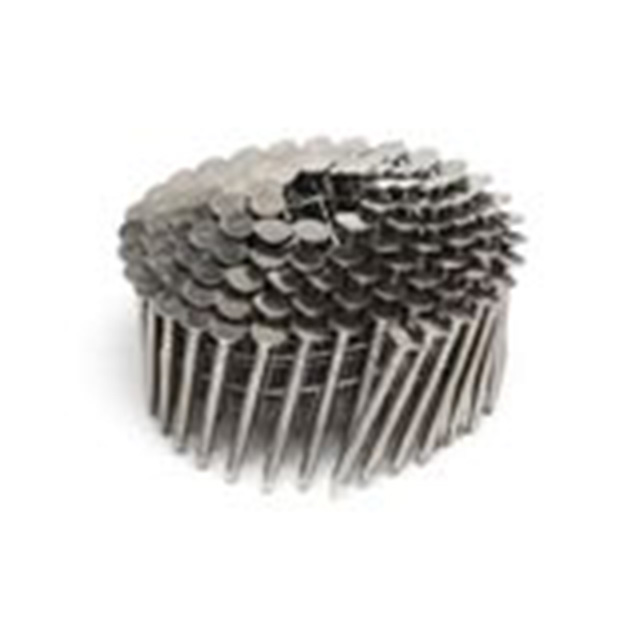
System Integrity: Absolute reliance on compatible hardware—specifically using 300-series Stainless Steel Coil Roofing Nails—to prevent catastrophic galvanic corrosion.
Architectural Constraints: Requires specialized mitigation for thermal expansion and visual waviness ("oil canning").
Roofing decisions ultimately come down to risk management and lifecycle budgeting. Standard materials like asphalt degrade under intense UV exposure. Coated metals eventually scratch, exposing vulnerable steel beneath. Stainless steel operates differently. It provides an aggressive defense mechanism built directly into its chemistry.
You should strongly consider stainless steel if your building faces specific environmental threats. These specific scenarios maximize your return on investment:
Extreme Marine Climates: Coastal properties endure continuous salt spray. Salt destroys painted coatings rapidly. Stainless steel neutralizes this threat entirely.
Heavy Industrial Zones: Factories emit pollutants that create acid rain. Acid quickly degrades zinc and aluminum roofs. Stainless steel easily withstands these harsh chemical attacks.
Hurricane-Prone Regions: Severe storms demand extreme tensile strength. Stainless steel panels resist wind uplift and flying debris exceptionally well.
Green and Vegetated Roofs: Roof gardens require organic fertilizers. These fertilizers create highly corrosive runoff water. You need an impervious barrier to prevent structural decay.
Aviation Restricted Zones: Buildings near airports must avoid blinding pilots. Rolled matte stainless steel provides low Solar Reflectance Index (SRI) glare. This meets strict aviation compliance laws.
Stainless steel does not fit every project. You should avoid it for budget-constrained builds. Standard residential environments rarely justify the premium price tag. For everyday homes, high-end aluminum or coated Galvalume proves much more economically viable. They deliver excellent protection without stretching your budget unnecessarily.
All stainless steel is not created equal. Selecting the proper metallurgical grade dictates how well your roof survives over the decades. You must match the alloy to your specific atmospheric challenges.
The roofing industry primarily relies on two grades of stainless steel. Your choice depends heavily on geographic location.
Type 304 serves as the standard industry baseline. It offers excellent atmospheric corrosion resistance. You will see it used frequently in commercial buildings and high-end inland residential applications. It handles normal rain, snow, and urban pollution effortlessly.
Type 316/316L steps up the protection significantly. Manufacturers add 2% to 3% molybdenum to the alloy. This specific element creates a powerful barrier against chlorides. You must mandate Type 316L for marine environments involving saltwater. It is also mandatory for industrial sites facing extreme chemical exposure.
Table: Comparing Stainless Steel Grades for Roofing
Grade Spec | Key Alloy Addition | Ideal Environment | Relative Cost |
|---|---|---|---|
Type 304 | Standard Chromium/Nickel | Inland, Urban, Standard Commercial | Baseline Premium |
Type 316L | Added Molybdenum | Coastal, Heavy Industrial, Green Roofs | Highest Premium |
Your chosen finish impacts both aesthetics and long-term maintenance. High-gloss finishes look spectacular on architectural focal points. However, they act like mirrors. They amplify minor surface imperfections and highlight structural waves. They also show dirt quickly.
Rolled-on matte or brushed finishes offer a smarter alternative. They cleverly camouflage dirt and dust. They resist blinding glare. Most importantly, textured finishes mask the natural waviness inherent in light-gauge metal panels.
Even the highest-grade metal roof will fail if contractors ignore basic chemistry. Many expensive projects collapse prematurely due to incorrect fastening hardware. To maintain a non-reactive environment, professional builders insist on using Stainless Steel Coil Roofing Nails throughout the entire assembly. Understanding how different metals interact is non-negotiable for anyone looking to protect a high-value architectural investment.
Galvanic corrosion occurs when two different metals interact. Exposing stainless steel to less noble metals triggers a destructive chemical reaction. Aluminum and zinc are prime examples of weaker metals. When rain or condensation acts as an electrolyte, rapid anodic degradation begins. The weaker metal literally eats itself away to protect the stainless steel.
This chemical reality dictates your underlayment and base installation phases. You cannot cut corners on fasteners. Highlighting the exact requirement for Stainless Steel Coil Roofing Nails is mandatory. They secure the decking without introducing foreign metals into the assembly.
Many unqualified contractors substitute cheaper galvanized or aluminum nails. They do this to save minimal costs. This mistake guarantees fastener failure. The incompatible nails will rust away quickly. You will experience severe roof uplift during the next major storm. Consequently, manufacturers will void your warranty immediately.
The entire roofing system must remain metallurgically pure. All clamps for standing seam panels require compatibility. Gutters, snow guards, and edge trim must share the exact same metallurgical profile. Mixing a copper gutter with a stainless roof invites rapid corrosion at the contact points.
Initial sticker shock deters many property owners. You must evaluate this material through a Total Cost of Ownership (TCO) lens. When amortized over 80 years, the math changes completely.
Material costs certainly run high. You can expect to pay between $500 and $1300 per square (100 square feet). However, stainless steel possesses extreme tensile strength. This strength allows engineers to safely specify thinner gauges. For instance, using a 28-gauge stainless panel performs as well as much thicker alternatives. This offsets the overall weight. It reduces the structural load requirements compared to heavy copper systems, ultimately saving money on the underlying roof deck framing.
Specialty metals compete fiercely for legacy projects. Let us compare them directly.
Vs. Copper: Copper develops a beautiful green patina over time. However, it produces heavy chemical runoff. This runoff severely stains surrounding masonry, stone, and wood siding. Stainless steel does not produce any staining runoff. Additionally, its pricing remains generally more stable than the volatile copper market.
Vs. Zinc: Zinc provides great longevity but exhibits high sensitivity to moisture. Stainless steel handles temperature fluctuations much better. More importantly, it does not suffer from underside corrosion risks. Zinc roofs often fail from underneath in poorly ventilated assemblies where condensation gets trapped.
Chart: Specialty Metal Roofing Comparison
Material | Expected Lifespan | Major Advantage | Major Drawback |
|---|---|---|---|
Stainless Steel | 50 - 80+ Years | Immune to salt, acid, and high winds. No masonry staining. | High upfront cost. Difficult to solder correctly. |
Copper | 70 - 100+ Years | Historic aesthetic appeal. Highly malleable. | Runoff stains building walls. Extremely heavy. |
Zinc | 60 - 80 Years | Self-healing patina. Environmentally friendly. | High risk of underside corrosion if poorly ventilated. |
Procuring the perfect material solves only half the problem. Installation demands absolute precision. Hiring standard roofers leads to expensive disasters. You must vet contractors thoroughly.
Light-gauge flat metal panels naturally develop visible waves. The industry calls this "oil canning." It does not affect structural integrity, but it looks terrible. Require your contractors to use tension-leveled panels. Ask them to incorporate subtle striations (ribs) into the panel design. Alternatively, they must install rigid backer boards directly underneath the metal to ensure absolute flatness.
Metal expands under the hot sun and contracts during freezing nights. If a contractor fastens panels too tightly, the metal will tear itself apart. Specify the exact inclusion of engineered expansion joints every 24 to 40 feet. This accommodates aggressive thermal movement safely.
This hidden risk destroys new roofs instantly. Contractors must use dedicated, pristine tools. If a worker uses a saw or drill bit previously used on carbon steel, microscopic iron particles transfer over. These particles embed into the stainless roof. When it rains, those iron particles rust. This destroys the local chromium passivation layer, causing permanent pitting.
Creating watertight seals around chimneys and valleys requires specialized soldering. You must demand the use of phosphoric acid-based fluxes. Traditional chloride-based fluxes work great on copper, but they ruin stainless steel. If workers fail to perfectly neutralize chloride flux after soldering, severe pitting corrosion occurs within months.
Verify their portfolio specifically contains stainless steel projects, not just standard aluminum or steel.
Demand a written thermal expansion plan for panels exceeding 30 feet.
Ensure they stipulate dedicated, uncontaminated tool usage in their contract.
Confirm they exclusively use Stainless Steel Coil Roofing Nails for all attachments.
Your roofing decision fundamentally impacts building security for the next century. Stainless steel acts as the ultimate "install-it-and-forget-it" system. It thrives in high-stakes environments where lesser metals quickly rot, rust, or tear.
Take decisive action for your upcoming project. First, verify your local climate challenges. Assess your exposure to salt, aggressive wind, or acid rain. Next, select the proper grade. Choose Type 304 for standard areas and Type 316 for coastal zones. Finally, source a contractor explicitly certified in specialty metals. Demand they mandate full-system compatibility. This means verifying every component, right down to the Stainless Steel Coil Roofing Nails. Doing so guarantees your roof survives whatever nature throws at it.
A: No. Heat conductivity does not equal heat retention. Combined with an Above Sheathing Ventilation (ASV) system, metal roofs reflect radiant heat and cool down rapidly after sunset, unlike asphalt.
A: No more than other materials, provided the roof deck is properly insulated and a high-quality, acoustic-dampening underlayment is installed.
A: Yes. Due to its high tensile strength and impact resistance, stainless steel resists denting far better than softer metals like aluminum or copper.


