
Views: 0 Author: Site Editor Publish Time: 2026-05-12 Origin: Site


Every year, contractors lose thousands of dollars to an invisible threat: fastener failure. You might buy premium roofing panels or expensive cedar lumber. However, driving the wrong nail into these substrates risks sudden structural failure. It invites ugly black stains and guarantees expensive callbacks. Standard galvanized nails serve as the default choice across many basic construction projects. Builders use them daily for interior framing and dry environments. Yet, harsh environmental conditions demand a much higher-grade solution. Specific material chemistries also require premium metals.
This guide delivers an evidence-based framework tailored for builders, contractors, and B2B buyers. We will evaluate exactly when you must invest in standard stainless hardware and Stainless Steel Roofing Nails. You will learn how to assess total cost of ownership (TCO) properly. We will explore complex material compatibility rules. Finally, we will review the critical compliance standards necessary for modern construction procurement.
TCO over Upfront Cost: Stainless steel fasteners cost more initially but yield a 30+ year lifespan, eliminating rework caused by corrosion.
Chemical Compatibility: Essential for high-tannin woods (cedar, redwood) and pressure-treated lumber, which actively degrade inferior metal coatings.
The "Solid" Advantage: Unlike galvanized nails (which rely on a thin, easily damaged zinc coating), stainless steel is a solid, self-passivating alloy throughout.
Grade Dictates Application: 304 is standard for general outdoor/wet use; 316 (with added molybdenum) is strictly required for coastal projects within 5 kilometers of saltwater.
Galvanic Corrosion Prevention: Stainless steel is highly compatible with various premium roofing materials (aluminum, zinc, composite), preventing rapid electro-chemical degradation.
Many buyers experience "price shock" when pricing out stainless options. Galvanized steel undoubtedly costs less upfront. Procurement teams often lean toward these cheaper alternatives to preserve budget margins. However, failing to specify stainless fasteners in corrosive environments triggers massive hidden costs later. Rusted nails lead directly to denied warranty claims. You risk suffering a severely damaged brand reputation when your structures bleed rust down pristine siding.
We must evaluate exterior fasteners strictly through a Total Cost of Ownership (TCO) lens. To calculate true value, we must compare realistic lifespans under severe exposure. Consider the labor cost of tearing off a prematurely failed roof. It eclipses the initial savings of cheap hardware tenfold.
Fastener Material Type | Primary Application Environment | Expected Usable Lifespan |
|---|---|---|
Electro-galvanized Steel | Indoor framing, sheltered trim, dry climates | 5–10 years |
Hot-Dipped Galvanized (HDG) | Inland exterior, dry decking, standard roofing | 10–20 years |
Type 304 Stainless Steel | Wet inland exterior, heavy rain, treated lumber | 30+ years |
Type 316 Stainless Steel | Marine coastlines, heavy industrial, high chlorides | 30+ years |
Installation physicalities also dictate real-world ROI. Modern framing heavily relies on rapid pneumatic nail guns. These tools subject fasteners to violent, high-speed impact during operation. This sheer mechanical force frequently chips the protective zinc layer on standard galvanized nails. Once you compromise that outer coating, rust resistance vanishes instantly. Water penetrates the fractured zinc and rapidly eats the core steel.
Stainless steel completely avoids this installation vulnerability. It possesses no superficial coating to chip or flake. It remains a solid, highly protective alloy from the core to the outer surface. You can drive it aggressively without fearing hidden micro-fractures.
To make smart purchasing decisions, you must understand the underlying chemistry. We do not need overly complex engineering formulas. Instead, let us look at how these distinct metals actually behave on the job site.
Galvanized nails rely purely on a sacrificial mechanism. Manufacturers coat standard steel wire in zinc. This zinc layer acts as a physical shield. It intentionally corrodes first to protect the vulnerable carbon steel beneath. Once environmental factors strip the zinc away entirely, destructive rust accelerates rapidly.
Stainless steel relies on a vastly different self-passivating mechanism. The alloy contains specific levels of chromium. Chromium reacts naturally with oxygen in the atmosphere. This chemical reaction forms an invisible, self-healing oxide layer around the nail. If a hammer or tool scratches the nail surface, this barrier immediately repairs itself. It actively prevents oxygen and moisture from reaching the underlying steel.
Many seasoned builders harbor a common engineering myth about metal hardness. Stainless steel contains a lower carbon content than regular steel. You cannot heat-treat it for maximum hardness. Technically, this metallurgical reality makes it slightly "softer" upon initial drive.
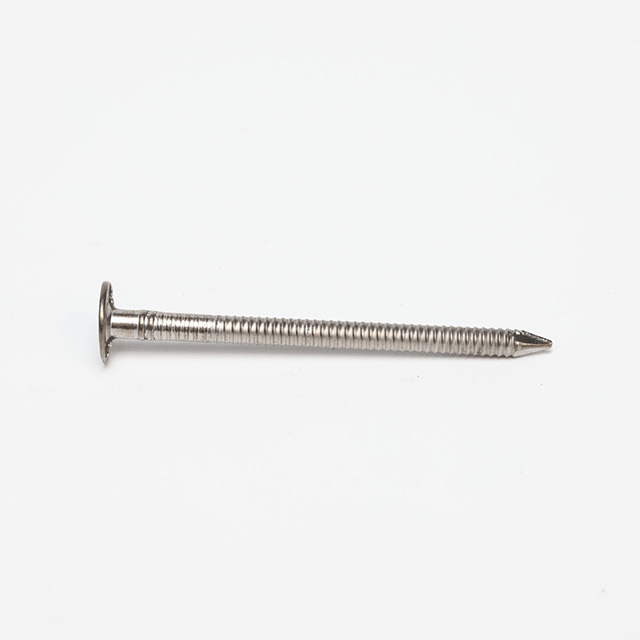
However, pure tensile strength does not equal holding power. A slightly softer metal does not mean a weaker structure. Holding power comes directly from the nail’s physical shape. For example, deep ring-shank ribs on high-quality Stainless Steel Roofing Nails lock into wood fibers securely. Furthermore, true holding power relies on resisting corrosion over decades. A slightly harder galvanized nail loses its holding strength completely once it rusts away. The stainless alternative retains its original grip profile permanently.
You must map specific material features to exact project outcomes. In certain construction scenarios, failing to use stainless steel guarantees catastrophic results. Best practices require identifying high-risk zones early in the planning phase. We have identified three distinct environments where you cannot substitute inferior metals safely.
Natural premium woods like cedar, redwood, and red oak contain high levels of tannic acid. Meanwhile, modern pressure-treated lumber utilizes aggressive chemical preservatives. Compounds like Alkaline Copper Quaternary (ACQ) prevent rot perfectly. Both the natural wood acids and these chemical additives react violently against zinc coatings. This rapid chemical reaction leaves dark blue or black stains bleeding down your pristine siding. Eventually, the fastener rots away completely, causing loose boards. You must use solid stainless options to prevent this aesthetic and structural failure.
Coastal construction follows a strict industry standard known as the "5-kilometer rule." If your project sits within five kilometers of an ocean coastline, you face extreme environmental hazards. You face constant salt spray. You also deal with corrosive airborne chlorides. Standard metals degrade incredibly fast in these salty conditions. You must strictly specify 316-grade stainless steel here. This specific grade contains an essential element called molybdenum. Molybdenum successfully resists severe saltwater corrosion. It prevents chloride pitting on the metal surface. Ignoring this rule guarantees massive structural rework within a decade.
Installing expensive copper, aluminum, or composite roofing introduces a hidden chemical danger. Mixing dissimilar metals triggers a destructive process called galvanic corrosion. Moisture acts as an electrolyte, causing the dissimilar metals to interact electrically. This interaction rapidly destroys the weaker, less noble metal. To prevent this expensive disaster, elite contractors rely on premium Stainless Steel Roofing Nails. These specialized fasteners remain chemically inert in challenging environments. They mate safely against most premium roofing materials. This proven compatibility protects your costly metal roofing investment for decades.
Procurement teams need a clear filtering logic. The stainless market offers multiple specialized grades. Choosing the right alloy prevents both structural failure and unnecessary overspending.
Type 304 stands as the most common industry standard. It contains 18% chromium and 8% nickel. You should specify this versatile grade for inland roofing, exterior siding, and standard composite decking. It performs exceptionally well under heavy rain, thick snow, and standard humidity exposure. It offers the best balance of cost and performance for non-coastal areas.
Type 316 represents a specialized, heavy-duty upgrade. It contains added molybdenum for superior chemical resistance. You must specify Type 316 for harsh saltwater exposure. It also handles environments heavily treated by aggressive de-icing salts during winter. Industrial facilities exposing fasteners to airborne manufacturing chemicals also require this premium grade exclusively.
Beyond the core metal grade, you must match the nail profile to your exact job requirements. Consider these critical specifications carefully:
Ring-shank profiles: These deliver extreme pull-out resistance. The deep grooves bite into the wood fibers and lock tight. You absolutely need ring-shank designs when installing roofing in high-wind zones or hurricane regions.
Large flat heads: These provide superior surface area hold-down power. They distribute pressure evenly. They secure roofing underlayment or heavy asphalt shingles firmly in place without tearing the fragile material.
Smooth shanks: Use these primarily for framing where lateral shear strength matters most. They drive quickly but lack the ultimate withdrawal resistance of a premium ring-shank.
For enterprise buyers and regional distributors, inconsistent metal quality presents a massive supply chain risk. Buying cheap, non-compliant overseas imports can ruin an entire construction season. Mixing up Type 304 and Type 316 inventories leads to devastating coastal project failures. You need rigid quality assurance protocols to protect your business.
You must instruct your buying teams to demand specific verification criteria on every single Purchase Order (PO). We strongly recommend verifying the following details before onboarding any new manufacturing partner.
Compliance Requirement | Core Purpose & Verification Focus | Recommended Buyer Action |
|---|---|---|
Material Test Reports (MTRs) | Verify actual chromium, nickel, and molybdenum content levels matches the specified grade. | Require certified MTRs prior to accepting any bulk shipment. |
ISO 3506 Standard | Ensure mechanical properties of corrosion-resistant stainless steel fasteners meet global benchmarks. | Check factory compliance certificates during supplier audits. |
ASTM F1667 Compliance | Confirm exact fastener dimensions, wire gauges, and structural bending performance. | Demand physical product samples for independent lab measurement. |
ASTM B117 Testing | Validate extended salt spray test data to prove long-term atmospheric corrosion resistance. | Request independent third-party lab testing reports annually. |
By integrating these exact demands into your POs, you filter out low-quality suppliers immediately. You secure a reliable, highly scalable inventory pipeline. This discipline guarantees your building partners receive flawless materials every time.
Standard carbon and galvanized nails certainly hold their place in climate-controlled environments. However, demanding exterior applications require a superior fastening solution. Using the right alloy ensures structural integrity and visual perfection.
Always prioritize Total Cost of Ownership (TCO) over cheap upfront pricing.
Specify Type 304 for general exterior use and Type 316 for coastal zones within five kilometers of saltwater.
Protect high-tannin woods and premium metal panels from destructive chemical reactions by strictly using stainless hardware.
Implement rigorous quality assurance checks, like demanding MTRs, during B2B procurement to avoid supply chain disasters.
Do not let incompatible metals ruin your next premium build. Review your upcoming project specifications carefully today. Ensure your framing and roofing materials align perfectly with your chosen fasteners. We encourage you to consult our technical sales team for guidance. You can request a detailed material compatibility chart. Better yet, browse our verified Stainless Steel Roofing Nails catalog to secure your inventory before your next major project begins.
A: Yes, under extreme conditions, lower grades can exhibit minor surface rust. Type 304 might show light staining if exposed heavily to coastal salt or chlorides over long periods. This exact vulnerability is why builders strictly specify Type 316 for marine environments. Regardless of minor surface discoloration, neither grade will ever structurally degrade or rot away like standard carbon steel.
A: Technically, they possess a slightly lower initial hardness. Manufacturers cannot heat-treat them like regular high-carbon steel. However, they easily maintain their core strength over decades. A galvanized nail might start out harder, but it loses massive structural integrity as it rusts. Therefore, stainless fasteners actually prove far stronger and more reliable by year 10, 20, or 30.
A: No. Cedar contains high levels of natural tannins. These acids react aggressively with the zinc coating on standard galvanized fasteners. This reaction causes unsightly black bleeding stains across your roof. It also actively accelerates the corrosion process. You must specify solid stainless fasteners to preserve the wood and maintain structural safety.
A: Yes, it is completely safe. Standard galvanized nails feature a fragile zinc coating. The striker pin on a pneumatic gun often chips this layer, instantly inviting rust. Stainless options are solid alloys from the surface to the core. They contain no superficial coatings. The violent impact of a nail gun will never compromise their built-in rust resistance.


