
Views: 0 Author: Site Editor Publish Time: 2026-05-12 Origin: Site


A high-performance Water-Resistive Barrier (WRB) is only as effective as the fasteners holding it. Using the wrong nails or staples directly compromises the building envelope. Moisture intrusion, failed municipal inspections, and costly rework often follow. Structural integrity relies heavily on this single protective layer.
Selecting house wrap fasteners requires balancing strict building code compliance against installation speed. You must also consider long-term material compatibility. Installers face immense pressure to keep projects moving swiftly. However, cutting corners at the decision stage jeopardizes structural longevity. You need the right fastening strategy to avoid catastrophic water damage.
This guide breaks down essential technical specifications for WRB fasteners. We will explore standard construction practices and modern pneumatic fastening systems. You will learn exactly what components are required to lock down house wrap reliably. Upgrading your fastener choices protects your projects and your profit margins.
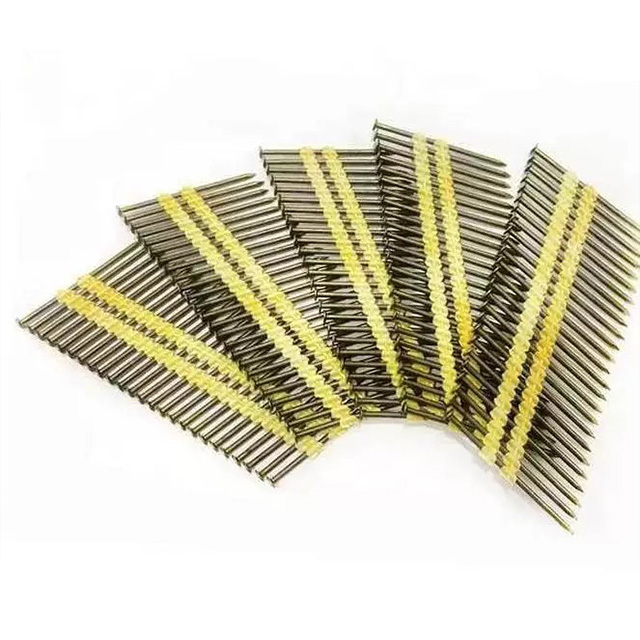
The Standard: Flexible plastic cap nails (electro-galvanized, ring shank) are the industry and code-compliant standard for securing house wrap, preventing wind tear-out and sealing penetrations.
Specs: Standard cap nails feature a ~29/32-inch diameter cap and typically require a 1-inch penetration depth.
Efficiency: Transitioning from hand-driven bulk nails to pneumatic collated systems drastically reduces labor costs and Total Cost of Ownership (TCO) on large siding projects.
Assembly Integration: The WRB is part of a broader envelope system; fasteners used over the wrap (like plastic sheet collated framing nails for furring strips) must also be specified to prevent WRB puncture damage from collation debris.
Many installers default to T-150 staples for speed. This is a massive business risk. Standard staples lack adequate holding power. They easily cause synthetic wrap to tear under wind load. They also leave unsealed holes allowing water ingress. Fixing these leaks later costs significantly more than buying proper fasteners upfront.
Major WRB manufacturers explicitly mandate cap nails. Brands like Tyvek design their warranties around these specific fasteners. Local building codes enforce this standard tightly. Inspectors will flag jobs using plain staples for exterior envelope applications. The International Residential Code (IRC) clearly emphasizes maintaining an unbroken air and moisture barrier.
Understanding the anatomy of a cap nail helps explain its superior performance. Each component plays a vital role in protecting the envelope.
Flexible Plastic Cap (~29/32"): This cap conforms tightly to the wall surface. It distributes holding power evenly across the synthetic membrane. This design drastically reduces "pull-through" tearing during severe weather.
Ring Shank (Annular Thread): The ribbed metal shank presses firmly into wood fibers. It creates a powerful locking effect. This provides maximum withdrawal resistance against negative wind pressures.
Electro-Galvanized Coating: Baseline corrosion resistance is non-negotiable. Electro-galvanizing protects the steel core. This stops rust from forming before exterior siding goes up.
Feature | Traditional Staples (T-150) | Flexible Plastic Cap Nails |
|---|---|---|
Holding Power | Low (Prone to pull-through) | High (Wide surface area distribution) |
Hole Sealing | Poor (Leaves open punctures) | Excellent (Cap acts as a gasket) |
Code Compliance | Rarely accepted for primary WRB | Industry standard & universally accepted |
Wind Resistance | Fails under moderate negative pressure | Withstands high negative wind loads |
Common Mistake: Never assume staples save money. The slight savings on bulk materials evaporate instantly when building inspectors fail the framing. Relying on staples often guarantees warranty rejection.
Size matters deeply when attaching exterior membranes. A 1-inch length serves as the universal standard. You use this length when attaching standard-thickness wrap directly to OSB or plywood sheathing. It provides enough penetration to anchor firmly without passing entirely through the substrate.
Modern building designs often incorporate continuous exterior insulation. This complicates your fastener selection. You must follow the "3X Rule" for these advanced assemblies. If fastening through exterior rigid foam insulation plus house wrap, you need significantly longer nails.
Measure the total thickness of the rigid foam plus the house wrap.
Calculate a penetration depth equaling three times the thickness of the top layer.
Ensure the nail penetrates at least 3/4" to 1" into solid wood studs.
Add these measurements together to determine your minimum required fastener length.
Failing to use manufacturer-specified fastener sizes voids WRB warranties immediately. It acts as a massive red flag for municipal building inspectors. Short nails vibrate loose under wind loads. The membrane then sags or tears away. This exposes the sheathing to bulk water damage.
Inspectors check penetration depths rigorously. Drive nails completely flush. Do not crush the foam insulation underneath. Keep your nail gun calibrated perfectly. If you hand-drive, use steady hammer strikes to avoid warping the plastic caps.
Labor acts as the primary cost driver on large residential builds. Multi-family projects amplify this expense. Hand-nailing bulk cap nails represents a high-friction process. It slows crews down drastically. Workers drop loose nails constantly, wasting expensive materials. Cold weather makes handling loose plastic caps nearly impossible.
Pneumatic cap staplers and nailers change the financial equation completely. Utilizing tools shooting collated cap nails cuts installation time by up to 60%. You recover the initial tool cost on your very first major job. Productivity scales effortlessly when workers stop fumbling in tool pouches.
System compatibility extends beyond just the WRB layer. Contractors must choose secondary fasteners carefully. You often install rainscreen furring strips or exterior siding over the completed house wrap. Using Plastic Sheet Collated Framing Nails is highly recommended here.
Secondary fastener collation types impact the underlying wrap. Paper-collated nails degrade rapidly in wet weather. Wire-collated nails leave sharp wire "flags" under the nail head. These flags gouge into the newly sealed envelope. They create hidden tears in the membrane. Conversely, plastic sheet collation ensures a clean, predictable drive. This protects the delicate moisture barrier you just installed.
Do not look strictly at the price per box. Evaluate the hourly labor rate against installation speeds. Hand-nailing averages 500 square feet per hour. Pneumatic tools push that past 1,200 square feet. Faster dry-in times mean other trades can start sooner. This accelerates your overall project timeline.
A major implementation risk plagues siding installers daily. Standard plastic caps possess a ~3mm thickness. This thickness can "telegraph" through thin lap siding materials. Fiber cement and vinyl siding reveal these underlying bumps easily. The result is a wavy, unprofessional exterior wall appearance.
Homeowners notice wavy siding immediately. It triggers callbacks and payment disputes. You must mitigate this risk before hanging the first piece of siding. Adopting specific strategies prevents telegraphing entirely.
Low-Profile Caps: Source caps designed with a flat, tapered edge. Avoid using thick, domed profiles. Tapered edges blend smoothly into the wall plane.
Drive Depth Calibration: Adjust your pneumatic nailer's depth-of-drive dial. The cap must sit flush and snug against the wrap. If overdriven, the plastic cap shatters. If underdriven, the protruding nail pushes the siding outward. To ensure an absolutely flat surface for siding, many professionals pair their calibrated tools with Plastic Sheet Collated Framing Nails. These fasteners leave no copper wire residue or paper debris under the head, preventing the microscopic gaps that contribute to unsightly telegraphing through thin lap siding materials.
Strategic Nailing Layout: Plan your horizontal fastener placements meticulously. Keep cap nails strictly on vertical stud lines. Ensure horizontal placements fall exactly where the siding overlap occurs. This hides the cap thickness inside the natural void of the siding's hem or nailing flange.
Training your crew on strategic layouts takes minimal time. It saves thousands of dollars in torn-down siding. Always run a quick string line check. Verify wall flatness before committing to siding installation.
Procuring the right hardware requires careful evaluation. You need materials built for harsh outdoor conditions. Evaluate your shortlisting process using four distinct dimensions.
Cap Material Quality: Plastics must remain UV-resistant and highly flexible. Cheap rigid plastics shatter quickly in cold weather. They also explode upon heavy pneumatic impact.
Shank Profile Design: Reject smooth or "bright" shanks entirely. Smooth shanks pull out of OSB over time. Mandate ring or spiral shanks for all exterior sheathing applications.
Collation Reliability: Ensure the collation mechanism feeds smoothly. Wire bands often jam specific gun brands. Just as you might specify Plastic Sheet Collated Framing Nails to eliminate jamming and debris, choose high-quality plastic-collated cap nails for the WRB phase. They feed reliably and leave no sharp residues.
Quantity vs. Yield: Evaluate pricing based on realistic job scales. A standard 250-pack typically covers a minor room addition. Evaluate bulk pricing options like 2000-count buckets. Base these calculations on standard 12"-16" spacing requirements. When placing these orders, it is strategically efficient to include your requirement for Plastic Sheet Collated Framing Nails in the same procurement cycle. Standardizing your site with plastic-collated hardware across both the WRB and framing phases ensures consistent tool performance and prevents moisture-related inventory waste.
Project Size | Estimated Square Footage | Required Fasteners (approx.) | Recommended Package Size |
|---|---|---|---|
Small Addition | 500 sq ft | 350 - 450 | Two 250-Packs |
Single Family Home | 2,500 sq ft | 1,800 - 2,200 | One 2000-Count Bucket |
Multi-Family Unit | 10,000+ sq ft | 7,500 - 9,000 | Bulk Pallet Orders |
Pro Tip: Always order 15% more than your estimated yield. Dropped hardware, misfires, and complex wall geometries consume more fasteners than flat surface estimates predict.
Securing house wrap properly sets the foundation for a durable building envelope. Upgrading from basic staples to electro-galvanized, ring-shank plastic cap nails remains essential. This simple switch prevents catastrophic moisture failures. It also protects your manufacturer warranties.
Start by reviewing the specific installation guidelines provided by your chosen WRB brand. Audit your pneumatic tool inventory to ensure collation compatibility. Finally, verify your fastening schedule aligns closely with local building codes. Do this before placing your next bulk hardware order. Taking these steps guarantees a resilient, professional, and leak-free installation.
A: While standard roofing nails have a larger head than framing nails, they do not offer the wide, flexible surface area of a 1-inch plastic cap. They are more likely to cause the wrap to tear under heavy wind loads and are generally not recommended over cap nails.
A: Generally, no. A properly driven plastic cap nail acts as its own gasket, sealing the hole it creates. Tape is reserved for overlapping seams and window flashing, though some extreme high-performance builds (like Passive House) may specify taping over fasteners.
A: Most building codes and manufacturer guidelines require fasteners to be spaced 12 to 18 inches apart on vertical stud lines, and up to 24 inches horizontally, though this varies by local wind zone requirements.


