
Views: 0 Author: Site Editor Publish Time: 2026-05-12 Origin: Site


Selecting the wrong roofing fastener doesn't just risk a few blown-off shingles. It jeopardizes the entire roof system. You risk voiding manufacturer warranties and exposing properties to severe water ingress. For contractors and property owners finalizing their materials list, the decision comes down to matching specific shank types, coatings, and structural codes to the environmental demands of the project.
Failing to adhere to recognized codes like IBC or IRC transfers liability directly to the installer. We must understand the exact specifications required for asphalt shingles to ensure lasting protection. This guide breaks down these critical baseline requirements. You will discover the actual return on investment for upgraded fastening methods. Furthermore, we reveal how specialized fasteners fit into a complete, watertight assembly.
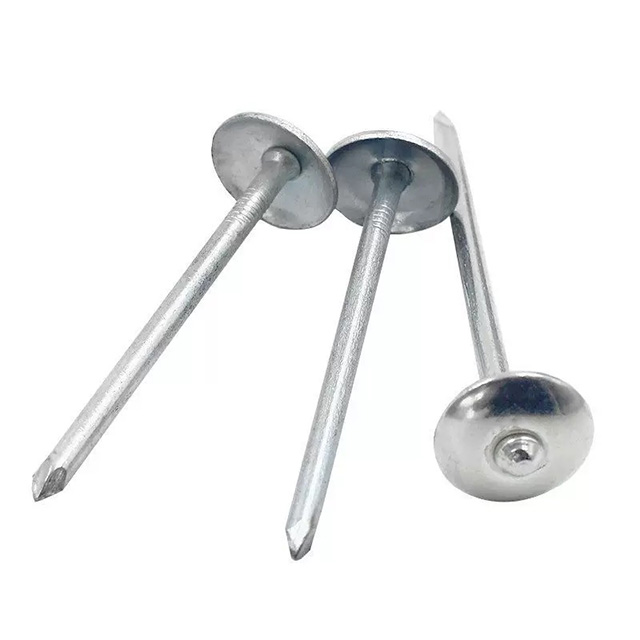
Minimum Compliance: Building codes require a minimum 12-gauge steel nail with a 3/8-inch flat head and a diamond point.
Penetration Rule: Nails must penetrate at least 3/4-inch into solid wood sheathing, or pass completely through thinner sheathing by 1/8-inch.
Holding Power Upgrade: Ring shank nails provide up to 300% more pull-out resistance compared to smooth shanks, making them essential for high-wind and coastal zones.
The 6-Nail ROI: Upgrading from standard 4-nail to 6-nail per shingle application costs marginally more in materials but can elevate wind warranty coverage from 110 mph to 130 mph.
Specialty Fasteners: Wide-capped umbrella roofing nails are critical for preventing tear-through and moisture damage, primarily utilized in high-stress underlayment and specialized material applications.
Contractors face significant financial liability if roofs fail prematurely. Failing to adhere to recognized building codes immediately voids manufacturer defect warranties. It transfers all legal accountability directly to you. The International Building Code (IBC) and International Residential Code (IRC) establish strict baseline metrics. They ensure asphalt shingles remain firmly attached during severe weather events. Compliance acts as your first line of defense against both structural failure and legal disputes.
The physical dimensions of the fastener matter immensely. You must use 12-gauge, 11-gauge, or 10-gauge wire dimensions. North American building codes require 12-gauge as the absolute minimum standard. Additionally, a wide-headed Umbrella Roofing Nail is preferred because its flat head diameter measures at least 3/8-inch across. This wide surface area prevents the metal from tearing through the soft asphalt matrix during high wind uplift events.
Penetration depth dictates structural integrity. Fasteners must bite deeply into the decking material. Rules require them to penetrate solid wood sheathing by at least 3/4-inch. If you encounter thinner sheathing, they must pass completely through the bottom by 1/8-inch. You cannot guess these measurements. Standard thickness materials over 3/8-inch decks usually demand 1-inch lengths. Thicker architectural variants or layered ridge caps require 1.25 to 1.5-inch lengths.
Shingle Type | Sheathing Thickness | Minimum Recommended Length |
|---|---|---|
Standard 3-Tab | Standard (1/2-inch or more) | 1 inch |
Architectural / Dimensional | Standard (1/2-inch or more) | 1.25 inches |
Heavyweight / Premium | Thick Decking | 1.5 inches |
Ridge Caps (Multiple Layers) | Any Decking | 1.5 to 1.75 inches |
Furthermore, execution at the drive line determines long-term success. The metal head must sit perfectly flush against the material surface. Over-driven fasteners fracture the fragile fiberglass core. Under-driven fasteners sit too high. They interfere directly with the overlapping sealant strip. Both mechanical errors guarantee future water leaks and premature system degradation.
Choosing the correct shank profile drastically affects long-term roof durability. You must evaluate mechanical holding power against upfront material costs. A minor investment here prevents massive repair bills later.
First, consider the smooth shank. It offers the lowest initial price point. Installers easily drive them by hand or pneumatic nailer. However, they provide the lowest pull-out resistance. They often back out over time. Industry professionals call these defects "nail pops." Daily thermal expansion and contraction of the roof deck push the smooth metal upward. This action lifts the overlapping layer above it and breaks the water barrier.
Next, look at the ring shank. This profile features engineered, circular ridges along the metal shaft. They actively lock into the surrounding wood fibers upon entry. Laboratory tests reveal roughly 300% greater pull-out resistance compared to smooth alternatives. They cost slightly more per box. However, they remain the superior choice for steep-slope environments. They are practically mandatory for coastal properties facing extreme wind uplift forces.
Profile Type | Upfront Cost | Pull-Out Resistance | Best Application |
|---|---|---|---|
Smooth Shank | Low | Baseline / Low | Standard inland residential, moderate climates. |
Ring Shank | Moderate | Excellent (+300%) | High wind zones, coastal areas, steep slopes. |
Wood Screws | High | N/A (Prohibited) | DO NOT USE for asphalt shingles. |
Finally, heed a strict industry warning. Never substitute proper equipment with wood screws. Screws seem incredibly strong, but they ruin roof systems. Their deep threads leave microscopic gaps inside the asphalt mat. These hidden gaps invite insidious water ingress over time. Furthermore, screw heads rarely sit perfectly flush. They cut into the material face and destroy the overlapping factory seal.
Specialty fasteners perform vital roles before the final layer goes on. Where exactly does an Umbrella Roofing Nail fit into a professional assembly? Proper placement prevents catastrophic material failure.
First, let us define the category. An umbrella roofing nail features an oversized, highly pronounced domed head. Many premium versions include integrated plastic or metal washers. Manufacturers engineered them specifically to create a watertight seal. They distribute holding pressure over a much wider surface area than standard models.
Contractors primarily utilize them for specific, high-stress applications across the deck:
Underlayment and Felt Integration: Installers rely heavily on square-cap or Umbrella Roofing Nail options here. They secure thin synthetic underlayment firmly to the wooden deck. The wide head prevents the material from tearing during high winds before the final shingles arrive, providing a secure secondary water barrier for the building envelope.
Flashing and Temporary Fixes: You use them where maximum tear-through resistance is required. They work exceptionally well when the fastener head faces brief weather exposure during phased construction.
Specialty Coverings: They secure rigid insulation boards or specific roll roofing products where standard flat heads would punch right through the fragile material.
However, implementation requires strict discipline. Standard asphalt shingle fastening demands traditional flat 3/8-inch heads. This ensures overlapping layers lay perfectly flat. Using bulky specialty items directly on the exposed face creates severe structural risks. The oversized profile disrupts the vital sealant strip above it. This critical error ultimately causes a failed roof system.
Protecting structural fasteners from moisture dictates the entire assembly's lifespan. You must choose surface coatings carefully to mitigate galvanic corrosion and rust. Selecting the wrong chemical makeup guarantees premature failure. Here is how the top materials rank in the field:
Hot-Dipped Galvanized Steel: This remains the ultimate winner for total cost of ownership. Manufacturers submerge the steel in molten zinc. This intense process creates a highly durable, thick, weather-resistant barrier. They easily meet strict ASTM F1667 standards. Professionals consider them the absolute standard for reliable asphalt projects.
Electrogalvanized Steel: This represents a dangerous trade-off. They cost less upfront. Unfortunately, they feature a much thinner zinc layer applied via electrical current. You face a high risk of premature rusting in humid environments. Many top-tier professionals refuse to use them on primary dwellings.
Stainless Steel and Copper: These serve niche, high-end applications. Coastal salt-spray environments strictly require them due to extreme corrosiveness. Installers also use them for slate, heavy tile, and premium copper flashing. You must match metals carefully. Using standard steel against copper flashing triggers rapid galvanic corrosion. This chemical reaction destroys the metal within months.
Aluminum: You should avoid these entirely for standard shingles. They possess weaker overall structural integrity. They easily bend or snap during pneumatic installation. Furthermore, they remain highly susceptible to salt and chemical degradation over time.
Contractors continually debate application volume. Should you use the standard four-pattern or upgrade to six per shingle? The numbers strongly favor the upgrade.
Let us frame the true cost versus the delivered value. A standard box of 7,200 coil roofing nails costs a tiny fraction of total project materials. They typically arrive 15-degree collated for rapid pneumatic nailers. Upgrading to a 6-nail pattern adds entirely negligible material expense. You might spend an extra $50 to $100 per average residential roof. The labor time increases only slightly.
The return on investment proves massive. Applying six correctly placed fasteners elevates wind warranties significantly. Many leading manufacturers boost their defect coverage from a standard 110 mph up to an impressive 130 mph. This provides immense peace of mind for property owners facing severe weather. Furthermore, local building codes often mandate this specific upgrade. Steep slopes, mansard designs, and specific high-wind coastal jurisdictions legally require the six-pattern layout.
However, implementation reality dictates extreme caution. Quantity never replaces accuracy. If you fire a pneumatic nailer haphazardly off the designated nail line, you compromise the entire system. Six incorrectly placed fasteners offer far less wind resistance than four perfectly placed ones. The compressor depth must remain calibrated. Every single strike must remain code-compliant to secure the warranty.
Selecting the right roofing fastener is fundamentally an exercise in risk mitigation. For standard asphalt materials, hot-dipped galvanized steel models with a 3/8-inch flat head and a minimum 12-gauge thickness offer the safest baseline protection. To guarantee maximum longevity, upgrade to ring shank profiles and enforce a strict 6-nail application pattern. This specific combination provides massive ROI by unlocking higher wind warranties and preventing blow-offs.
Always respect the physical chemistry of your materials by matching metals to prevent galvanic corrosion. Finally, keep specialty options like the Umbrella Roofing Nail strictly designated for their optimal use cases. Use them exclusively to secure underlayment and prevent tear-through underneath the primary surface layer. Mastering these details ensures a watertight, code-compliant assembly built to last decades.
A: Yes. Pneumatic nailers ensure efficient, standardized application via 15-degree collated wire coils. However, the compressor depth must be calibrated daily to prevent over-driving (which cuts the shingle) or under-driving (which prevents the shingles from sealing).
A: Remove the overlapping shingle, extract the backed-out nail entirely, seal the old hole with an ASTM D4586-compliant asphalt roofing cement, and drive a new nail nearby. Never re-drive a nail into the same hole.
A: No. The extraction process weakens the shank and chips the zinc coating, guaranteeing rapid rust and eventual failure if re-installed.
A: Contractors often downsize to 3/4-inch or 7/8-inch nails on exposed eaves to prevent the nail points from protruding through the wood sheathing and ruining the aesthetic from below. Ensure this depth still meets manufacturer approval for that specific roof zone.


