
Views: 0 Author: Site Editor Publish Time: 2026-05-12 Origin: Site


Roof failures, leaks, and material blow-offs often trace back to improper fastener selection rather than defective roofing materials. You might instinctively blame the shingles or metal panels for a leak. However, the actual culprit is usually a failing nail. We rely on umbrella nails as purpose-built fasteners. They solve specific challenges in roofing and exterior construction. They excel at preventing water ingress, minimizing electrochemical degradation, and providing high pull-out resistance in high-wind environments.
Choosing the wrong fastener can compromise an entire building envelope. Transitioning from basic fastener knowledge to technical evaluation is crucial. This guide helps contractors, buyers, and builders accurately specify the exact Umbrella Roofing Nail material, shank, and size required for compliance. You will learn how to evaluate environmental factors and structural loads. By mastering these technical nuances, you can guarantee long-term structural integrity and optimize the total cost of ownership for any roofing project.
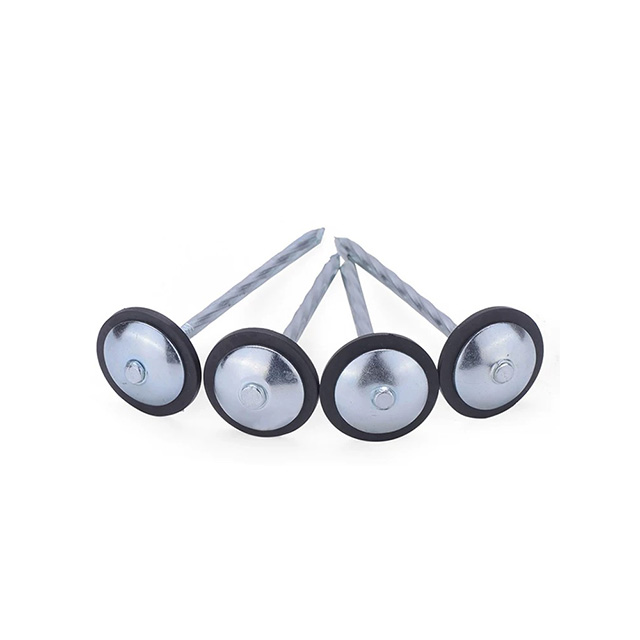
Application Scope: Essential for fastening metal roofing sheets, asphalt felt, PVC panels, and rigid foam insulation without crushing the substrate.
Core Sizing Rule: Fastener length must provide a penetration depth of 2.5 to 3 times the thickness of the attached material to ensure adequate pull-out resistance.
Leak Prevention: The combination of a wide, distributed-pressure umbrella head with an EPDM or neoprene washer creates an active seal against moisture.
TCO Optimization: Selecting the correct coating (e.g., hot-dipped galvanized vs. stainless steel) mitigates galvanic corrosion, extending roof lifespan by 15–30 years depending on the environmental exposure.
Roofing projects demand highly specific fastening solutions. Standard wire nails fail quickly under outdoor exposure. Builders rely on the unique geometry of an Umbrella Roofing Nail to secure delicate or expanding materials across various environments. You must match the fastener to your specific substrate to prevent structural failure.
Corrugated Metal & Polycarbonate Roofing: Metal and UPVC sheets undergo constant thermal expansion. They expand in the heat and contract in the cold. The broad umbrella head distributes hold-down pressure widely across the panel ridges. This distribution prevents the fastener from tearing through the material during expansion or high wind uplift.
Roofing Felt and Underlayment: You must secure waterproof membranes flat against the roof decking before installing shingles. The wide head prevents wind shear from catching and displacing these critical protective layers during active construction.
Rigid Insulation Boards: Contractors often pair these nails with secondary plastic caps. They secure fragile foam or insulation sheeting effectively. The dispersed pressure prevents the nail shaft from punching through or crushing the internal cellular structure of the foam.
Agricultural and Coastal Structures: Highly humid or saline environments destroy standard steel quickly. Coastal buildings face constant salt spray. Standard construction nails oxidize, rust, and fail rapidly. Using highly coated umbrella fasteners prevents this rapid degradation in aggressive climates.
We do not just use these nails to hold materials together. Manufacturers engineer them as active weatherproofing components. Every part of the nail serves a specific defensive function against the elements.
The head functions as a physical shield. Its widened surface area significantly increases the structural holding power. Furthermore, it acts as your first line of defense against driving rain. Standard flat heads allow water to pool around the puncture site. The convex Umbrella Roofing Nail shape naturally sheds water away from the vulnerable shaft hole, ensuring the moisture barrier remains intact even during severe storms.
A bare metal head cannot create a watertight seal against rigid roofing panels. Manufacturers seat a flexible washer beneath the umbrella head to solve this problem. When you drive the nail, this washer compresses to fill microscopic gaps.
Industry standards highly favor EPDM over standard rubber. EPDM provides superior UV resistance and thermal stability. Standard rubber dries out, cracks, and fails after a few seasons. EPDM ensures the seal remains flexible and intact over a 20-year lifecycle.
Material Type | UV Resistance | Thermal Stability | Expected Lifespan |
|---|---|---|---|
Standard Rubber | Low | Prone to cracking in freezing temps | 2–5 Years |
Neoprene | Moderate | Good flexibility across climates | 10–15 Years |
EPDM | Exceptional | Resists extreme heat and cold cycles | 20+ Years |
Mixing dissimilar metals on a roof causes galvanic corrosion. If a bare steel nail contacts an aluminum roofing sheet, moisture triggers an electrochemical reaction. The nail rusts prematurely. Galvanized zinc coatings neutralize this risk. The thick zinc layer acts sacrificially. It protects the core steel and prevents adverse reactions against modern roofing metals.
Procuring fasteners requires evaluating both your budget and your environmental constraints. You must balance upfront costs against long-term durability. We call this evaluating the Total Cost of Ownership (TCO). When specifying an Umbrella Roofing Nail, the protective coating dictates how long your roof will survive before rusting begins, making the choice between galvanized and stainless steel critical for long-term project success.
The protective coating dictates how long your roof will survive before rusting begins. Here is a breakdown of the three primary material options.
Coating Type | Zinc Thickness | Ideal Environment | Estimated Lifespan | TCO Impact |
|---|---|---|---|---|
Electro-Galvanized | 5–20 g/m² | Temporary structures, mild arid climates | 5–10 years | Lowest initial cost, high replacement cost |
Hot-Dip Galvanized | 40–100 g/m² | Standard outdoor exposure, heavy rain | 15–25 years | Balanced TCO, industry standard choice |
Stainless Steel (304/316) | N/A (Solid Alloy) | Coastal, industrial, highly acidic areas | 20–30+ years | Highest initial cost, lowest lifetime TCO |
Electro-galvanized options offer a lower upfront cost. They remain viable only for temporary structures or interior applications. Hot-dip galvanized fasteners serve as the industry standard for outdoor exposure. They provide a thick zinc layer for excellent sacrificial protection. Stainless steel requires the highest initial investment. However, it delivers the lowest TCO for coastal or highly acidic environments where zinc would eventually fail.
The nail shank determines how much grip the fastener maintains inside the wood deck. Wind uplift forces try to pull nails out vertically. Choosing the correct shank thread prevents this catastrophic failure.
Smooth Shank: These are the easiest to drive and carry the lowest cost. We recommend them strictly for basic framing. They suit substrates where extreme wind uplift is not a major factor.
Ring Shank (Annular Thread): These rings act like wedges. They lock deeply into wood fibers as they penetrate. They are ideal for softwoods. Choose ring shanks for any application requiring high withdrawal resistance.
Twist/Spiral Shank: This shank spins as you drive it. It functions similarly to a screw. It proves superior for dense hardwoods. We highly recommend twist shanks for areas prone to severe vibrational stress or extreme weather conditions.
Selecting the right length and thickness prevents structural failure. If a nail is too short, it will pull out. If it is too thin, it will bend during installation.
Industry professionals rely on a standard evaluation lens for length. Your fastener length must provide a penetration depth of 2.5 to 3 times the thickness of the attached material. This ensures adequate anchorage into the roof deck.
Follow these steps to calculate your required length:
Measure the exact thickness of your roofing material (e.g., a corrugated panel measures 0.5 inches).
Multiply this thickness by 2.5 to find your minimum deck penetration requirement (0.5 x 2.5 = 1.25 inches).
Add the material thickness and the penetration requirement together to find your minimum total nail length (0.5 + 1.25 = 1.75 inches).
Round up to the nearest standard commercially available size (select a 2-inch nail).
Standard wire gauges for these fasteners range from 8 to 14. Remember, lower gauge numbers mean thicker wire. Thicker gauges prevent the shank from bending. You need thicker gauges when using pneumatic installation tools or when driving into highly dense wood substrates.
North American builders historically use the "Penny" system, denoted by the letter "d". For example, a 10d nail equals 3 inches. Modern suppliers typically translate this into actionable inch or metric dimensions. Standard availability usually ranges from 1 inch to 4 inches (25mm to 100mm) depending on local building codes.
Even the highest quality fastener will leak if installed improperly. Human error during the driving process accounts for the vast majority of roof leaks. You must pay attention to tool pressure and strike angles.
Contractors frequently use too much force. Excessive force completely crushes the EPDM washer. It dishes the metal roofing panel downward. This deformation creates a permanent pooling zone for water around the nail head. Standing water will eventually bypass the compromised washer. This guarantees premature leaks.
Best Practice: Drive the nail until the washer compresses snugly against the panel. Stop before the rubber bulges outward past the umbrella head.
You must drive nails perfectly perpendicular to the roof deck. Workers sometimes strike nails at a slight angle to save time. Angled driving lifts one side of the umbrella head. It breaks the 360-degree washer seal. This leaves a direct puncture hole exposed to moisture and wind-driven rain.
Tool compatibility requires careful consideration. Pneumatic nail guns increase job site efficiency drastically. However, you must ensure your selected nail gauge can handle pneumatic strike forces. Thin gauges will bend instantly under a pneumatic hammer. Furthermore, improper pneumatic depth settings cause severe overdriving. Always test your compressor pressure on a scrap piece of material first.
Procurement teams face unique challenges when sourcing fasteners at scale. Finding a reliable manufacturing partner ensures your construction projects stay on schedule and under budget.
Evaluate a manufacturer's historical defect rate. You must specifically check for off-center heads and missing washers. An off-center head provides uneven pressure and fails to seal the puncture. Missing washers render the fastener entirely useless for weatherproofing. Request batch testing reports before signing large purchase orders.
Assess logistics and handling efficiency based on your specific job site needs. A good supplier offers multiple packaging formats.
Bulk Cartons (25-30kg): Best for large factory floors or automated pre-fabrication shops.
Palletized Boxes (5kg/box): Ideal for commercial job sites. Workers can easily carry small boxes onto the roof without risking injury.
Customized Gunny Bags (50kg): Often preferred for highly rugged agricultural sites or specific export markets requiring minimal packaging waste.
Look for suppliers who offer strong OEM capabilities. Your regional building codes may demand specific adaptations. A robust manufacturer can adjust zinc coating thicknesses for your climate. They can swap standard rubber for specialized EPDM washers. They can also produce custom shank lengths to match unique architectural insulation requirements.
Sourcing an umbrella fastener is never a simple commodity purchase. It represents a critical structural decision. The right combination of head diameter, washer material, shank threading, and galvanic coating ultimately dictates the longevity of your entire roof. A minor mistake in material selection translates into massive repair costs down the line.
We encourage buyers to proactively audit their local environmental conditions. Evaluate your regional wind loads and saline moisture levels carefully. Always apply the 2.5x length rule to your specific substrates to guarantee adequate hold. Once you map these requirements, you can confidently request customized specification sheets or bulk test samples from reliable manufacturers.
A: Common wire nails have flat heads and no sealing mechanisms. Umbrella fasteners feature a widened, convex head that distributes hold-down pressure evenly. This prevents fragile roofing materials from tearing. Additionally, they incorporate a rubber or EPDM washer beneath the head to actively prevent rainwater from leaking through the puncture hole.
A: EPDM is a synthetic rubber formulated for extreme outdoor durability. Standard rubber degrades quickly under direct sunlight and cracks during freezing temperatures. EPDM offers superior UV resistance and thermal stability. It maintains its flexible watertight seal through severe temperature fluctuations for over 20 years, far outlasting standard rubber washers.
A: Yes, provided you use the correct specifications. You must select a thicker gauge (like 8 or 9 gauge) to prevent shank bending from the pneumatic strike force. Additionally, you must calibrate the gun perfectly for a vertical strike. Improper compressor pressure easily overdrives the nail and destroys the sealing washer.
A: In standard outdoor environments, hot-dipped galvanized fasteners typically last 15 to 25 years. They feature a thick layer of zinc (40–100 g/m²) that provides sacrificial protection against rust. However, lifespan decreases in highly acidic industrial zones or direct coastal areas with constant heavy salt spray.


