
Views: 0 Author: Site Editor Publish Time: 2026-05-11 Origin: Site


Property owners and procurement managers sometimes catch contractors using staples instead of nails to speed up a job. It creates immediate alarm for anyone managing a construction budget, and rightfully so. Fixing a poorly fastened roof costs exponentially more than the fasteners themselves. A failed installation leads to catastrophic blow-offs during extreme weather. These failures turn minor storms into major repair bills.
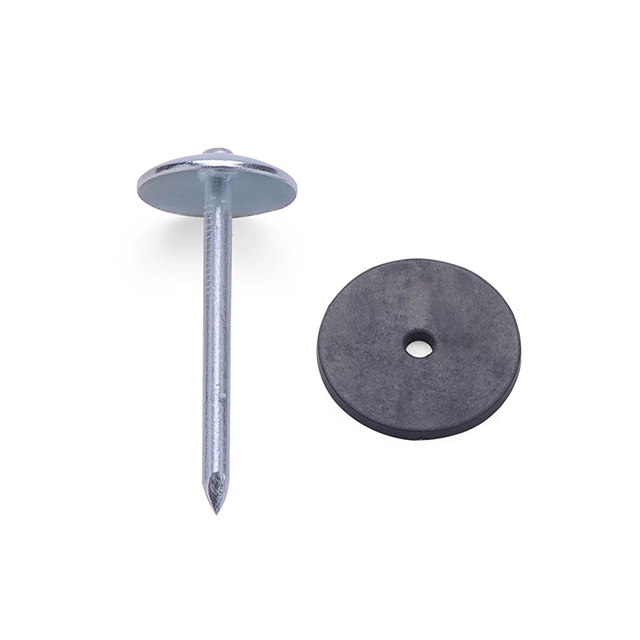
Choosing between staples and nails directly impacts your Total Cost of Ownership (TCO). The decision also affects your warranty validity and overall storm resilience. While staples offer historical speed advantages, modern roofing standards dictate a different approach. They require nails as the only acceptable choice for asphalt shingles. Specifically, you need fasteners featuring wide, flat heads like the Umbrella Roofing Nail. We will explore how these specific fasteners provide higher error margins, superior wind resistance, and strict building code compliance. This knowledge empowers you to protect your property investment over the long term.
Cost Parity: Both staples and nails cost approximately $0.01 to $0.03 per fastener; material cost savings is a myth.
Installation Risk: Staples require absolute precision; slight wrist rotations by installers cause horizontal placements that lead to catastrophic shingle blow-offs.
Compliance: Major manufacturers (like GAF) and testing labs (UL) no longer support staples for asphalt shingles.
Holding Power: The broad surface area of an umbrella roofing nail (typically 3/8-inch head) provides superior hold-down strength compared to the narrow 1/16-inch width of a staple crown.
Roofing contractors prized extreme efficiency during the 1980s and 1990s. Many professionals strongly preferred pneumatic staple guns for residential and commercial jobs. These tools felt incredibly lightweight. Their compact magazines held hundreds of fasteners at a time. This allowed installers to cover large roof areas rapidly. Under optimal laboratory conditions, staples offered an aggressive grip. The dual legs penetrated the wood decking and held the shingles tightly. For a brief period, the industry viewed staples as the ultimate productivity hack. It boosted profit margins on individual roofing projects.
This widespread adoption did not last. Increased severe weather events across the country exposed a critical flaw. Staples feature an extremely low tolerance for human error during rapid installation. Extreme wind uplift acts like a vacuum on roofing materials. When high winds hit older roofs, shingles fastened by staples tore away effortlessly. Forensic engineering revealed the primary issue. The rapid pace of installation caused slight misalignments. A misaligned staple provides almost zero holding power against wind sheer. The industry could no longer ignore this vulnerability.
Consequently, the construction sector established a strict modern baseline. Authorities transitioned to galvanized, wide-head fasteners like the Umbrella Roofing Nail. They made this the non-negotiable industry standard for asphalt roofing. You will no longer find reputable organizations debating this shift. The focus moved entirely from contractor speed to structural integrity.
You must evaluate fasteners based on physical contact area. This determines how well the roof resists wind uplift. A standard Umbrella Roofing Nail features a wide head. It typically measures 1/4 to 3/8 inch in diameter. This broad surface lies perfectly flat against the shingle. It provides a symmetrical, strong anchor. The wide head clamps the asphalt mat securely to the decking.
Conversely, a staple provides a maximum grip width of only 1/16 inch. Think of a staple crown as a tiny wire wire. High winds pull the shingle upward. The narrow wire easily slices straight through the soft asphalt mat. The staple remains firmly embedded in the wood, but the shingle blows away entirely. This physical limitation makes staples highly dangerous in storm-prone regions.
Performance Metric | Roofing Nails | Roofing Staples |
|---|---|---|
Contact Surface Area | Broad (1/4 to 3/8 inch) | Narrow (approx. 1/16 inch wide crown) |
Wind Resistance | Excellent. Clamps asphalt securely. | Poor. Slices through asphalt under pressure. |
Orientation Sensitivity | Omnidirectional (foolproof) | Highly sensitive (requires exact parallel placement) |
Industry Status | Gold Standard | Obsolete for asphalt shingles |
We must debunk the persistent "staples are cheaper" myth. You might hear contractors claim staples save money. This argument fails under basic scrutiny. Both options cost mere pennies per unit. A standard fastener costs approximately $0.01 to $0.03. The material cost difference on a typical roof amounts to less than twenty dollars. Fastener costs simply do not drive roofing budgets.
You must frame the true cost in terms of maintenance. A single missing shingle causes cascading damage. Water infiltrates the underlayment. It rots the wood decking and ruins interior drywall. A failed staple leads to an emergency repair call. You will pay hundreds of dollars for a contractor to replace one blown-off shingle. This completely negates any labor time saved during the initial installation. Over a twenty-year lifespan, nails deliver a vastly superior Total Cost of Ownership.
Roofing is exhausting manual labor. Fatigue sets in quickly. We must account for the "wrist rotation" failure. Installers operate heavy pneumatic guns on steep pitches. Their wrists naturally twist as they reach across the roof deck. If a contractor angles the staple gun slightly, the staple enters vertically. It fails to run parallel to the designated nailing strip. A vertical staple straddles almost no underlying material. It instantly compromises the holding power.
Nails solve this human factor beautifully. They are entirely omnidirectional. Their round heads eliminate orientation errors completely. You cannot install a round nail "crooked" regarding its rotational direction. This creates a foolproof installation process.
Common Mistakes to Watch For:
Over-driving: High compressor pressure forces the fastener entirely through the shingle mat. It shatters the fiberglass backing.
Under-driving: Low pressure leaves the fastener head raised. The raised head prevents the next shingle row from sealing flat. It creates a tunnel for wind to catch the material.
Leading roofing manufacturers carry tremendous influence. GAF, North America's largest roofing manufacturer, sets clear boundaries regarding fasteners. Their technical bulletins address staple usage directly. Manufacturers officially state your basic material warranty might remain intact initially. However, they strictly exclude any damage directly caused by staple use. If wind blows your shingles off because a staple sliced through the mat, you have no coverage. The manufacturer will reject your claim immediately. They will point to improper installation methods. You assume all financial risk if you allow contractors to use staples.
We rely on testing labs to certify material safety. Underwriters Laboratories (UL) defines wind resistance tiers. Decades ago, historical UL wind tests accepted staples. Those older tests only simulated wind speeds up to 60 mph. Climate patterns changed. Building requirements evolved rapidly. Modern certifications test for 110 mph to 130 mph wind zones. Manufacturers achieve these higher-tier wind ratings exclusively using roofing nails. Testing facilities no longer utilize staples to certify high-wind asphalt shingle performance. They consistently fail the baseline parameters.
Municipalities codify these laboratory findings into law. Many local building codes now explicitly ban staples for primary roof coverings. This applies heavily to hurricane- and storm-prone regions. Building inspectors will fail a roof during the final inspection if they discover staples securing asphalt shingles. A failed inspection forces a complete tear-off. The contractor must remove the brand new roof and start over at their own expense. You must avoid this catastrophic delay by verifying local codes beforehand.
Staples are not entirely useless in construction. They still serve a highly efficient purpose during the preparatory phases. Installers widely use staples for securing 15-lb felt or synthetic underlayment. Roofers apply this thin water barrier directly to the wood decking prior to shingle installation. Staples work perfectly here. The underlayment does not face direct wind uplift once covered by heavy shingles. A slap-stapler allows workers to tack down underlayment papers rapidly and securely.
We must highlight a highly specific edge case. Cedar sidewall applications actually demand staples over nails. Experienced craftsmen prefer properly driven stainless steel staples for this exterior wood cladding.
Cedar shingles are rigid and prone to splitting. Nails act like tiny wedges. They often split the fragile wood grain upon impact. Staples feature two thin legs. They grip the wood fibers better and distribute the pressure. This prevents splitting entirely. However, the installer must apply the staple perfectly horizontal. If they angle the crown, it reduces the amount of wood held between the legs. For coastal regions, codes mandate Type 316 stainless steel staples to prevent salt corrosion. This remains the only acceptable domain where staples outperform round-headed fasteners.
You hold the power during the procurement phase. Do not accept vague contracts. Instruct your decision-makers to demand specific terminology. The estimate must explicitly list a high-quality Umbrella Roofing Nail (typically 10-12 gauge galvanized) for the primary installation. If the contract generically states "fasteners," push back immediately. You need written proof of their intended materials. This creates legal leverage if they attempt to switch materials on the job site.
You must also question the exact sizing for complex applications. Standard nails measure about 1.25 inches. They work perfectly for new roofs. However, you must apply the "shingle-over-shingle" rule for overlay projects. If your contractor performs a roof overlay over existing shingles, standard nails will fail catastrophically.
Contractors must specify 1.5-inch to 1.75-inch long nails for overlays.
The longer nail must penetrate both layers of asphalt.
The nail tip must bite at least 3/4-inch into the underlying OSB or plywood decking.
If the deck is thinner than 3/4-inch, the nail must penetrate completely through the wood.
You must act decisively when evaluating bids. Advise your team to disqualify any asphalt shingle contractor who insists on using staples. Some roofers might claim they use staples to "speed up the job" or "save you money." Treat this as an immediate red flag. It demonstrates a severe lack of ongoing education. It indicates they prioritize their own labor costs over your property's long-term survival. Terminate negotiations with these vendors immediately.
For asphalt shingle roofing, nails are the unequivocal winner. The industry settled this debate decades ago. While staples offer theoretical holding power in perfect laboratory conditions, real-world variables destroy their effectiveness. Human fatigue, slight wrist rotations, and aggressive wind uplift turn staples into a liability. Broad-headed nails eliminate orientation errors and provide massive clamping force against severe weather.
Focus your evaluation heavily on proper installation techniques. Ignore the negligible material cost of the fastener. Prioritize a contractor's strict adherence to modern nailing standards. Demand written confirmation of galvanized, 10-12 gauge fasteners in your contracts. Verify nail length for any overlay projects. By insisting on these proven standards, you protect your property's long-term integrity and ensure your warranties remain valid when storms strike.
A: Professional roofers strictly use nails as the modern standard for asphalt shingles. They reserve staples exclusively for securing synthetic underlayment, felt paper, or specialized exterior wood siding like cedar shakes.
A: You do not need an immediate tear-off unless you observe systemic failures. Monitor your roof closely after strong storms. Look for loose, sliding, or missing shingles. If extensive blow-offs occur, you will likely need to replace the roof using proper nails.
A: The industry standard requires a 10-12 gauge galvanized nail. The flat head must measure at least 3/8-inch in diameter. The length must allow the nail to penetrate the OSB or plywood decking by a minimum of 3/4 inch.
A: Contractors estimate using approximately 400 fasteners per roofing square (100 square feet). This translates to exactly 4 nails per standard 3-tab shingle under normal wind conditions. High-wind zones often require 6 nails per shingle.


